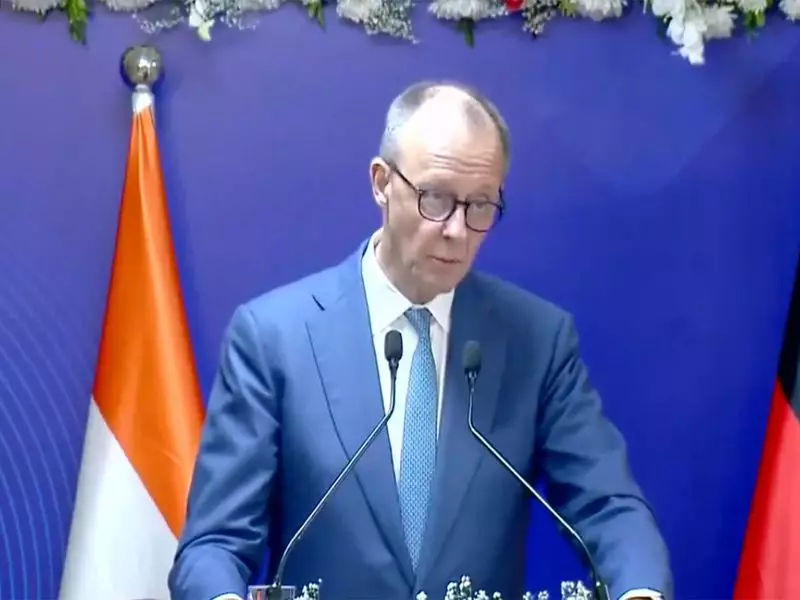
German Chancellor Olaf Scholz has emphatically stated that concluding a free trade agreement (FTA) between India and the European Union is essential to fully realizing the economic potential between India and Germany. During his recent visit to India, Scholz positioned the nation as a 'partner of choice' for Germany, underscoring a strategic pivot in international economic alliances.
A Strategic Partnership for the Future
The Chancellor's comments came during high-level discussions aimed at deepening the Indo-German strategic and commercial partnership. He highlighted that while bilateral trade and investment flows are robust, they operate below their true potential due to existing trade barriers. An India-EU FTA, Scholz argued, would act as a powerful catalyst, streamlining regulations, reducing tariffs, and creating a more predictable environment for businesses on both sides.
This push aligns with the broader recalibration of Germany's economic diplomacy, seeking to diversify supply chains and build resilient partnerships. India, with its large market, demographic dividend, and growing technological prowess, fits perfectly into this vision. Scholz's delegation, which included a significant business contingent, signals Germany's serious intent to expand its footprint in India across sectors like renewable energy, advanced manufacturing, and digital innovation.

Concrete Steps and Collaborative Vision
The dialogue between Chancellor Scholz and Indian leadership extended beyond trade talks. Discussions reportedly covered enhanced cooperation on defence technology, green hydrogen initiatives, and skill development. Both nations are keen to move from a traditional buyer-seller relationship to one of co-development and co-production, particularly in defence and clean energy sectors.
Germany's endorsement is a significant boost for the long-pending India-EU Broad-based Trade and Investment Agreement (BTIA) negotiations, which have seen multiple rounds of talks over the years. Scholz's advocacy adds considerable political weight from within the EU, potentially breaking the logjam and accelerating the negotiation process. The Chancellor's visit served as a platform to translate political goodwill into actionable economic agendas.
Implications for Global Trade Dynamics
The strengthening of the India-Germany axis, with the EU FTA as its centerpiece, carries substantial implications. It represents a concerted effort by two major democratic economies to shape a rules-based trading order and counter economic fragility. For India, a successful pact with the EU, championed by a key member like Germany, would provide unprecedented access to one of the world's largest single markets, attracting greater foreign direct investment and boosting exports.
For Germany and the EU, it offers a gateway to a dynamic, high-growth economy and a strategic counterbalance in the Indo-Pacific region. The Chancellor's clear designation of India as a 'partner of choice' marks a definitive step in this direction, setting the stage for a more integrated and ambitious economic relationship that could define trade patterns for decades to come.