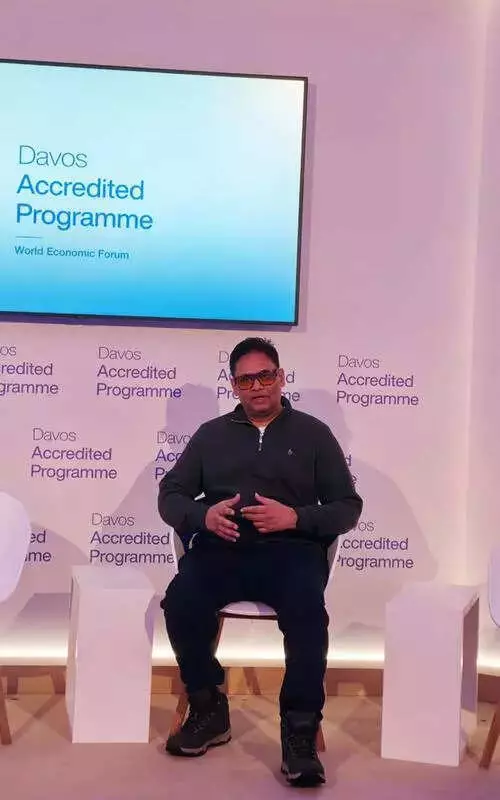
Odia Entrepreneur Arun Kar Champions Trust-Driven Innovation at World Economic Forum Davos
UK-based Odia entrepreneur and former Indian Army Captain Arun Kar recently addressed a significant session at the prestigious World Economic Forum in Davos, Switzerland. In an exclusive conversation with Arunika Mohapatra, Kar shared profound insights from his participation, focusing on the critical need to evolve innovation paradigms for sustainable global impact.
Shifting from Speed to Problem-Driven Innovation
When asked about his key message at Davos, Arun Kar emphasized a fundamental shift in how innovation should be approached globally. "I spoke about the need to shift from speed-driven innovation to problem-driven and trust-driven innovation," he stated. Kar elaborated that true innovation isn't measured by how rapidly products reach the market but by how responsibly solutions are deployed at scale across diverse contexts.
"Technology only creates real value when it solves genuine problems, earns trust, and delivers long-term impact across markets and institutions," Kar explained, highlighting that superficial technological advancements without substantive problem-solving frameworks often fail to create sustainable value.

Three Pillars of Responsible Innovation
Kar highlighted three essential aspects that must guide contemporary innovation efforts:
- Problem-First Approach: Innovation must always begin with identifying and understanding real-world problems rather than developing technology for its own sake.
- Responsible Implementation: Sustainable scale requires innovation built with governance, transparency, privacy, and security by design from the outset.
- Collaborative Ecosystems: Long-term value creation demands alignment between entrepreneurs, policymakers, and broader ecosystems rather than isolated individual efforts.
Odisha's Role in Global Innovation Discourse
Kar proudly spoke about his roots and Odisha's potential in the global innovation landscape. "I shared that regions like Odisha represent resilience, discipline, and untapped talent," he revealed. The entrepreneur emphasized that with appropriate platforms, policy support, and institution-led thinking, such regions can contribute significantly to global innovation narratives.
"Odisha reflects grounded growth, which is increasingly relevant in today's global innovation discourse," Kar noted, suggesting that emerging economies and regions offer unique perspectives often missing from mainstream innovation conversations dominated by technological hubs.
Trust as the Critical Currency in Innovation Economy
One of Kar's most significant takeaways from Davos was the universal recognition of trust's paramount importance. "What struck me most was the shared realization that trust has become the most critical currency in the innovation economy," he observed. The forum revealed strong consensus that without trust from citizens, customers, and institutions, even the most advanced technologies cannot achieve sustainable scale or meaningful adoption.
Engagements with Indian Dignitaries at India Pavilion Launch
Kar actively participated in the launch of the India Pavilion on January 20, where he engaged with several prominent Indian dignitaries. His interactions included meetings with:
- Andhra Pradesh Chief Minister N Chandrababu Naidu
- Assam Chief Minister Himanta Biswa Sarma
- Union Minister for Civil Aviation Ram Mohan Naidu
- Union Minister for New and Renewable Energy Pralhad Joshi
These discussions were forward-looking and centered on India's growth trajectory, sustainability initiatives, and technology's role in institution-building. "The pavilion launch highlighted India's growing confidence and leadership in global conversations around innovation, sustainability, and economic growth," Kar remarked, underscoring the nation's expanding influence on international platforms.

Arun Kar's participation at the World Economic Forum Davos represents not just personal achievement but signals the growing recognition of diverse voices in shaping global innovation policies. His emphasis on trust, responsibility, and regional contributions like Odisha's offers a refreshing perspective in technology discussions often dominated by speed and scale metrics alone.