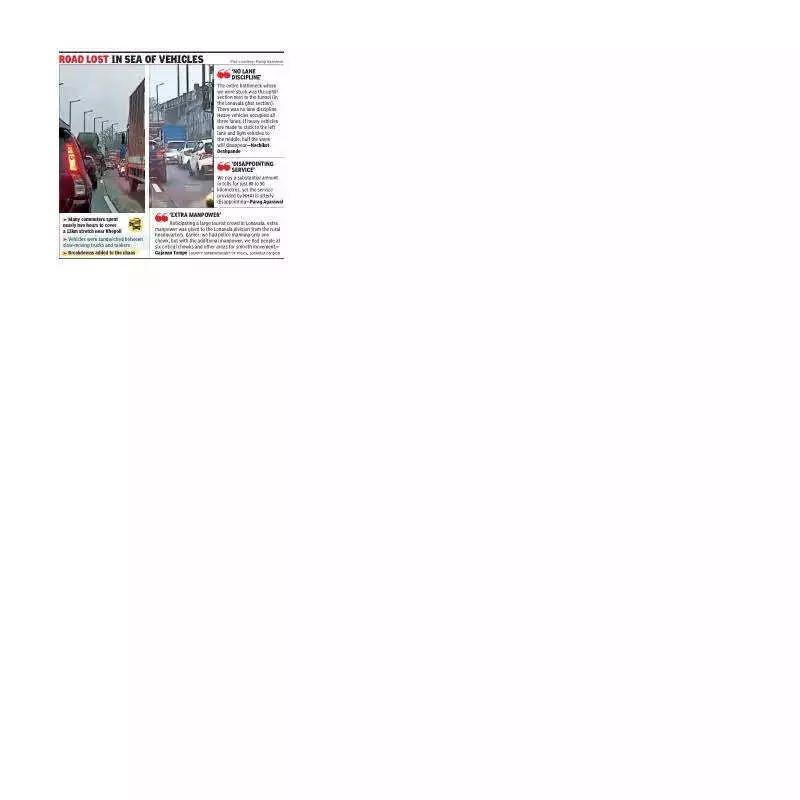
Republic Day Weekend Brings Nightmare Commute on Pune-Mumbai Expressway
The extended Republic Day weekend turned into a commuting nightmare for thousands traveling between Pune and Mumbai as massive traffic jams paralyzed the Pune-Mumbai Expressway, particularly in the challenging ghat sections. What was meant to be a celebratory long weekend quickly descended into chaos, with commuters facing unprecedented delays and expressing frustration over what they perceive as systemic failures in traffic management and infrastructure planning.
Gridlock Grips the "Speed Corridor"
From Friday night onward, the expressway—often dubbed a "speed corridor"—transformed into a parking lot. Commuters reported spending nearly two hours to cover a mere 12-kilometer stretch near Khopoli, according to Google Maps images shared by frustrated travelers. The congestion was so severe that many abandoned their weekend plans altogether after seeing routes marked in red on navigation apps.
Kedar Joshi was among those who canceled his trip to Pune to visit his parents after observing 5-10 kilometers of congestion. "My kids are young, and they would have been irritated and agitated in long traffic jams," Joshi explained, highlighting how the traffic situation disrupted family plans and caused emotional distress.

Multiple Factors Converge to Create Chaos
Several elements combined to create the perfect storm of traffic congestion:
- Poor Lane Discipline: Commuters reported all three lanes being occupied by trucks, with heavy vehicles constantly changing lanes and creating dangerous bottlenecks
- Vehicle Breakdowns: Multiple mechanical failures added to the congestion, with Raj Bogawat tweeting that "more than 30 to 50 vehicles broke down on the way" during his seven-hour journey from Dadar to Pune
- Absence of Authorities: Travelers noted a complete lack of highway police or NHAI personnel to manage the situation, particularly in critical areas
Raja Narasimhan described his morning commute as particularly harrowing: "As we approached the Lonavala exit from Pune, traffic came to a grinding halt. What should've been a smooth ride turned into a 30-minute ordeal." He specifically pointed to "indisciplined driving and a glaring lack of traffic management" as primary culprits.
Commuters Question Toll Justification and Infrastructure Planning
The extended delays sparked serious questions about the value proposition of the expressway. Many commuters questioned whether paying a Rs 320 toll was justified when journeys between Pune and Mumbai stretched to over five hours, not accounting for the significant stress and frustration experienced.
Kedar Joshi offered a broader critique of transportation planning: "The govt should seriously study the feasibility of RRTS on high-traffic routes like Mumbai–Pune–Bengaluru, supported by efficient feeder bus, tram or Metro feeder services." He emphasized that simply building wider highways wouldn't solve the problem, as new vehicles would continue to be added to the roads.
"The anticipation, planning and preventive measures for traffic congestion are absent in the govt machinery," Joshi told TOI. "It is eternally in reaction mode, which leads to huge loss of man-hours and fuel."
Police Response and Weekend Travel Patterns
Even those who attempted to beat the traffic by leaving early found themselves caught in the gridlock. Rushikesh Agre left Mumbai on Friday evening but still reached Pune around 2 AM after getting stuck on the expressway. Parag Agarawal and his family, departing Mumbai at 6 AM on Saturday for Mahabaleshwar, spent two hours navigating a ghat section that typically takes 10-15 minutes.
SP Vikrant Deshmukh of the highway safety patrol, Pune division, acknowledged the challenges: "Additional manpower was deployed by the police department in anticipation of the weekend rush, but the large number of vehicles led to blocks in the ghat area." He explained that police implemented intermittent traffic blocks from Pune to Mumbai to allow Mumbai-to-Lonavala traffic to pass, as that direction was causing significant jams.

Deshmukh noted that while there was heavy traffic toward Mahabaleshwar, particularly around Khambatki ghat, it remained moving traffic. The department had deployed additional staff and cranes to ease movement, but the sheer volume of vehicles overwhelmed these measures.
Broader Implications for Regional Transportation
The Republic Day weekend chaos on the Pune-Mumbai Expressway highlights several critical issues facing India's transportation infrastructure:
- The need for better traffic management during peak travel periods
- The importance of lane discipline enforcement, particularly for commercial vehicles
- The necessity of developing alternative transportation systems beyond road expansion
- The economic and personal costs of prolonged traffic congestion
As commuters recover from the weekend's ordeal, questions remain about how similar situations can be prevented during future holiday periods. The incident serves as a stark reminder that infrastructure development must be accompanied by effective management strategies and consideration of multimodal transportation solutions to meet the growing demands of intercity travel in one of India's busiest economic corridors.