

Indian Railways: The Critical Engine for Viksit Bharat 2047
The transport and logistics sector stands as the fundamental backbone for realizing India's ambitious Viksit Bharat @2047 vision. As the nation's primary carrier, the railways play an indispensable role in connecting remote regions while offering a sustainable and economical mode of transportation. Today, India boasts the fourth largest railway network globally and ranks as the second biggest freight carrier in the world. Recent budgetary allocations have been pivotal, with approximately Rs 2 to 2.5 lakh crores dedicated to infrastructure over the past two to three years.
Current Challenges and Performance Metrics
Despite substantial investments in track infrastructure and rolling stock, average train speeds have remained stagnant over the last decade. Freight trains typically operate at 20–25 kmph, while mail and express passenger trains average 50–52 kmph. A significant gap persists in attracting private sector involvement in critical areas such as track development, station modernization, and manufacturing units. Furthermore, competition from expressways and other transport modes necessitates a clear value proposition to increase rail's freight share from below 30% to the targeted 45% by 2030.
Strategic Recommendations for Transformation
While continued government funding remains essential, linking these investments to structural reforms is crucial for sustainable growth. Experts propose focusing on several key areas to revitalize this vital growth engine.

1. Accelerating Private Investments
Government investments alone may not suffice for long-term sectoral needs. Channelizing private capital is imperative to introduce innovative technology, enhance efficiency, and improve service quality. Drawing from Public-Private Partnership (PPP) experiences, Indian Railways should develop investor-friendly models with a robust risk allocation framework addressing regulatory, financial, construction, traffic, and operational risks. This approach would foster wider private participation, create a pipeline of projects, and promote advanced technology adoption and efficient operations and maintenance practices. Given the high capital costs and socio-economic constraints of railway projects, cost recovery mechanisms should incorporate non-tariff measures like non-fare revenue and land value capture to improve viability and returns.
2. Boosting Manufacturing Growth
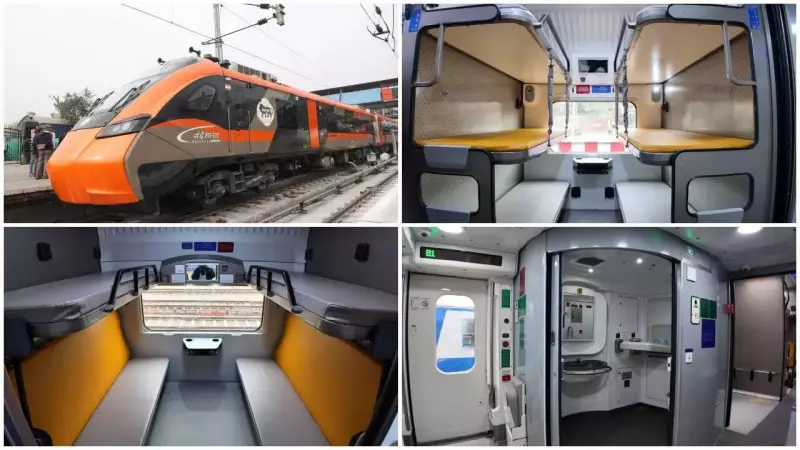
The success of indigenous manufacturing initiatives such as the Vande Bharat trains, metro coaches, and the Kavach automatic train protection system should be replicated across the rail industry. Encouraging private sector-led innovations in rolling stock, tracks, signalling, and electrical systems is vital. To position India as a global rail component manufacturing hub, exploring capacity or production-linked incentives for advanced technology components and systems is recommended.
3. Industry-Aligned Commercial Structure
The current fare and tariff structure requires realignment with the business needs of the freight sector. Implementing a tariff policy that incentivizes rail freight, encourages long-term industry commitment, and promotes efficiency and competition is essential. Potential measures include:
- Introducing a multi-operator regime
- Adopting dynamic pricing models
- Shifting to per-train pricing schemes instead of tonnage-based pricing
- Implementing time-tabled services
- Offering value-added services and return load discounts
- Enhancing multi-modal integration
These reforms would help railways capture non-bulk commodities like containerized movement, auto carriers, and parcels/light-weight shipments, including e-commerce, which are growing faster than traditional bulk commodities.

4. Expanding Dedicated Freight Corridors (DFCs)
DFCs have demonstrated the potential for efficient and faster freight services. Expanding new corridors while optimizing existing ones through higher capacity and speed-capable rolling stocks, along with intermodal freight terminals across the network, is crucial. Future corridors should be planned in a targeted, time-bound manner, leveraging both private and public investments.
5. Establishing a Supportive Institutional Structure
The above measures underscore the need for an appropriate institutional framework to drive innovative models, ensure customer satisfaction, incentivize efficiency, enhance transparency, and provide operational flexibility. An enabling regulatory framework is required to balance social obligations with business needs. Current mismatches, such as inadequate track infrastructure for passenger trains and insufficient wagon types for goods trains, lead to underutilized assets. Accelerating the implementation of safety works like Kavach 4.0 and advanced signalling systems, while reviewing lessons from 100% electrification projects, is necessary.
Conclusion: A Transformative Agenda
The upcoming budget should champion a transformative agenda focusing on capital recycling models and private sector investments in both capital creation and operations. Additionally, it should introduce industry-friendly tariff structures, incentivize rail-linked industries, and establish a robust framework for an institutional structure that promotes asset investments, competition, efficiency, and innovation, supported by human capital development. By embracing these reforms, Indian Railways can evolve into a powerful contributor to achieving the Viksit Bharat @2047 vision, solidifying its role as a cornerstone of India's economic growth and connectivity.





