Dubai Food Supply Crisis Forces Shipping Reroute to Khor Fakkan Port
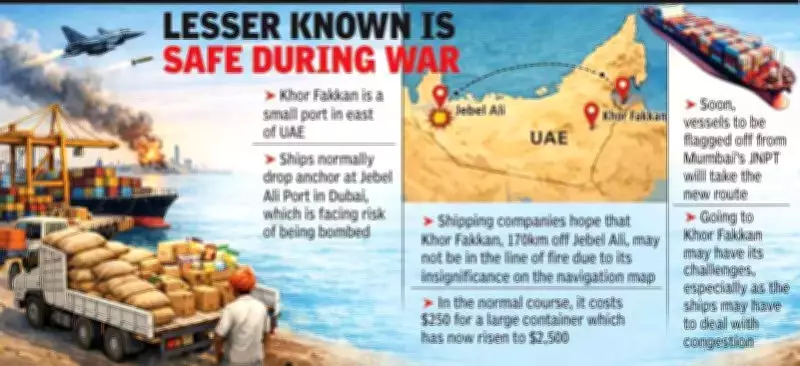
As Dubai grapples with a severe food supply crisis amid escalating regional tensions, shipping companies have implemented a critical operational shift. They are now diverting vessels to Khor Fakkan, a smaller port located on the eastern coast of the United Arab Emirates, as an emergency alternative to the primary Jebel Ali Port in Dubai.
Strategic Diversion to Avoid Conflict Zones
Jebel Ali Port, which serves as Dubai's main import hub and is heavily reliant on food shipments, currently faces significant security risks due to its potential vulnerability in the ongoing regional conflicts. Shipping lines are strategically opting for Khor Fakkan, situated approximately 170 kilometers away from Jebel Ali, under the assumption that its lower profile on global navigation maps might shield it from missile threats and military targeting.
This rerouting is not merely a logistical adjustment but a necessary response to ensure the continuity of essential food supplies to a region dependent on imports.

Exponential Freight Cost Increase
The financial implications of this diversion are staggering. Under normal circumstances, shipping a large container to Dubai costs around $250. However, the new route to Khor Fakkan has driven freight rates up to $2,500 per container—a tenfold increase.
Shivkumar Rao of M/s R&Y Logistics, a Nagpur-based company and agent for Unifeeder shipping company, confirmed this dramatic surge. "It is basically the overall risk involved in the voyage that spiked the freight," Rao explained, highlighting that war surcharges and elevated fuel costs are primary contributors to the hike.
Impact on Indian Exporters and Logistics
Indian exporters, including prominent names like Haldiram's from Nagpur, who regularly send consignments of packaged food to Dubai, are directly affected by these changes. Vessels scheduled to depart from Mumbai's Jawaharlal Nehru Port Trust (JNPT) will soon adopt the new route to Khor Fakkan. Additionally, ships already en route are being redirected to this alternate port.
A branch head of an international shipping company in Mumbai noted, "Going to Khor Fakkan may have its challenges, especially as the ships may have to deal with congestion." Despite potential logistical bottlenecks, Khor Fakkan has emerged as a crucial hub for ensuring safe passage and delivery.
Broader Regional and Economic Implications
The rerouting strategy extends beyond immediate food supply concerns. Sources indicate that apart from deliveries within the UAE, a portion of the consignments arriving at Khor Fakkan will be transported to other Gulf countries, facilitating regional trade continuity. Exports from Central India, which include textiles and machinery alongside food items, are also navigating this altered logistics landscape.
This development occurs against a backdrop of heightened regional tensions, where security measures and trade restrictions are influencing global shipping routes and costs, underscoring the interconnected nature of international trade and geopolitical stability.