

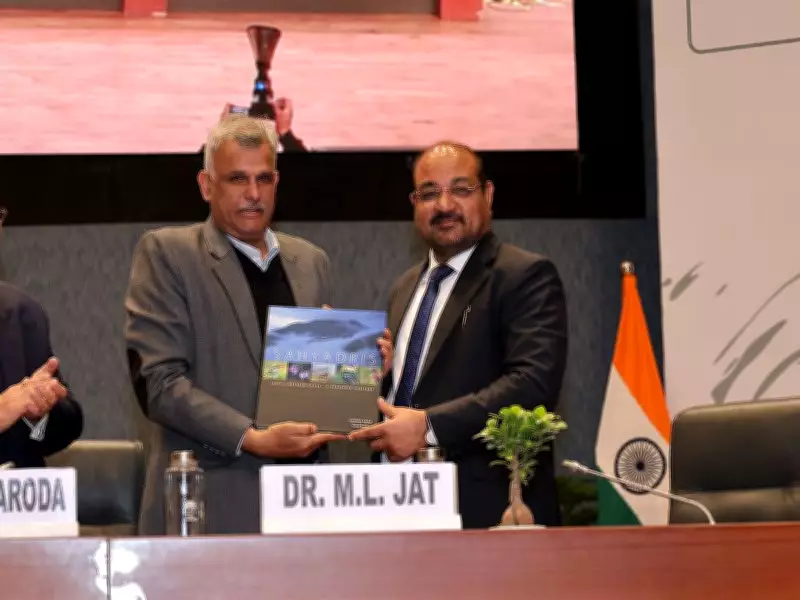
TREESCAPES 2026 Wraps Up in New Delhi, Setting Stage for Agroforestry Advancements
The Centre for International Forestry Research and World Agroforestry (CIFOR-ICRAF), in partnership with the Indian Council of Agricultural Research (ICAR), has successfully concluded TREESCAPES 2026, the inaugural South Asian Agroforestry & Trees Outside Forests (AF-TOF) Congress. This landmark event was held from February 5th to 7th, 2026, at the Bharat Ratna C. Subramaniam Auditorium within the National Agricultural Science Complex (NASC) on the Pusa Campus in New Delhi.
A Platform for Regional Collaboration and Climate Action
The three-day regional congress aimed to establish itself as a critical platform for collective discussions on enhancing tree-based agriculture and trees outside forest systems. Its primary goals were to boost climate resilience, restore landscapes, and improve agricultural livelihoods throughout South Asia. The event was attended by distinguished dignitaries, including Dr. Madan Prasad Pariyar, the Hon'ble Minister for Agriculture and Livestock Development from the Government of Nepal, and Mr. Ahmed Hassan Didi, the Hon'ble Minister of State for Agriculture and Animal Welfare from the Republic of Maldives. Senior officials from India and other South Asian nations also participated, underscoring the regional commitment to this cause.
Key Insights from Leaders and Experts
Dr. M.L. Jat, Secretary (DARE) and Director General (ICAR), emphasized the significance of agroforestry in his address. He noted, "Asia hosts some of the world's most climate-vulnerable agricultural systems, yet it possesses tremendous potential to lead in nature-based economic transformation. Recent regional studies indicate that agroforestry has contributed to reducing deforestation and avoiding tens of millions of tonnes of greenhouse gas emissions annually, while simultaneously supporting rural livelihoods. TREESCAPES demonstrates that scaling success will hinge on unlocking green finance, empowering local institutions, and integrating youth and women into extension and entrepreneurship models. For South Asia, tree-based agriculture is not merely about restoring landscapes—it is about future-proofing rural economies."

Mr. Manoj Dabas, India Country Director at CIFOR-ICRAF, highlighted a critical paradox in India's approach. He stated, "India's tree-based systems already account for nearly 20 percent of national carbon stocks, yet the country continues to import over USD 7 billion worth of wood and wood-based products annually, with this figure growing at double-digit rates. This contradiction represents a massive missed opportunity. TREESCAPES has brought together evidence showing that tree-based agriculture can reduce import dependence, strengthen rural incomes for India's 86 percent marginal farmers, and deliver measurable climate outcomes. The next phase of growth will depend on aligning carbon markets, digital traceability, and private-sector procurement with farmer realities. Agroforestry must be positioned not as an environmental add-on, but as core rural infrastructure."
Comprehensive Discussions and Thematic Focus
The congress gathered a diverse group of stakeholders, including policymakers, senior government officials, researchers, industry leaders, financial institutions, civil society organizations, farmers, and youth from across South Asia. Discussions centered on several key areas:
- Strengthening policy and regulatory frameworks to support agroforestry initiatives.
- Expanding forest certification with greater integration of smallholder farmers.
- Leveraging agroforestry and Trees Outside Forests (TOF) for enhanced climate resilience and ecosystem services.
In addition to high-level thematic sessions, the event featured:
- Digital and geospatial innovations for agroforestry.
- Strategies for water-secure and multifunctional landscapes.
- Capacity building and extension systems to support farmers.
- Enhancing trees in urban landscapes to improve environmental quality.
The congress also included four plenaries and a dedicated ministerial hour, highlighting strong political commitment to mainstreaming agroforestry and Trees Outside Forests across the region.

Aligning with India's Green Economy Goals
With India's push towards a green economy aligned with its 2070 net-zero goals, TREESCAPES 2026 emphasized the need for stronger institutional collaboration and public-private partnerships (PPP). These efforts are crucial to addressing implementation opportunities and scaling agroforestry sustainably in India. The event positioned itself as a pivotal platform to encourage effective implementation of agroforestry as a means to increase tree cover, improve farmers' incomes, and enhance livelihoods as the region moves towards a more climate-resilient future.
Organizational Partners and Thematic Collaborations
TREESCAPES 2026 was organized jointly by CIFOR-ICRAF and ICAR, with organizing partners including the ICAR-Central Agroforestry Research Institute (CAFRI) in Jhansi, the National Bank for Agriculture and Rural Development (NABARD), and the Indian Institute of Forest Management (IIFM) in Bhopal. Thematic partners comprised organizations such as GIZ, Haryana Forest Development Corporation, ITC Limited, The Nature Conservancy, Intellecap, International Water Management Institute (IWMI), Forest Stewardship Council (FSC), Indian Society of Agroforestry, and IORA Ecological Solutions. Knowledge partners included the National Academy of Agricultural Sciences (NAAS) and the Trust for Advancement of Agricultural Sciences (TAAS).
This collaborative effort underscores the comprehensive approach needed to advance agroforestry and tree-based systems in South Asia, contributing to broader environmental and economic sustainability goals.





