India Eyes Latin America for Critical Mineral Security
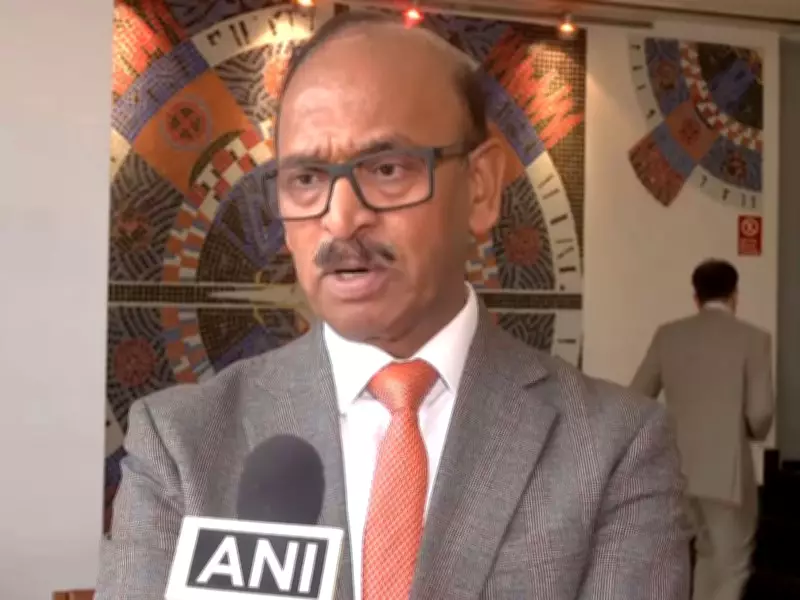
Trade agreements and deeper economic engagement with Latin American countries can help India secure reliable supplies of critical minerals and strengthen supply-chain resilience, said Ajay Sahai, Director General and CEO of the Federation of Indian Export Organisations (FIEO), on Wednesday. Speaking on the sidelines of the LAC FIRST: India-Latin America & Caribbean Business & Diplomatic Conference, Sahai highlighted ongoing efforts to expand trade arrangements with Peru, Chile, and the Mercosur bloc.
Ongoing FTA Negotiations
Sahai noted that the Indian government is upgrading the India-Chile Preferential Trade Agreement (PTA) to a comprehensive economic partnership. "We are almost ready to sign an FTA with Peru also, and our negotiations are going in expanding the India-Mercosur PTA also, bringing more countries into that and expanding the scope also," he told ANI. These moves are part of India's strategy to diversify sources of critical minerals essential for industries such as electronics, defense, and renewable energy.
Focus on Lithium and Critical Minerals
Responding to a query on lithium imports from Argentina, Sahai said Latin America is a key region under evaluation. "The government is exploring the reliable supply for the critical minerals. Latin American countries are definitely on our radar," he said, adding that these nations are also open to new investment. India's growing demand for lithium, used in batteries for electric vehicles and energy storage, makes partnerships with lithium-rich countries like Argentina and Chile strategic.

Geopolitical Shifts Drive Supply Chain Realignment
Sahai emphasized that changing geopolitical dynamics underscore the need for secure and diversified supply chains, particularly for strategic resources. "We need to increase our basket of trade also with the countries and looking into the new geopolitical challenges we are looking into a new alignment for the supply chain. Latin American countries can be part of the supply chain," he said. He added that India and Latin America can work together to develop a safe and secure supply ecosystem.
Services and Digital Infrastructure Cooperation
Beyond minerals, Sahai pointed to services and technology partnerships as growth areas. India's success in digital public infrastructure (DPI) offers lessons for Latin America. "Services will be also one option. People have talked about developing the digital public infrastructure where India has taken a lead and probably Latin American countries can learn and scale after learning from India," he said. Indian companies are also exploring investments in manufacturing in the region, using local raw materials to produce finished goods for export.
Bilateral Trade at USD 54 Billion, Potential Untapped
On trade flows, Sahai noted that India's exports to the Latin America and Caribbean (LAC) region stood at USD 21.5 billion in calendar year 2025, while imports were around USD 32.5 billion, bringing total bilateral trade to about USD 54 billion. "As of now, if you are looking into our export to LAC in calendar year 2025, it was USD 21.5 billion and import from them around USD 32.5 billion. So it's a USD 54 billion imports and exports with them, but when you are looking into the appetite of the market, I think we are nowhere near the potential," he said.
Strong Presence in Key Sectors, More Opportunities
India has established a strong presence in automobiles and auto components, pharmaceuticals, chemicals, machinery, and electrical electronics in the region. However, Sahai stressed that significantly greater opportunities remain untapped. "I think we are nowhere near the potential. We have done reasonably well in automobile and auto components, pharmaceuticals, chemicals, probably in machinery and electrical electronics. Every market is open for us. We have the capability and the time has come that we can put the potential into opportunity," he said.

Distance and Language No Longer Barriers
Addressing challenges in expanding trade, Sahai said distance and language should no longer be viewed as barriers. "I don't think prevailing challenges. It's basically a mental block. Today, distance and language are no longer a barrier," he said. He also noted that rising metals and minerals prices could increase demand in Latin American economies, creating additional opportunities for Indian exporters.
Impact of US-Iran Agreement Premature to Assess
Commenting on the proposed US-Iran agreement, Sahai said it was premature to assess its impact on global trade and economic stability. "I personally feel that we have to live in an era of unended war. I am not sure whether we will be back to normalcy because it will take little more time. Let us first see how the agreement is finally concluded. Once the agreement is concluded, we will have greater certainty on that part," he said.