

In a significant development for international trade relations, US President Donald Trump on Tuesday ended months of speculation by formally announcing a comprehensive US–India trade agreement. The landmark deal, unveiled by the American leader, includes a pivotal pledge to reduce reciprocal tariffs on Indian goods to 18% from the previous 25%, offering much-needed relief to Indian exporters who have faced competitive challenges in the US market.
Key Provisions and Unconfirmed Claims
While the finer details of the bilateral agreement remain somewhat unclear and have not been officially confirmed by the Indian government, President Trump claimed that New Delhi had agreed to a series of measures as part of the pact. These reportedly include halting purchases of Russian oil, reducing both tariff and non-tariff barriers to “zero”, and committing to purchase more than $500 billion worth of American goods over an unspecified period. The American goods covered under this commitment would span critical sectors such as energy, technology, agricultural products, and coal.
Indian Government's Response
Prime Minister Narendra Modi acknowledged the development in a post on X (formerly Twitter), describing it as “wonderful” news for bilateral relations. However, notably, the Prime Minister did not refer to any of the specific conditions outlined by President Trump or share further substantive details regarding the trade deal's provisions. This has led to some ambiguity and anticipation for official confirmation from Indian authorities.

Political Reactions and Diplomatic Context
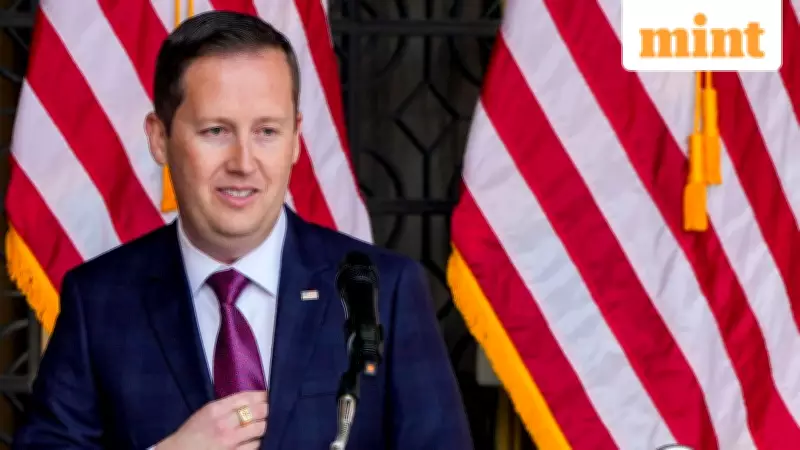
The trade deal was hailed by several political figures in the United States, including Sergio Gor, the US Ambassador to India. Gor described the bilateral relationship as possessing “limitless potential” and emphasized the expanding strategic scope of cooperation between the two nations. His endorsement underscores the diplomatic importance attached to this agreement.
Who is Sergio Gor?
Sergio Gor, born Sergey Gorokhovsky, is an American businessman and political operative with a significant role in US-India relations. According to official records, he was confirmed by the US Senate as the US Ambassador to India on October 8, 2025. Gor has held senior positions in the White House and was appointed by the Trump administration in 2025 to two key diplomatic roles: US Ambassador to India and Special Envoy for South and Central Asia.
With a global upbringing that included early years in Tashkent and Malta, Gor pursued higher education at George Washington University in the United States. Over time, he built a political career that brought him into close proximity with senior figures in the current administration. Details about his personal life, including family background, are not publicly available, adding an element of intrigue to his profile.
Gor's Role in the Trade Deal
Since arriving in India in January, Ambassador Gor has consistently framed the bilateral partnership in ambitious terms, referring to India as a resilient and innovative partner. He has argued that the United States and India have a “once-in-a-lifetime opportunity to redefine diplomacy” through strengthened economic and strategic ties.
In remarks quoted by ANI after assuming his ambassadorial role, Gor stated, “No partner is more essential than India. In the months and years ahead, it is my goal as ambassador to pursue a very ambitious agenda. We will do this as true strategic partners, each bringing strength, respect, and leadership to the table.” His proactive diplomacy has been instrumental in laying the groundwork for this trade agreement.
Economic Implications for India
The announcement of the trade deal comes after a prolonged period during which tariffs as high as 50% had severely hurt the competitiveness of Indian goods in the US market. This led to significant margin pressure and uncertainty in export-linked sectors, affecting industries ranging from textiles to technology.
With tariffs now lowered to 18%, companies with substantial exposure to the American market are expected to witness a host of positive outcomes. These include improved order visibility, margin expansion, and stronger pricing competitiveness, which could revitalize India's export economy and foster job creation in key sectors.

Overall, the US-India trade deal represents a pivotal moment in bilateral relations, promising economic benefits while raising questions about implementation and verification of the claimed commitments. As details emerge, stakeholders in both countries will be closely monitoring the deal's impact on trade flows and diplomatic cooperation.





