

US Announces Major Tariff Reduction on Indian Goods Following Modi-Trump Conversation
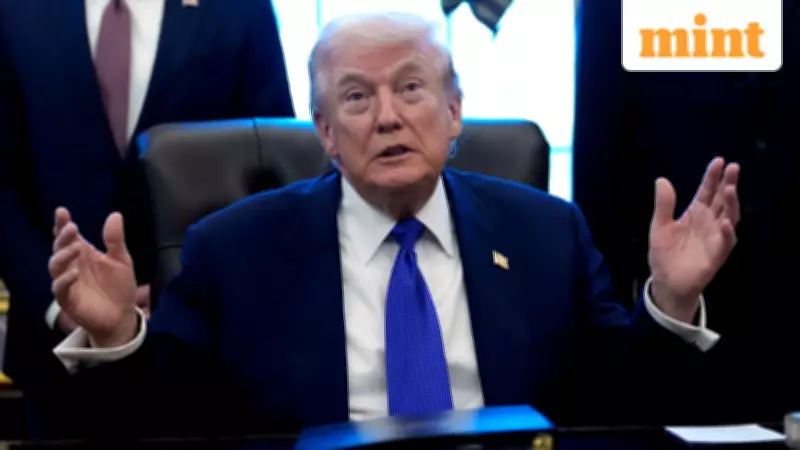
In a significant development for bilateral trade relations, US President Donald Trump has announced a substantial reduction in tariffs imposed on Indian goods. This move comes after a telephone conversation with Indian Prime Minister Narendra Modi, marking what Trump described as a "major breakthrough" following months of trade tensions between the two nations.
Details of the Tariff Reduction
According to President Trump's announcement, the United States has reduced duties on Indian imports from 25% to 18%. This represents a notable decrease from the peak tariff rate of 50% that had been imposed earlier. The White House has confirmed that this adjustment includes the removal of penalties specifically linked to India's purchases of Russian oil.
Prime Minister Modi acknowledged the development through a social media post, expressing gratitude to President Trump on behalf of India's 1.4 billion citizens. He emphasized that cooperation between the world's two largest democracies and major economies creates significant opportunities for mutually beneficial partnerships.

Geopolitical Implications and Russian Oil Claims
International media coverage has highlighted the geopolitical dimensions of this agreement. Multiple US publications reported President Trump's claim that India has agreed to reduce or completely halt its purchases of Russian crude oil as part of the deal. Trump specifically stated that India would instead increase energy purchases from the United States and potentially from Venezuela.
Energy Intelligence, citing sources within India's refining industry, reported that Indian refiners are preparing to cease purchases of Russian crude despite attractive discounts. The publication noted that during recent energy discussions in Goa, officials indicated that recent increases in Russian oil purchases do not reflect the current priorities of the Modi administration.
Broader Trade Context and Expert Analysis
The Washington Post contextualized this development within India's broader trade strategy, noting that it follows closely after India's comprehensive trade agreement with the European Union. This appears to be part of India's efforts to diversify its international partnerships amid previous tensions with Washington.
Financial markets reacted positively to the news, with the Indian rupee strengthening against the US dollar. Oil prices experienced some volatility as traders assessed the potential implications for global energy markets.
Cautious Responses and Unconfirmed Claims
Despite the confirmed tariff reduction, experts have urged caution regarding some of the broader claims associated with the agreement. Economic analysts note that while the 18% tariff rate has been officially announced, several other aspects remain unconfirmed by Indian authorities.
Specifically, claims that India has committed to purchasing $500 billion worth of American goods or will immediately cease buying Russian oil have not been formally verified by New Delhi. India's Ministry of External Affairs has not issued any official statement addressing these particular aspects of the reported agreement.
Current Trade Relationship and Market Reactions
The trade relationship between India and the United States has experienced significant strain since August, when the US imposed tariffs as high as 50% on certain Indian goods—the highest rate applied to any Asian nation at that time. These included specific penalties related to India's continued purchases of Russian oil following the Russia-Ukraine conflict.
According to recent data from the Centre for Research on Energy and Clean Air, India remains one of the largest purchasers of Russian crude, accounting for approximately 38% of Russia's exports in December 2025, second only to China.
Market analysts have expressed mixed reactions to the deal. Some energy traders remain skeptical about immediate changes to India's oil purchasing patterns, while others anticipate that US traders might be more focused on potential developments in US-Iran relations.

Economist Scott Lincicome characterized the agreement as containing "vague terms" that could represent anything from a substantial breakthrough to minimal practical impact, noting that India has approached trade negotiations cautiously in recent months.
The development represents a potentially significant shift in India-US economic relations, though many details regarding implementation and broader commitments await further clarification from both governments.





