

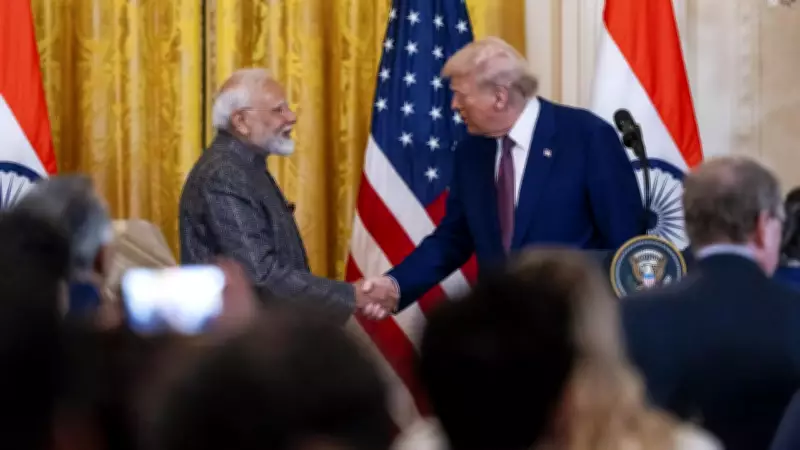
US-India Trade Breakthrough: Tariffs Slashed to 18%, Modi-Trump Seal Major Deal
In a significant development for global trade, the United States and India have announced a major breakthrough in their economic relationship. President Donald Trump and Prime Minister Narendra Modi have agreed to roll back steep tariffs and deepen bilateral cooperation, marking a reset in ties that had been strained by punitive duties and geopolitical tensions.
Key Announcements and Tariff Reductions
The centerpiece of this agreement is a sharp reduction in US tariffs on Indian goods. Effective immediately, these tariffs have been lowered to 18%, down from the previous rate of 25%. This rollback comes as a relief to Indian exporters in critical sectors such as pharmaceuticals, auto parts, chemicals, and electronics, which had been struggling under higher duties. Analysts view this move as a strategic step to restore India's competitiveness as a manufacturing alternative to China, particularly for firms integrated into global supply chains serving the US market.
President Trump described the tariff reduction as a gesture of "friendship and respect" for Prime Minister Modi. In return, India has committed to easing barriers for American exports and significantly expanding purchases from the United States. Trump claimed that Modi agreed to "BUY AMERICAN" at a much higher level, including over $500 billion worth of US energy, technology, agricultural, coal, and other products. While this figure represents a dramatic expansion of US exports to India, no specific timeline or detailed breakdown has been released yet.

Protection of Sensitive Sectors and Joint Statement
Union Commerce Minister Piyush Goyal addressed the media, confirming that the "much-awaited trade deal" with the US has been successfully concluded. He emphasized that the agreement, finalized under the leadership of Prime Minister Modi, prioritizes the interests of the nation and its people. "In the US trade deal, the sensitive sectors of India's economy, particularly agriculture and dairy, have been protected," Goyal stated, highlighting widespread enthusiasm across the country.
Goyal further announced that both countries will soon issue a joint statement detailing the agreement. "We stand for the people of India. We stand for national interest. And today, 140 crore Indians are celebrating a trade deal which is under final stages of detailing between the negotiating teams of both countries," he added. The minister assured that the deal will protect the interests of every Indian while providing huge opportunities for all.
Energy and Strategic Calculations
A crucial aspect of the deal involves energy trade, particularly India's oil purchases. President Trump directly linked the tariff reduction to India's commitment to stop buying Russian oil and increase purchases from the United States and potentially Venezuela. A White House official confirmed that the separate 25% tariff tied to Russian oil purchases would be dropped under the agreement. However, Russia has clarified that it has not received any official communication from India regarding plans to halt oil imports, adding a layer of uncertainty to this aspect of the deal.
Prime Minister Modi responded warmly to the announcement, praising Trump's leadership as "vital for global peace, stability, and prosperity." He emphasized that when two large economies and the world's largest democracies work together, it benefits their people and unlocks immense opportunities for mutually beneficial cooperation. This tone suggests that New Delhi views the deal as reinforcing its position as a key US partner and a geopolitical counterweight to China.
Criticisms and Unanswered Questions
Despite the positive political messaging, not everyone views the deal as an outright win. Critics argue that the new 18% tariff rate remains significantly higher than the average of about 2.5% that American importers paid on goods from India before Trump's tariff policies. Dan Anthony of We Pay the Tariffs, representing over 800 US small businesses, described the deal as locking in a rate six times higher than previous levels, warning that reduced tariffs still function as taxes on US importers and consumers.

Many details of the agreement remain unclear. Michael Kugelman, a South Asia expert, points out that in the absence of a formal joint statement, it is difficult to ascertain exactly what has been agreed upon. While Trump claimed India would stop buying Russian oil and purchase $500 billion worth of American goods, India has only confirmed the tariff reduction to 18%. A White House official suggested the understanding involves India ceasing Russian oil imports altogether, but practical implementation remains uncertain.
Broader Implications and Future Negotiations
This trade breakthrough follows a period of intense negotiations and comes on the heels of India's recent agreements with the European Union, the UK, Oman, and New Zealand. These efforts reflect India's strategic push to diversify markets amid US tariff volatility. By striking a deal with Washington, New Delhi avoids overreliance on any single bloc and strengthens its negotiating position in other international agreements.
Richard Rossow, senior advisor at the Center for Strategic and International Studies, praised India's measured approach during negotiations. He noted that Washington was keen to reduce its trade deficit with India, which currently stands at around two to one. "This time, India didn't fight back. They put their head down, kept negotiating, and tried to comply," Rossow said, crediting India for avoiding escalation.
Looking ahead, former US trade official Mark Linscott expects future negotiations to address wider issues such as digital trade, technical barriers, sanitary rules, and intellectual property. The current agreement, while significant, may serve as a foundation for more comprehensive trade discussions between the two nations.
The reduction of US tariffs to 18% is expected to stabilize trade flows and ease uncertainty for businesses that had shifted supply chains to India after being urged to reduce dependence on China. Analysts believe this accord could defuse tensions and rebuild confidence in the economic relationship between the world's largest democracies.





