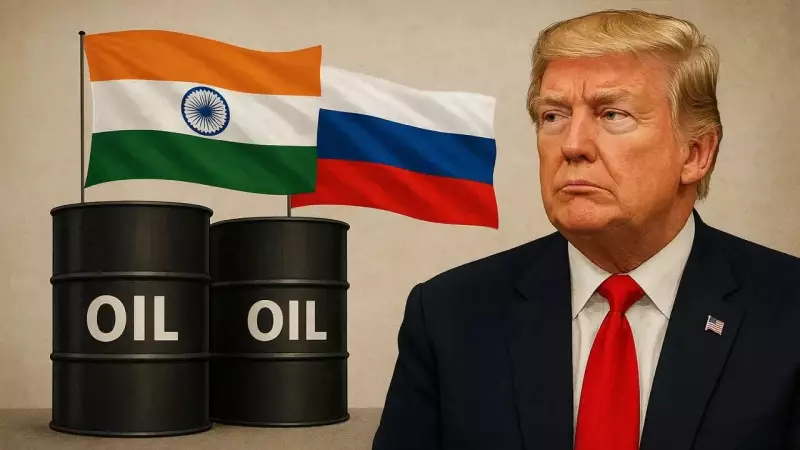
In a significant development that could ease trade tensions between Washington and New Delhi, US Treasury Secretary Scott Bessent has suggested there might be a "path" to removing the 25% tariffs imposed on India for its purchases of Russian oil. Speaking at the World Economic Forum in Davos, Bessent claimed these penalties have already achieved their primary objective by dramatically reducing Indian imports from Russia.
Tariffs Have "Achieved Their Aim" According to US Official
Bessent argued that Washington's tariff imposition has delivered concrete results in altering India's energy procurement patterns. "We put 25% tariffs on India for buying Russian oil and the Indian purchases by their refineries of Russian oil have collapsed. So that is a success," he stated during his conversation with Politico. The Treasury Secretary emphasized that while the tariffs remain in place currently, he envisions a potential pathway for their removal, describing the policy outcome as "a check and a huge success."
Criticism of European Union's Approach
In his remarks, Bessent took direct aim at European countries engaged in free trade agreement negotiations with India, accusing them of indirectly funding Russia's military campaign in Ukraine through their trade policies. "I will also point out that our virtue signaling European allies refused to do it because they wanted to sign this big trade deal with India," he asserted.

The US official provided detailed context about the shifting dynamics of India's oil imports, noting that before Russia's invasion of Ukraine, only about 2-3% of oil processed by Indian refineries originated from Russia. Following sanctions and subsequent price discounts, this proportion increased significantly to approximately 17-19%. Bessent highlighted what he called "the ultimate act of irony and stupidity" - European nations purchasing refined petroleum products from India that were originally derived from Russian crude, thereby "financing the war against themselves."
Timing Ahead of Key Diplomatic Visits
These comments come just days before European Council President António Luís Santos da Costa and European Commission President Ursula von der Leyen are scheduled to visit India between January 25 and 27. During their stay, the European leaders will serve as chief guests at India's 77th Republic Day celebrations and co-chair the 16th India-EU Summit on January 27, where trade discussions are expected to feature prominently.
Clarification of US Position on Energy Purchases
Earlier in the week, Bessent further elaborated on the American stance regarding India's Russian oil imports during an appearance on Fox News. He explained, "India started buying Russian oil after the (Ukraine) conflict began, but President Trump put a 25 per cent tariff on them, and India has geared down and has stopped buying Russian oil."
This clarification follows India's previous characterization of the US tariff action as "unfair, unjustified and unreasonable," with New Delhi consistently maintaining that its energy decisions are driven by national interest considerations and prevailing market conditions.
Broader Context of US-India Trade Relations
The tariff discussion occurs against a backdrop of wider strains in bilateral trade relations between the United States and India. Former President Donald Trump has imposed tariffs totaling 50% on various Indian imports, with energy connections to Russia emerging as a central flashpoint in the economic relationship.
Trade adviser Peter Navarro has repeatedly criticized New Delhi's trade policies, previously describing India as the "Maharaja of tariffs" and framing Russian oil purchases as a matter of national security concern. Navarro has also questioned why US-developed artificial intelligence platforms serve substantial overseas user bases, including those in India, as part of his broader critique of international trade arrangements.
European Commission Tightens Sanctions Framework
Meanwhile, the European Commission has moved to strengthen its sanctions regime, explicitly stating that refined oil products derived from Russian crude oil fall under its import prohibition measures. The Commission has clarified that individual member states bear responsibility for enforcement and implementing appropriate penalties for violations.

India has consistently defended its imports of Russian crude oil, emphasizing that its energy sourcing decisions are fundamentally driven by market conditions and national energy security requirements rather than political considerations.