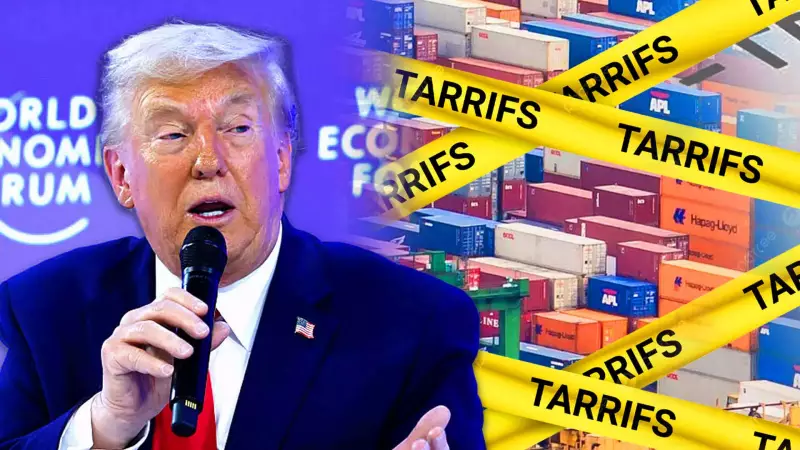
In a significant development at the World Economic Forum in Davos, the United States has publicly characterized its tariff pressure on India as a strategic success. Treasury Secretary Scott Bessent asserted that the 25 percent tariff imposed on India due to its purchases of Russian oil has effectively accomplished its intended objective. He highlighted that Indian refinery imports from Russia have experienced a sharp and notable decline, attributing this shift directly to the punitive measures enacted by Washington.
Diplomatic Signals and Geopolitical Implications
While the tariff penalty remains actively in place, the United States has now signaled a potential rollback, suggesting that diplomatic avenues are beginning to open between the two nations. This indication comes at a critical juncture, even as industry analysts point out that Russian crude continues to flow into Indian markets. The persistence of these imports is largely driven by favorable pricing advantages and the stability offered by long-term contractual agreements, which complicate the immediate cessation of such trade.
Transatlantic Tensions Exposed
Bessent's remarks also brought to light underlying transatlantic fault lines, as he openly criticized the European Union for its failure to impose similar tariffs on India. This criticism is particularly pointed given that the EU is concurrently negotiating a favorable free trade agreement with India, creating a perceived inconsistency in approach. The Treasury Secretary's comments underscore the complex interplay between trade policies and diplomatic relations on the global stage.

India's Energy Security and Geopolitical Alignment
For India, this entire episode serves as a stark reminder of how decisions related to energy security are increasingly being recast as tests of geopolitical alignment. The intricate entanglement of oil procurement, international trade dynamics, and diplomatic maneuvering highlights the multifaceted challenges faced by nations striving to balance economic interests with strategic partnerships. As global energy markets evolve, India's choices in this arena will continue to be scrutinized and influenced by broader geopolitical currents.
The situation remains fluid, with ongoing discussions likely to shape future trade and energy policies. Observers will be closely monitoring how India navigates these pressures while maintaining its energy security and economic stability in an increasingly interconnected world.