

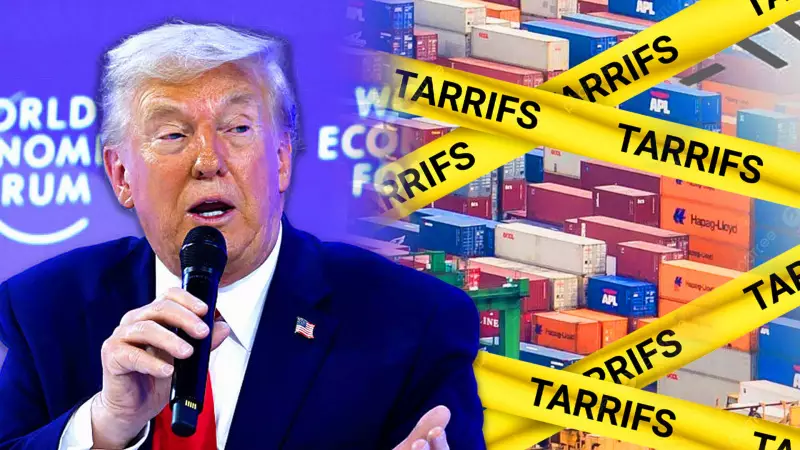
US Declares Tariff Pressure on India Successful, Signals Potential Rollback at Davos
In a significant development at the World Economic Forum in Davos, the United States has publicly characterized its tariff pressure on India as an effective policy achievement. Treasury Secretary Scott Bessent asserted that the 25 percent tariff imposed over India's procurement of Russian oil has successfully accomplished its intended objective.
Declining Imports and Diplomatic Signals
Bessent highlighted that Indian refinery imports from Russia have experienced a sharp and noticeable decline since the implementation of the punitive tariff measure. While the penalty remains actively in place at present, Washington has now sent clear diplomatic signals that it could potentially be rolled back in the near future. This suggestion indicates that diplomatic space between the two nations may be opening for constructive dialogue and negotiation.
Analyst Perspectives on Continued Russian Crude Flow
The American statement emerges even as independent energy analysts maintain that Russian crude continues to find its way into Indian markets through established channels. These experts point to compelling pricing advantages and existing long-term contractual agreements that continue to facilitate this energy trade relationship between New Delhi and Moscow.

Transatlantic Criticism and Geopolitical Implications
Secretary Bessent's comments at the international forum also revealed emerging transatlantic fault lines in global energy policy. He specifically criticized the European Union for failing to impose similar tariff measures on India while simultaneously negotiating what he characterized as a favorable free trade agreement with the South Asian nation.
For India, this entire episode underscores how fundamental energy security decisions are increasingly being reinterpreted as tests of geopolitical alignment in the contemporary international landscape. The intricate entanglement of oil procurement, international trade dynamics, and diplomatic relations has created a complex scenario where economic decisions carry significant political weight.
The Davos statements reflect Washington's attempt to frame its economic pressure as both successful and potentially reversible, while simultaneously calling out what it perceives as inconsistent approaches among Western allies regarding energy trade with nations purchasing Russian commodities.






