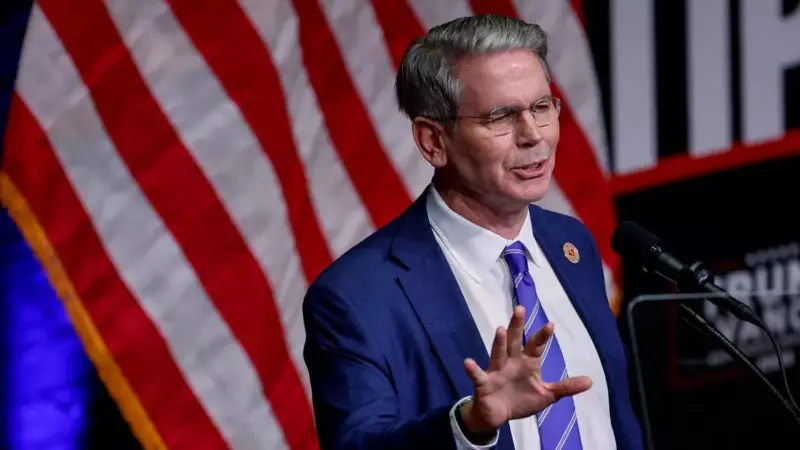
In a significant development ahead of the anticipated conclusion of India-EU trade deal negotiations, US Treasury Secretary Scott Bessent has highlighted the impact of American tariffs on India's oil imports from Russia. Bessent asserted that these tariffs have led to a dramatic collapse in Indian purchases of Russian oil, a move he termed a major policy success.
US Tariffs Drive Down Indian Imports of Russian Oil
During an interview with Politico, Bessent revealed that the imposition of 25 per cent tariffs on India for acquiring Russian oil resulted in a sharp reduction in such imports by Indian refineries. He emphasized that these tariffs remain in effect, though he suggested there might be a pathway to remove them in the future. "We put 25 per cent tariffs on India for buying Russian oil, and the Indian purchases by their refineries of Russian oil have collapsed. So that is a success. The tariffs are still on. The 25 per cent Russian oil tariffs are still on. I would imagine that there is a path to take them off," Bessent stated.
EU's Refusal to Impose Tariffs Linked to Trade Deal Ambitions
Bessent also pointed out that European Union allies chose not to implement similar tariffs, attributing this decision to their desire to finalize a substantial trade agreement with India. "I will also point out that our virtue signalling European allies refused to do it because they wanted to sign this big trade deal with India," he remarked. This stance comes as India and the EU have made rapid progress in their negotiations, closing nearly 20 out of 24 chapters over the past six months, with aims to conclude talks imminently.

Historical Context and Irony in Oil Trade Dynamics
Before Russia's invasion of Ukraine, Russian oil constituted only 2-3 per cent of India's total oil imports. Post-invasion, this share surged to 18-19 per cent, enabling India to reap significant profits. Bessent highlighted an ironic twist, noting that European nations were purchasing refined products from Indian refineries that processed Russian oil, thereby indirectly financing the conflict against themselves. "...but in the ultimate act of irony and stupidity, guess who was buying the refined products from the Indian refineries made from Russian oil ...the Europeans. They are financing the war against themselves," he observed.
Broader Sanctions and Trade Implications
In addition to tariffs on India, the United States has imposed sanctions on Russia's major oil companies, Rosneft and Lukoil, to undermine Moscow's war funding capabilities. The European Union has also enacted multiple sanctions packages against Russia, including measures to prohibit imports of petroleum products refined from Russian crude via third countries. Official trade data indicates a notable shift, with India's imports from Russia declining by over 18 per cent between April and October last year, while imports from the US jumped by 62 per cent during the same period.
Recent Developments and Future Prospects
Recent actions include Indian public sector refiners securing a one-year deal for American liquefied petroleum gas imports, and India opening its nuclear sector amid US pushes for nuclear energy expansion. Furthermore, US Trade Representative Jamieson Greer acknowledged that India has presented a strong offer in trade talks, though challenges persist due to India's resistance to importing American agricultural products. The political landscape also saw US Republican Senator Lindsey Graham mention a proposed bill for hefty tariffs on countries trading Russian uranium and petroleum products.
As negotiations between India and the EU near a critical juncture, the interplay of tariffs, sanctions, and trade deals continues to shape global economic relations, with significant implications for India's energy strategy and international partnerships.