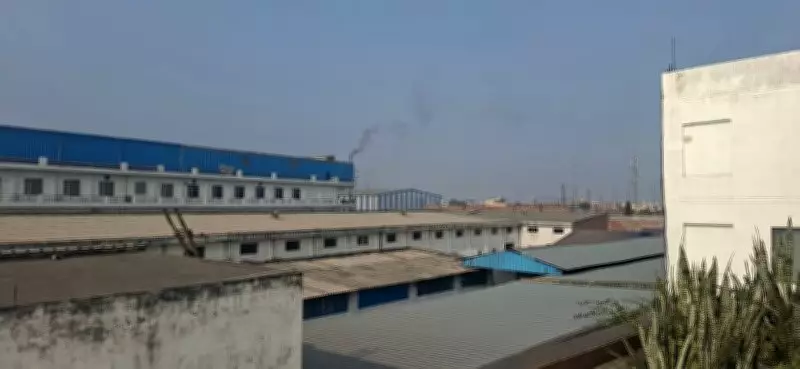
Iran-Israel-US War Severely Disrupts Panipat's Industrial Chain
The Old Industrial Area of Panipat, already grappling with challenges from the Russia-Ukraine war, inflation, European market disruptions, the Israel-Hamas conflict, and Trump's tariffs, is now facing intensified pressure due to the Iran-Israel-US war. This new conflict has severely affected industrial production, leading to a cascade of issues including shortages, cost surges, and labor exits.
Production Chain Disrupted by LPG Shortages and Rising Costs
Industrial production in Panipat has been hit hard by a critical shortage of liquefied petroleum gas (LPG), a sharp increase in yarn prices—especially polyester—higher packaging material costs, elevated dyeing charges, rising freight rates, and extended delivery times to buyers. The dyeing process, considered the backbone of the textile and handloom industries, has been particularly impacted due to LPG shortages, disrupting the entire industrial processing chain.
According to industry reports, around 400 dyeing units in Panipat have shut down due to LPG shortages, while piped natural gas (PNG) supply to about 150 units has been cut by up to 60%. Units in Barhi and Kundli reliant on LPG are also facing shutdowns. Nitin Arora, president of the Panipat Dyers' Association, noted that over 150 LPG-dependent units in Sector 29 Part-2 have closed, with additional closures in outer areas and restricted operations for PNG units.

Cost Surges and Export Challenges
Vinod Dhamija, chairman of the Haryana Chamber of Commerce and Industries, Panipat chapter, highlighted that the conflict has affected the entire industrial chain, not just gas-based industries. Prices have surged nearly 80% overall, with polyester yarn up by about 40% and cotton yarn by around 20%, pushing production costs to unsustainable levels. Shipment timelines have lengthened from 20 days to over 40 days, accompanied by higher freight charges, leading overseas buyers to cancel or put orders on hold.
Panipat's handloom and textile products, exported globally with an annual turnover of about Rs 60,000 crore (exports around Rs 20,000 crore), include items like bath mats, rugs, carpets, bedsheets, and curtains. However, the disruption has caused a decline in production across nearly all sectors, impacting industries in Bapoli, Mandi-Israna, Barhi, Kundli, and Rai areas.
Labor Migration Adds to Strain
A significant labor shortage has emerged as workers return to their native villages due to the unavailability of LPG for cooking. Despite industrialists distributing electric induction cookers, migration continues as many landlords prohibit their use. Vijender Jain, general secretary of the Barhi Industrial Zone, emphasized that labor migration is a major concern, with workers struggling to refill small cylinders and facing high costs.
Subhash Gupta, director of the Kundli Industrial Area, added that exports of utensils from Kundli have also been hit, and workers are leaving because they cannot obtain cooking gas for rented accommodations. This exodus further strains an industry already under pressure for three years, with around 60% of production impacted across sectors.
Industry Leaders Voice Concerns
Narender Nanda, vice-president of the Barhi Industrial Zone, stated that the industry faces further difficulties due to the conflict, with rising prices of petroleum products, yarn, dyeing chemicals, and packaging materials. Chemicals sourced from Gujarat have been affected by gas supply issues, pushing costs higher. Amit Gupta, president of the Barhi Industrial Zone, noted that over 125 LPG-dependent units out of 650 operational ones are badly affected, with 60% of units in textiles disrupted.
The Iran-Israel-US war has thus created a perfect storm for Panipat's industries, exacerbating existing challenges and threatening the region's economic stability.