West Asia Conflict Threatens Andhra Pradesh's Cashew Industry with Import Crisis
The escalating unrest in West Asia is poised to deliver a severe blow to Andhra Pradesh's vital cashew industry, creating significant challenges for raw cashew imports that are both operationally difficult and financially burdensome. The state's cashew sector remains critically dependent on imported raw cashew nuts, primarily sourced from African nations, several of which have implemented temporary export restrictions amid the regional tensions.
Immediate Impact on Processing Units
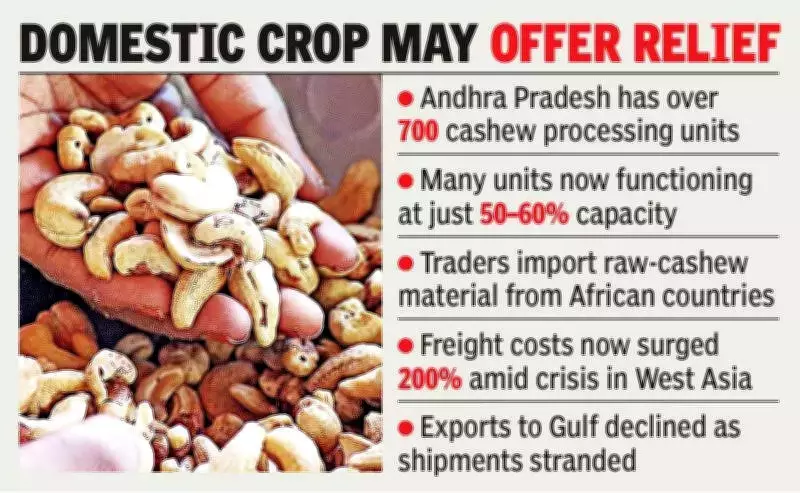
As a direct consequence of these developments, cashew processing facilities across Andhra Pradesh may confront substantial shortages beginning as early as next month. Approximately 700 cashew processing units operate throughout the state, with nearly 350 factories concentrated specifically in the Palasa–Kasibugga region of Srikakulam district. Many of these units are already functioning at significantly reduced capacity levels, operating at just 50–60% of their full potential.
The collective output from Srikakulam's processing facilities amounts to approximately 60,000 kilograms of cashew kernels produced daily, highlighting the substantial economic contribution of this industry to the regional economy.

Dependence on Imported Raw Materials
Despite domestic cashew cultivation covering approximately 1.2 lakh hectares across the state, nearly 40% of existing cashew trees are over 25 years old, resulting in lower-quality kernel yields that cannot meet industry demands. This limited local supply forces processors to rely heavily on imports from multiple international sources including Ghana, Ivory Coast, Benin, Tanzania, Indonesia, and other countries, primarily transported via sea routes.
Logistical and Financial Disruptions
According to Malla Kantarao, vice-president of the Andhra Pradesh Cashew Manufacturers' Association (APCMA), the escalating tensions in West Asia have created severe disruptions across multiple operational areas including logistics, payment systems, and export channels. Sea freight rates have experienced dramatic increases, surging over 200% in recent weeks, which has forced numerous processing units to completely halt their import activities.
"The situation has become increasingly challenging for the entire industry," explained industry representatives. "Export shipments of cashew kernels to Gulf countries have also declined significantly, with consignments worth hundreds of crores currently stranded due to the logistical complications."
Industry Outlook and Future Concerns
Industry experts indicate that existing raw cashew nut stocks will likely sustain processing operations until late April. The anticipated domestic cashew crop expected in May may provide temporary relief to the strained supply chain. However, if the West Asian unrest continues unabated, the industry faces the prospect of severe raw material shortages that could significantly impact production capacity and economic stability.
The cashew industry's vulnerability to international geopolitical developments underscores the need for strategic planning and diversification of supply sources to ensure long-term sustainability and resilience against global market disruptions.