The World Trade Organization's cotton discussions have revealed a significant divide between India's push for a standalone agreement and the United States and European Union's insistence on broader agricultural reforms. This clash underscores why cotton remains one of the most sensitive and contentious issues in global trade negotiations, affecting millions of small farmers across developing nations.
India's Stand on Cotton: A Development-First Approach
According to WTO documents from the 24th Dedicated Discussion on Cotton held in November 2025, India emphasized that cotton remains critical for livelihoods and rural development in developing and least-developed countries. The Indian delegation highlighted that despite long-standing mandates dating back to the Bali and Nairobi ministerial decisions, progress on cotton issues has been disappointingly limited.
India presented a comprehensive position calling for a balanced outcome that addresses multiple aspects simultaneously. Domestic support mechanisms, market access barriers, and development assistance programs all need coordinated attention according to India's submission. The country reiterated its existing commitment to duty-free access for cotton imports from least-developed countries, covering 98.2% of tariff lines.

Why Cotton Matters to India
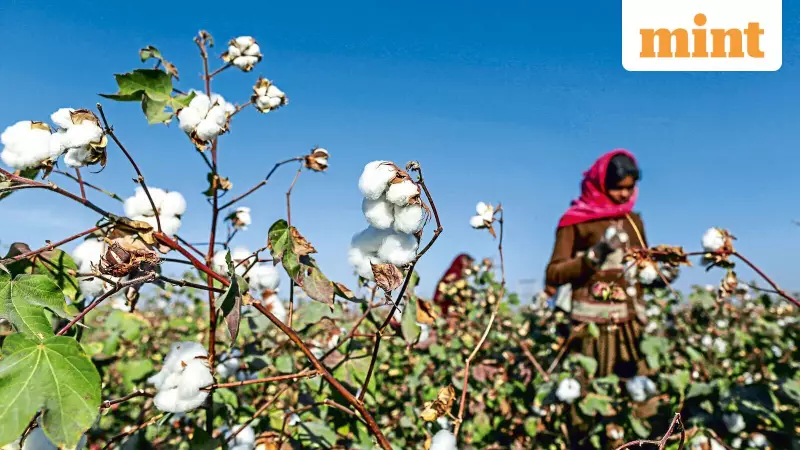
India's strong stance on cotton reflects its significant position in the global cotton ecosystem. As the world's second-largest cotton producer, India accounts for approximately one-quarter of global output. The crop is cultivated across about 13 million hectares and supports nearly 60 million people directly or indirectly.
Recent production data reveals fluctuations in India's cotton output. The 2024-25 season saw production of 29.4 million bales (170 kg each), lower than the 33.6 million bales in 2022-23 and 31.1 million bales in 2021-22. Total cotton availability, including opening stocks and imports, reached 35.74 million bales by the end of the 2024-25 season on 30 September 2025.
Export figures for the 2024-25 crop year are estimated at approximately 1.8 million bales, reflecting relatively subdued overseas shipments amid tighter domestic supply and global market volatility. Meanwhile, India's total cotton demand stood at 35.45 million bales in FY24 and declined marginally to 33.60 million bales in FY25 according to textiles ministry estimates.
US and EU Position: Comprehensive Reform Required
In contrast to India's focused approach, major developed economies including the United States and European Union argued that any decision on cotton should be integrated into a broader agreement on agricultural reform rather than addressed separately. The US maintained that piecemeal decisions could undermine comprehensive agricultural negotiations, while the EU urged pragmatism and consensus-based outcomes.
Both the US and EU acknowledged the urgency of addressing trade-distorting subsidies in cotton markets but emphasized that solutions must be part of wider agricultural reforms. This position creates a significant challenge for developing nations, particularly African countries that have been pushing for a standalone cotton outcome at the upcoming 14th WTO Ministerial Conference.
Global Cotton Production Landscape
Data from the International Cotton Advisory Committee projects global cotton production in 2025-26 at around 25.4 million tonnes. China leads with approximately 25% of global output, followed by India, Brazil, and the United States. This concentration of production among a few major players contributes to the complexity of negotiations, as domestic support policies in these countries significantly impact global markets.
The MC14 Litmus Test
Trade experts view the cotton debate as a crucial test for whether the 14th WTO Ministerial Conference (MC14), scheduled for 26-29 March in Yaoundé, Cameroon, can deliver meaningful outcomes for developing and least-developed countries. Cotton represents one of the few issues with a long-standing and explicit development mandate under the WTO framework, dating back to the Hong Kong ministerial and reinforced at subsequent meetings.

Abhash Kumar, a trade expert, noted: "Even limited progress on cotton would signal that MC14 can address core development concerns instead of remaining stalled by wider disagreements over agricultural reform." This perspective highlights the symbolic importance of cotton negotiations beyond their immediate economic implications.
The WTO, with its 164 member countries representing over 98% of global trade, faces increasing pressure to demonstrate its relevance in addressing development concerns. The cotton discussions, intensifying ahead of MC14, will likely set important precedents for how the organization balances the interests of developed and developing nations in agricultural trade negotiations.