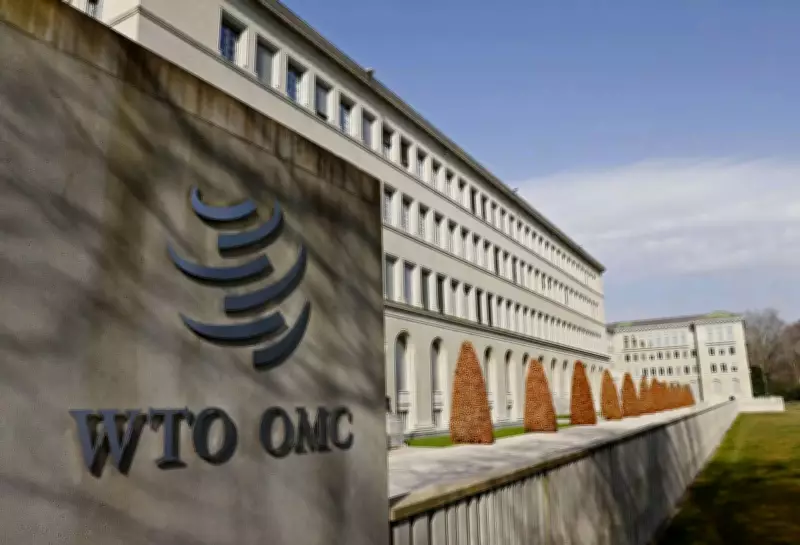
WTO MC14 Conference in Cameroon to Tackle Key Trade Issues Amid Deep Divisions
Trade ministers from 166 economies are set to convene in Yaoundé, Cameroon, from March 26 to 29 for the fourteenth ministerial conference (MC14) of the World Trade Organisation (WTO). The meeting will address a wide array of contentious topics, including agriculture, the 28-year moratorium on e-commerce transmissions, fisheries subsidies, and a China-led Investment Facilitation for Development (IFD) proposal. However, officials anticipate limited outcomes due to persistent divisions between developed and developing nations, with the conference likely focusing on extending existing arrangements rather than forging new agreements.
E-Commerce Moratorium at the Forefront of Debates
The e-commerce moratorium, which prohibits customs duties on electronic transmissions, is expected to be a central point of debate. The United States and European Union are advocating for a permanent extension, while India and other developing countries oppose it, arguing that tariffs on digital trade are crucial for industrialisation, job creation, and preserving policy space. A report by the Global Trade Research Initiative (GTRI) highlights that developing economies face estimated revenue losses as business shifts to digital, with India emphasizing the need to avoid a widening digital divide and maintain clarity on definitions of "electronic transmissions."
Agriculture and Public Stockholding Under Scrutiny
Agriculture remains a highly contentious issue, with India's public stockholding (PSH) programme at the centre of discussions. India's PSH system, which procures staples like rice and wheat at Minimum Support Prices (MSP) to support food security, is considered trade-distorting under WTO rules due to outdated 1986–88 reference prices that inflate subsidy calculations. India argues that these structural inequities disadvantage developing countries, as developed members like the US and EU retain most subsidy entitlements, and seeks a permanent solution for PSH along with stronger Special and Differential Treatment (S&DT) for small farmers. In contrast, the US, EU, and Cairns Group oppose broad exemptions, warning of trade distortions and advocating for wider negotiations on market access and subsidy reductions.

Fisheries Subsidies and Sustainability Concerns
Talks on fisheries subsidies are also likely to see limited movement, following the 2022 agreement on illegal fishing. Negotiations have shifted towards addressing subsidies linked to overcapacity and overfishing, but differences over balancing sustainability with livelihood concerns for small-scale fishers remain unresolved. India maintains that its support targets small, artisanal fishers and calls for stronger S&DT provisions, including longer transition periods. However, the US and EU argue that major economies like India and China should no longer benefit from broad flexibilities, leading to ongoing disputes.
Special and Differential Treatment Sparks Tensions
The issue of Special and Differential Treatment (S&DT) is set to add to tensions, with developed nations pushing to limit such provisions while developing countries argue they remain essential for economic growth and transition. The US and EU propose limiting S&DT mainly to least developed countries or making it conditional and time-bound, but India strongly opposes any dilution, asserting that development gaps remain wide and flexibilities are critical for industrial catch-up and livelihood protection.
Plurilateral Agreements and WTO Reforms
Plurilateral agreements, particularly the proposed IFD pact backed by over 120 countries, are emerging as another point of contention. The agreement aims to create a pre-investment appeal system, but officials have flagged concerns about whether investment falls within the WTO's mandate. India argues that such deals undermine the balance of interests between developed and developing countries and could sideline issues like farm subsidies, creating a two-tier WTO dominated by major economies. Additionally, reforms to the WTO's decision-making process will be discussed, with India and South Africa upholding consensus as the basis of a fair multilateral system to ensure developing countries have an equal say.

Dispute Settlement and Institutional Challenges
The WTO's dispute settlement system remains weakened, with the Appellate Body non-functional since 2019. While discussions on restoring the system are expected, differences over its structure are likely to persist. India favours restoring a fully functional two-tier system with a standing Appellate Body and ensuring interpretations remain member-driven. Overall, MC14 is expected to be shaped by deep divisions across major issues, leaving little room for compromise and likely resulting in continuity rather than breakthroughs.
Commerce and industry minister Piyush Goyal will lead the Indian delegation at the meeting, with India focusing on defending policy space, securing development priorities, and building coalitions in an increasingly fragmented WTO. The conference highlights the WTO's ongoing struggle to adapt to a changing global economy marked by rising tensions over power, technology, and development interests.