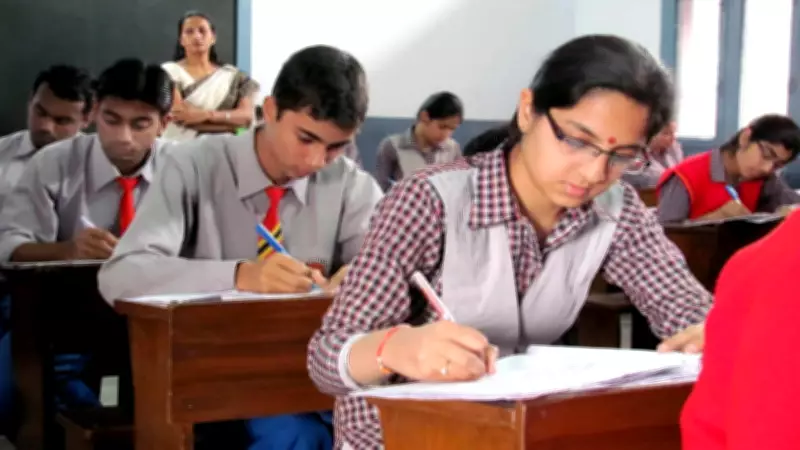
From Rituals to Routines: How Adults Look Back at Their Board Exam Memories
For many Indian students, board exams are not merely a test but a defining season etched in memory, a period when entire households realigned around a teenager's schedule. This sentiment resonates deeply with adults who now reflect on those formative years, offering insights into the pressures and peculiarities of the examination system.
Family Rituals and Collective Efforts
Muskan, a 25-year-old professional working in Pune's Vigyan Shala, recalls board exams as a collaborative family endeavor. Living in a joint family, she describes how her parents would hush others while she studied in a secluded room. "Earlier, what family or the school principal suggested based on evaluation—that used to become the career goal," she notes. Like many peers, she prepared for the IIT-JEE in Kota during her Class 12 in the 2016–17 batch, a common path for aspiring engineers.
Reflecting on the unfounded promise that 'After engineering, one can do anything,' Muskan emphasizes the critical need for individual research in career choices. "When the one option presented to you closes, you're left staring at a blank space. Then it feels demoralizing," she explains. Additionally, she points out that board exams hold special significance for many young women, citing her cousin's diligent preparation this year to secure college admission and gain independence by moving out of her hometown.

Unintentional Traditions and Lasting Impressions
Pranav Vanikar, a 25-year-old geopolitical analyst based in London, cherishes a ritual his father unknowingly created. A small act before his first exam coincided with a successful paper, leading to its repetition on every subsequent exam day. "Everyone feels like there is a lot riding on these exams," he says. "But a couple of months after they're done, nobody really looks back. Now when I think about it, I didn't need to put so much pressure on myself. But hindsight is 20/20, right?"
Systemic Changes and Personal Challenges
Varun Sharma, a CBSE 2013 graduate, experienced unique challenges as part of the first batch under the Continuous and Comprehensive Evaluation (CCE) system introduced by then HRD Minister Kapil Sibal. This allowed skipping Class 10 boards and facing Class 12 boards directly. His first paper began with a shock: a wobbly table at a government school exam center, with an unhelpful invigilator. In contrast, his home environment was supportive. "My parents were super chill. They had zero expectations. They always said one paper would never define my life," he recalls.
However, internal competition from his elder sisters studying abroad added pressure. "When the exam results came, my parents were on cloud nine, but for me it felt lukewarm," he admits. Today, as an investment banker with degrees from Japan, Varun notes, "Do I remember anything from my board exams? No. However, the atmosphere of the exam center still haunts me."
Critiques of the Education System
Ganesh Kuthwad, a history researcher who completed Maharashtra State Board exams in 2019, views board exams and engineering entrances as part of a high-pressure ecosystem. From his research perspective, he identifies a fundamental gap. "All exams felt like a competition for a good college, but we never received training in research or skills," he states. "When I look back now at all those exams, it feels like education has turned into a competition. Education should not be a competition. Now that I am a researcher in history, I see how research is done, what skills are important, and how crucial that training is. In all those exams, the pressure builds so much that you lose the process of actual learning."

Physical and Emotional Battles
Gorakh Gomase, who appeared for Maharashtra State Board exams from Nanded, describes the experience as an intense physical and emotional battle. "12th boards felt like a fight—social pressure, home pressure, relatives' pressure. It was treated like the last fight of my life," he shares. On one exam day, despite being unwell from stress, he walked three kilometers to the center and completed the paper. Now, with a postgraduate degree in history and preparing for the NET, he reflects, "Now it feels like we were running endlessly. Basic things became clear later, it wasn't necessary to take so much pressure."
These diverse stories highlight how board exams, while often stressful, shape lasting memories and impart valuable lessons on resilience, family support, and the need for systemic reform in education.