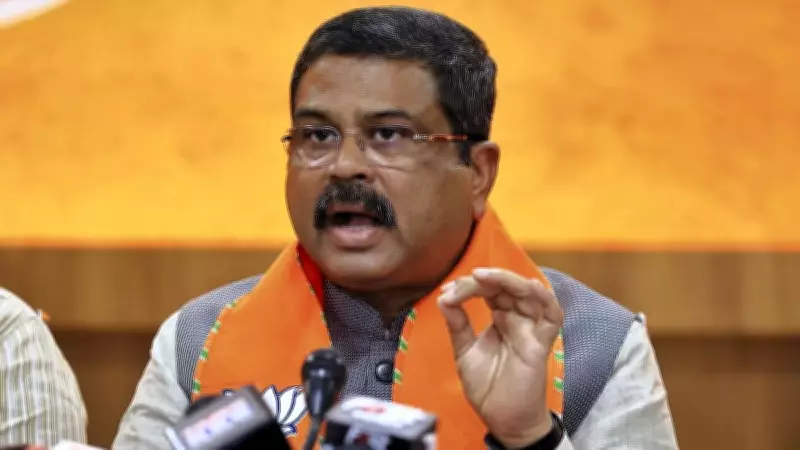
The Central Board of Secondary Education (CBSE) will implement its three-language policy on a gradual basis, with students in classes 7, 8, and 9 continuing to study their existing language combinations for the upcoming academic year, Union Education Minister Dharmendra Pradhan announced on Thursday.
Gradual Rollout for Higher Classes
Speaking to reporters after a review meeting, Pradhan stated that the policy will be phased in to ensure a smooth transition. “For classes 7 to 9, there will be no immediate change. Students will continue with the languages they are currently studying,” he said. The minister added that CBSE is expected to issue an amended order after discussions in its governing council.
Background of the Three-Language Formula
The three-language formula, part of the National Education Policy (NEP) 2020, recommends that students learn three languages: two Indian languages and one foreign language. In Hindi-speaking states, this typically means Hindi, English, and another modern Indian language; in non-Hindi states, it includes the regional language, Hindi, and English. The policy aims to promote multilingualism and national unity.

Implementation Details
Pradhan clarified that the rollout will begin from the next academic session for lower classes, with detailed guidelines to be released soon. “We are committed to implementing NEP 2020 in letter and spirit, but we also want to ensure that students and teachers are not burdened suddenly,” he explained. The minister emphasized that schools would be given adequate time to prepare and train teachers.
Reactions and Impact
Education experts have welcomed the gradual approach. “A phased implementation reduces disruption and allows schools to align curricula and resources,” said Dr. Anjali Sharma, a former CBSE official. However, some parent groups have expressed concerns about the additional workload. The CBSE governing council is expected to finalize the timeline in its next meeting.