CBSE Class 10 Hindi Examination 2026: A Comprehensive Analysis
The Central Board of Secondary Education (CBSE) successfully conducted the Class 10 Hindi examination on March 2, 2026, from 10:30 AM to 1:30 PM across India. This crucial board exam saw participation from over 25 lakh students nationwide, who tackled a three-hour paper designed to assess their proficiency in grammar, comprehension, prose, poetry, and writing skills.
Student Reactions: Manageable but Time-Consuming
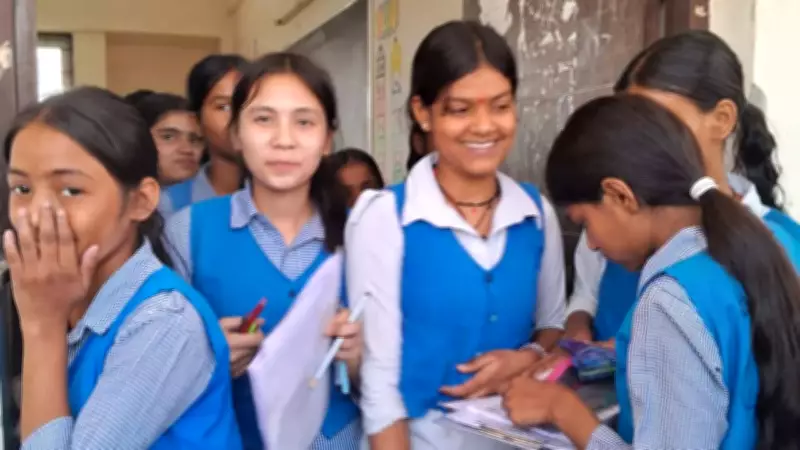
Initial feedback from students indicates that the paper was generally perceived as easy to moderate in difficulty, though many candidates found it slightly time-consuming. Students Radhika and Riya, who appeared for the exam, shared their experience: "The paper was easy but a bit time-consuming. We hope to score good marks." They added that most questions were familiar and aligned with their preparation expectations.
This sentiment was echoed by numerous students across examination centers, who reported that while the questions themselves weren't particularly difficult, the paper's length required careful time management to complete all sections comfortably. The consensus among test-takers suggests that steady pacing was essential for optimal performance.

Teachers' Professional Analysis
Educators provided detailed insights into the examination's structure and difficulty level. Sanjesh Sharma, TGT Hindi at SKV SRC Khajoori Khas Chowk, noted significant changes in the poetry section: "The poem introduction was tough. Earlier, it used to come in the options. Also, figures of speech (alankaar) used to be asked directly, but this time they were asked through examples. Students were only required to write the examples. So, this paper was a bit difficult. However, since the students' preparation was good, they did not face any problems."
Subha Chandra Jha, Deputy Head of the Hindi Department at Modern English School, Kahilipara, described the Hindi Course-B paper as moderate and strictly syllabus-based: "The question paper emphasised competency, application, and critical thinking rather than rote memorisation. The reading section included competency-based questions such as Assertion-Reason, while grammar was application-based. Writing and literature required a mix of understanding, analysis, and creativity. Overall, the paper was well-structured, balanced, and scoring."
Shweta Gupta (TGT) from JAIN International Residential School (JIRS) also characterized the paper as easy to moderate and well-balanced: "The questions were clearly framed and covered the syllabus properly. Reading and Literature were straightforward and familiar. The Writing section required proper time management but was manageable, and grammar was direct and based on textbook concepts. Most students felt confident after attempting the paper."
Section-Wise Examination Breakdown
Reading Section: The comprehension passages were competency-based and required careful understanding, incorporating analytical elements that tested students' ability to interpret content beyond surface-level reading.
Grammar Section: This portion focused on application of rules and conceptual clarity rather than mere memorization, making it particularly scoring for well-prepared students who understood fundamental linguistic principles.
Writing and Literature Sections: These sections included familiar formats and syllabus-based questions, though the length of required responses made effective time management crucial. The poetry section demanded deeper understanding, particularly regarding literary elements and contextual interpretation.
Overall Assessment and Difficulty Level
Teachers across various educational institutions described the paper as fair, syllabus-aligned, and student-friendly. While some changes in question approach, especially within the poetry section, added moderate difficulty, strong preparation enabled students to handle the examination confidently. The consensus among educators is that the Class 10 Hindi examination was rated as easy to moderate, balanced, and scoring, with time management emerging as the critical factor for success.

The examination's emphasis on competency-based questions reflects CBSE's evolving assessment methodology, which prioritizes application and critical thinking over rote learning. This approach aligns with broader educational reforms aimed at developing comprehensive language skills among secondary school students.