Happiness Eludes UPSC Aspirants Amid Tough Competition
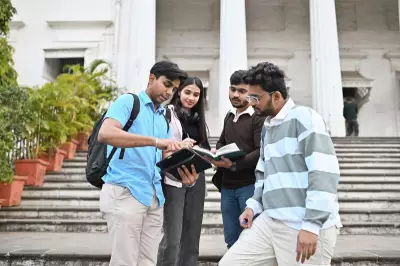
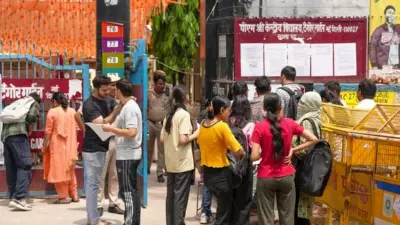
Happiness is like a mirage, the more you chase it, the more it eludes you. The World Happiness Report 2026 ranked India 116th out of 147 countries, highlighting the subjective nature of well-being. While the average Indian often wears a smile despite everyday hardships, one community finds it especially difficult to stay cheerful: UPSC Civil Services aspirants. Obsession to excel at all costs, sacrificing little moments of joy for larger goals, and ruthless competition define their journey, yet success often remains elusive despite best efforts.
Unrealistic Expectations and Exam Criticism
Unrealistic expectations from family, friends, teachers, and society add pressure on students to excel in what is touted as the toughest exam in the country, perhaps the world. Many aspirants complain they didn't get a fair chance due to unconventional exam papers, subjective evaluation, and consistently elevated standards. The Union Public Service Commission (UPSC) often finds itself isolated, facing criticism for being insensitive to aspirants' aspirations by setting tough papers that even AI tools find difficult to decode.
UPSC Centenary: A Remarkable Milestone
The UPSC officially marked its centenary year from October 1, 2025, to October 1, 2026, commemorating 100 years since its establishment on October 1, 1926. It is no mean feat for any institution to last credibly in a dynamic political landscape and successfully execute a century of merit-based recruitment and public service. Amid debates over paper leaks, nepotism, and corruption, UPSC has stood the test of time, staying true to its essence and meeting golden standards without any major blemish—a remarkable milestone deserving admiration. The commission has gracefully evolved from a colonial era institution into a constitutional body, delivering its core mandate: to find the best competent minds to serve India's national interests in its quest to become Viksit Bharat by 2047, the centenary of India's independence.

Balancing Fairness and Aspirant Concerns
Politics-administration dichotomy does not exist in its true essence now. Yet, just as politicians are elected to express the will of the people, administrators are selected to execute it. Selecting the right person for the right job is a Herculean task when a nation is going through a once-in-a-generation demographic dividend. Any compromise in selection could derail the nation's quest to become an economic superpower and convert the demographic dividend into a demographic disaster, which no nation can afford given complex geopolitical security impediments. The real litmus test for UPSC is to balance conducting a fair, impartial exam without alienating sincere aspirants who genuinely wish to serve the nation. Wild accusations by some aspirants and self-appointed social media crusaders that the exam is unfair, unpredictable, based on sheer luck, or deviating from the syllabus create unnecessary anxiety among fresh aspirants. A few experimental questions intentionally framed not to be attempted—to test decision-making abilities and clarity of thought—are attacked venomously for social media polarization goals.
Historical Context and Adaptability
The Charter Act of 1853 introduced an open competition system for recruitment to civil services, deviating from the unfair patronage system. The Macaulay Committee in 1854 (the committee on the Indian Civil Service) strongly advocated that the competitive examination should be of a high standard and ensure selection of candidates with thorough knowledge. UPSC has tried to ensure that the examination for elite services like IAS, IFS, and IPS stands out in terms of innovative, fresh questions of the highest standard, based on thorough conceptual and factual knowledge rather than superficial rote learning within the prescribed syllabus.

Attitude Over Aptitude: The Key to Success
Aspirants need to adapt to the changing dynamics of exams with a positive mindset rather than being overly pessimistic about the examination system itself. It is not just the right aptitude (tested in the CSAT paper) but the right attitude that is required to ace the examination, which rewards successful candidates with unmatched powers to be change-makers of the future. Anything worth cherishing has a price and a difficult journey; there are no freebies on a platter. The exam is not just about knowledge but about perseverance and a never-say-die attitude despite odds. A true aspirant never complains bitterly or gets distracted by external noise; he trusts his capabilities to calmly rise to challenges with a positive mindset. As a paraphrase of Darwin's natural selection theory still holds true: 'It is not the strongest of the species that survives, nor the most intelligent, but the one most adaptable to change.'