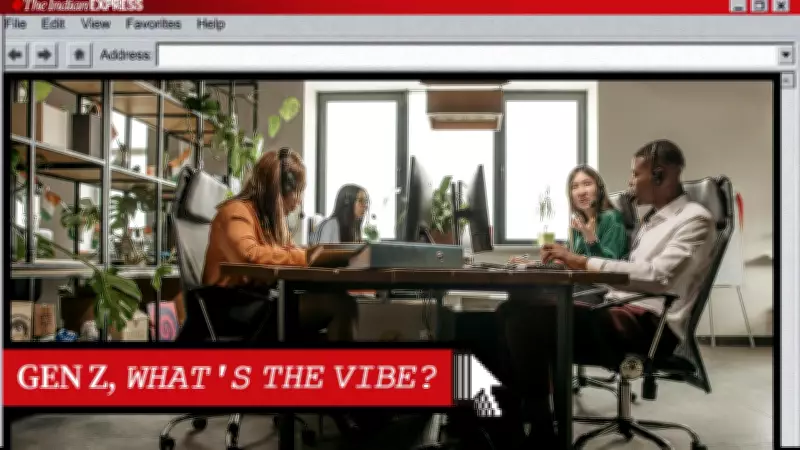
Gen Z Redefines Professionalism: From 'Yes, Boss' to 'Circle Back Tuesday'
For decades, the concept of professionalism in the workplace came with an unspoken set of rules that employees were expected to follow without question. This included answering calls after hours, feeling guilty for taking leave, and silently enduring when seniors took credit for their work. The environment was often dressed up with modern amenities like glass buildings and corporate jargon, but beneath the surface, exhaustion was the prevailing norm.
Now, with Gen Z entering the workforce, this traditional framework is being challenged. This generation is not adhering to the old memo; instead, they are redrawing the lines between work and personal life, sparking a heated debate about what constitutes true professionalism and healthy work culture.
Setting Boundaries: A Shift in Workplace Dynamics
Gen Z employees are increasingly refusing to pick up calls at 10 PM simply because a boss is available, taking leave without apology, and questioning unpaid opportunities disguised as learning experiences. They are also calling out disrespect, even when it comes from those in senior positions. To some observers, this behavior appears as indiscipline, but to others, it represents a generation that refuses to confuse burnout with ambition.

Across various industries, young professionals are quietly—and sometimes loudly—redefining workplace ethics. The core of their pushback is not about laziness but about dignity and respect. As Vrushali Patil, a young PR executive, shares, "We brought workplace toxicity to the attention of upper management, but we were the newbies; they didn't trust us and said that this is how it is supposed to be."
Communication Over Confrontation
Samruddhi Vaidya, a senior manager in the Public Relations industry, notes that boundary-setting often revolves around clear communication rather than confrontation. In an industry driven by urgency, weekend messages are common, but Gen Z employees are changing the approach. They provide clear timelines that align with their days off, reassuring clients with phrases like "We'll circle back by Tuesday." This small shift rejects the expectation of instant availability without rejecting the work itself.
For Gen Z, respect is considered a baseline requirement, not a bonus. Mohit Negi, a corporate employee, resigned after witnessing a competent colleague being unjustly terminated, stating, "If they could do this to them, why wouldn't they do it to me?" His loyalty was conditional on fairness and psychological safety, highlighting a recalibration of workplace values.
Not Rebellion but Recalibration
Karthik, a growth strategy manager who has managed Gen Z teams, emphasizes that this shift is not about generational conflict but systemic issues. He observes that Gen Z employees are honest about their needs and provide direct feedback, leading to faster alignment and more genuine collaboration. However, he clarifies that boundaries should not equate to a lack of ownership. "If something is genuinely urgent, flexibility matters. If you are unavailable, communication matters. Ignoring responsibility in the name of boundaries is not fairness; it is avoidance."
He points out that poor planning, unclear priorities, and cultures where everything is labeled urgent create friction. Gen Z employees are simply refusing to tolerate dysfunction silently, pushing for more efficient and respectful systems.
Blurring Boundaries: A Double-Edged Sword
Not everyone views this shift as progress. Viveka Nagar, a senior media professional with over 14 years of experience, believes that the conversation around boundaries sometimes overlooks accountability. She shares instances where urgent tasks were sidelined for personal activities like dance classes or grooming appointments during core hours. "Leaves and personal space are very important for mental health, but I also believe that some level of professionalism is important to maintain office decorum," she says.
This tension raises critical questions: Where does self-respect end and unprofessionalism begin? Who determines what is truly urgent? Are older managers struggling to adapt, or are younger employees underestimating responsibility?

A Wake-Up Call for Leadership
Jeel Gandhi, CEO of Under25, argues that the scrutiny faced by Gen Z reflects more on outdated systems than on their discipline. "What people are calling stern boundaries are actually a healthy practice that should have been normalized years ago," she says. For Gen Z, dedication is measured by outcomes rather than hours, and efficiency is prioritized over performative busyness.
Gandhi notes that this generation is navigating unprecedented challenges, including economic volatility and climate change, and they seek leaders who are honest, emotionally intelligent, and communicative. "Demanding loyalty without offering purpose, development, and a vision is an empty offer for them," she adds. In a country with high burnout rates, this insistence on balance may be less about entitlement and more about survival.
Conclusion: A Cultural Evolution
Gen Z is fundamentally challenging the notion that suffering is a job requirement. While there are instances where boundaries might be misused, and accountability remains crucial, this generation is openly questioning whether constant availability and fear-based respect should define professional life. The discomfort observed in offices today may signal not a decline in work ethic but a necessary cultural evolution.
The question is no longer just "Are you dedicated enough for this job?" but "Is this job healthy enough for my life?" As Gen Z continues to reshape workplace norms, the debate over professionalism, work culture, and boundaries is likely to intensify, prompting organizations to adapt and redefine success in more human-centric terms.