Shashi Ranjan, state project director of Jharkhand Education Project Council (JEPC), speaks to Shikha Yadav on the government's roadmap for improving education outcomes in state schools. Excerpts:
Enrolment and Retention Improvements
Jharkhand's enrolment and retention story has been genuinely encouraging over the last decade. The state achieved zero primary dropout in 2024-25, compared to 6.41% in 2014-15. Upper primary dropout declined from 7.42% to 1.7%, while secondary dropout reduced sharply from 23.2% to 3.5%. Now, the focus is gradually shifting from access to actual classroom learning outcomes.
Challenges in Foundational Learning
One major challenge has been ensuring foundational literacy and numeracy at an early stage. For this, the state is implementing programmes like 'Main Bhi NIPUN, Mera Vidyalay Bhi NIPUN', where the focus is moving away from mere syllabus completion towards competency-based learning. Learning enhancement programmes and structured pedagogy interventions are also being run, especially in rural schools. In tribal regions, programmes like PALASH are helping through mother-tongue-based multilingual education, which reduces language barriers and improves comprehension among young children.

Special Focus Districts
Districts like Pakur, Sahibganj, West Singhbhum, and Garhwa continue to struggle with several gaps. These districts are being treated as special focus districts where interventions are more intensive and closely monitored. The state is strengthening child tracking through UDISE and focusing on regular monitoring and child-specific pedagogy methods. The expansion of mother tongue-based multilingual education programmes in Santhal Pargana and Kolhan regions is also a key strategy.
Teacher Recruitment and Student-Teacher Ratios
Teacher recruitment is already underway at multiple levels. Recently, more than 11,000 teachers were recruited for primary and middle schools, while recruitment processes for secondary and special teachers are also ongoing. For the first time in the state, Teacher Need Assessment (TNA) is being carried out in a structured manner to improve professional competency, classroom practices, and learning delivery.
Girls' Education Beyond Secondary School
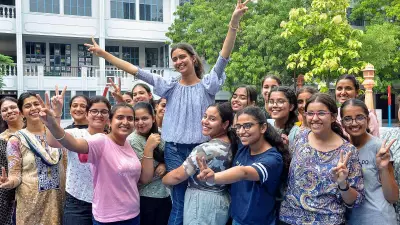
The Savitribai Phule Kishori Samriddhi Yojana has played a major role by providing financial support of up to Rs 40,000 in phased instalments, which helps delay early marriage and encourages continuation of education. The department is also ensuring enrolment in KGBVs and other residential schools, especially at secondary and higher secondary levels. Apart from academics, schools are increasingly focusing on emotional wellbeing, confidence-building, skill-based vocational courses, and girl-friendly infrastructure.