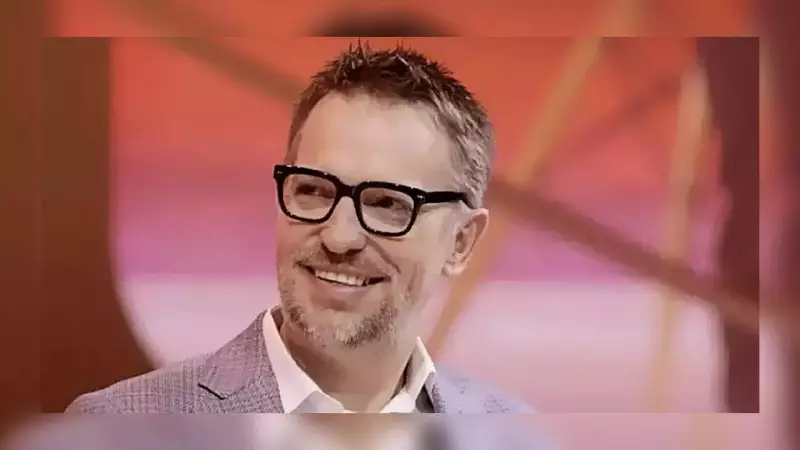
In a bold statement challenging conventional career wisdom, LinkedIn's Chief Executive Officer Ryan Roslansky has declared that the traditional five-year career plan is now obsolete and even "a little bit foolish." He advocates for a significant shift in strategy, urging professionals to prioritise immediate learning and experiences over long-term, rigid roadmaps.
The Case Against the Five-Year Plan
Roslansky shared his views on the "No One Knows What They’re Doing" podcast, where he dissected the realities of the modern labour market. He argued that the relentless pace of technological change, spearheaded by artificial intelligence (AI), combined with economic volatility, makes detailed long-term planning ineffective. The ground is constantly moving beneath professionals' feet, he noted, rendering a fixed five-year path impractical.
"You’ll hear people frequently say, ‘Hey, you have to have a five-year plan, chart out what the next five years of your life are going to look like, and then follow that path,'" Roslansky said. "And in reality, when you know technology and the labour market and everything is moving beneath you, I think having a five-year plan is a little bit foolish."

A New Mental Model: Focus on the Next Few Months
Instead of a distant horizon, the LinkedIn CEO, who has led the professional networking giant since 2020, recommends a more agile approach. He suggests professionals should concentrate on the immediate future—the next few months—and ask themselves two fundamental questions: What do you want to learn? What type of experiences do you want to get?
"That’s, I think, the right mental model in this environment," Roslansky explained. He believes that by focusing on these shorter steps and acquiring relevant skills, unforeseen career opportunities will naturally emerge. "A lot of your career path will open up for you. And the sooner you realise that, you can take your own career into your own hands," he added.
This perspective is backed by stark data. According to the World Economic Forum, approximately 39% of core worker skills are expected to be transformed or become entirely obsolete by the year 2030. This statistic underscores the urgency of continuous, short-cycle skill acquisition.
Data Reveals the Myth of the Linear Career Path
Roslansky's philosophy is deeply informed by LinkedIn's own data, which reveals that straight-line career trajectories are rare. Supporting this, a report from job training provider TAFE Gippsland indicates that individuals typically change careers three to seven times throughout their lives, while switching jobs as many as 16 times.
The trend is even more pronounced among younger workers. A recent Randstad report found that Gen Z employees change jobs approximately every 1.1 years on average. Recruiters term this behaviour "growth-hunting" rather than "job-hopping," as these workers seek new roles when they feel stagnant or see no advancement opportunities.
"A lot of people just believe that there’s some linear career path that you jump on. You know, you graduate high school and then go to a certain college and then you become a consultant and then get an MBA. People believe that’s how it happens," Roslansky observed, highlighting a common misconception.
His commitment to exploring non-linear careers is so strong that he hosts his own podcast, The Path, which delves into how professionals navigate diverse and unexpected career journeys.
The Counter-Argument: Value of Long-Term Vision
Not all career experts fully align with Roslansky's view. Some continue to advocate for the structure provided by a five-year plan. Talent management executive Mary McNevin told Arielle Executive that such plans offer flexibility and direction. "Five-year plans also give you the flexibility to change what’s no longer relevant to your long-term goals, without derailing your progress. This way, you’re always working toward what you truly want to achieve," she stated.

This opposing view maintains that intentional goal-setting is crucial because "career growth doesn't just happen by accident." The debate thus centres on whether a flexible long-term vision or a purely short-term, adaptive approach is more effective in today's turbulent job market.
Ultimately, Roslansky's comments signal a major cultural shift in career thinking, driven by the disruptive forces of AI and global economic shifts. For professionals in India and worldwide, the message is clear: adaptability, continuous learning, and a focus on immediate skill development may be the new keys to sustainable career growth.