TISS Revives Student Elections After Two-Year Hiatus, Triggers Controversy Over Neutrality Clause
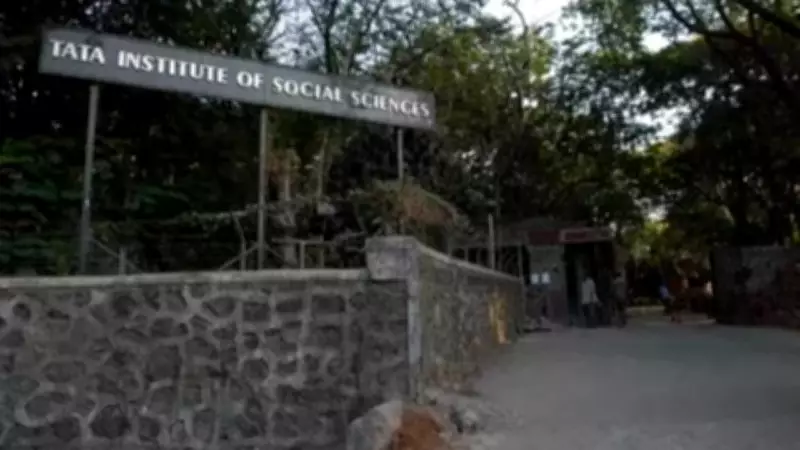
The Tata Institute of Social Sciences (TISS) in Mumbai is preparing to restore student representation through elections scheduled for February 6, 2026, ending a nearly two-year suspension of democratic processes on campus. However, this return to electoral politics has ignited a fresh debate concerning neutrality, participation, and institutional control that threatens to overshadow the restoration itself.
Controversial Undertaking Sparks Constitutional Concerns
For the upcoming polls, candidates must submit a formal undertaking declaring they are not affiliated with nor represent any political party, political organization, or student wing linked to such entities. While administration officials describe this as a routine procedural requirement, significant sections of the student community interpret it as a restrictive measure that extends beyond mere procedure into fundamental principles.
Students have mounted substantial opposition to this declaration, viewing it as an attempt to undermine constitutional rights, particularly freedom of association and expression. One student informed TNN that the language closely mirrors amendments made to the institute's honor code in 2024, which faced similar resistance at that time. The core concern remains that this requirement contradicts the Students' Council constitution, which explicitly permits students to associate with organizations and maintain political affiliations.

Administration's Assurance Fails to Quell Campus Unease
An institute official attempted to downplay the undertaking's impact, stating it would not be used to disqualify candidates and emphasizing that the declaration has been part of existing processes. The official added that this specific condition would undergo review in subsequent election cycles, assuring students that the oath taken by elected representatives after elections would hold greater relevance than this preliminary undertaking.
However, this administrative reassurance has done little to settle campus tensions. Students argue that the broader electoral context makes the undertaking difficult to dismiss as merely symbolic. Another student highlighted how the authority of the students' union has already been diluted under the proposed Students' Council constitution, with the consultation timeline creating practical challenges—Friday marked the final day for submitting feedback, while Thursday was the last date for nominations.
Additional Requirements and Ambiguity Concerns
Beyond political affiliation declarations, the undertaking also requires candidates to disclose whether any disciplinary actions, inquiries, or adverse proceedings are pending or have been initiated against them by the institute. Candidates must demonstrate a minimum attendance of 75 percent in previous semesters and have no academic arrears in their election year.
Media reports have detailed objections focusing particularly on the declaration's wording. Students describe the language as dangerously vague, noting that the absence of clear definitions for what constitutes a political organization or student wing leaves substantial room for arbitrary interpretation. Some prospective candidates remain uncertain whether past or present associations with student collectives could be construed as violations, creating what many describe as a chilling effect on participation.
Historical Parallels and Structural Overhaul
Students have drawn direct parallels with the 2024 honor code amendments, which they previously opposed on grounds that changes diluted constitutional protections. They maintain that the current undertaking contradicts the stated spirit of the Students' Council constitution, which explicitly permits political views and associations.

This dispute unfolds against the backdrop of a comprehensive restructuring of student representation at TISS's Mumbai campus. Nearly two years after student unions were suspended, the institute released a draft constitution for a new Students' Council on January 23, announcing elections while stating the framework aligns with Lyngdoh Committee recommendations. The new structure replaces traditional students' unions with a Students' Council comprising class-wise elected representatives and committees focused on culture, sports, literature, health, and mentorship.
Unresolved Trust Deficit and Democratic Concerns
Student organizations remain skeptical of these changes. The Progressive Students Forum (PSF) has accused the administration of weakening student democracy and implementing a new system without adequate consultation. While the draft constitution describes itself as student-driven, the forum questions which students participated in its drafting process.
What is unfolding at TISS represents more than a simple dispute about whether elections should be neutral—it reflects a deeper disagreement about how neutrality should be defined and enforced. For administration officials, the undertaking serves as a procedural safeguard. For protesting students, it represents part of a concerning pattern that narrows spaces for association and dissent.
As TISS attempts to restore student representation after two years, the fundamental challenge will be whether this restoration can occur in a manner that builds confidence across the entire campus community, rather than deepening suspicions precisely when participation is meant to resume. The institute's ability to navigate these tensions will significantly influence the future of campus democracy and student governance structures.