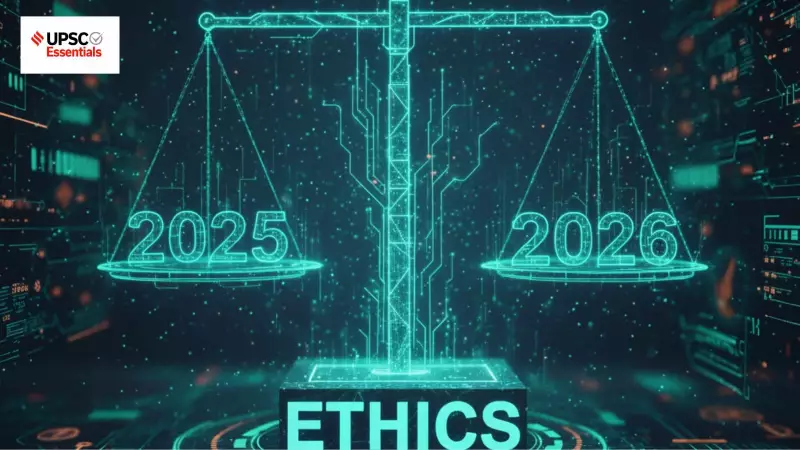
As the calendar turns to 2026, a series of profound ethical challenges that dominated discourse in 2025 continue to demand scrutiny and resolution. These issues, which tested the foundations of governance, justice, and personal morality, are poised to remain highly relevant, offering vital case studies for civil service aspirants and working professionals alike. Here are five pivotal ethical issues from the past year that will likely require your reasoned answers in the year ahead.
1. The IndiGo Alert: Customer Service as an Ethical Imperative
The recent crisis in aviation, highlighted by issues at carriers like IndiGo, has forced a fundamental re-examination of business ethics. The situation prompts a critical question: what does it truly mean to prioritize the customer in the service sector? The episode serves as a stark reminder that quality service is not merely a corporate slogan but an ethical commitment that must be reflected in tangible actions. As we move into 2026, the relationship between service providers and consumers will increasingly be viewed through an ethical prism, testing companies on their core values.
2. The Unending Tug-of-War: Social Media Governance vs. Free Speech
The ethical dilemma of regulating harmful online content while fiercely protecting free expression shows no signs of abating. Digital platforms are under intense public and regulatory scrutiny as they grapple with misinformation, harassment, and questions of liability. While influencers continue to command attention, the debate is evolving into a critical ethical study for 2026. It compels us to ask: does the platform of influence grant a license for 'Free Thinking' devoid of responsibility and core societal values?

3. Climate Crisis: The Unavoidable Duty of Our Time
Environmental challenges, including water security, severe air pollution, and resource depletion, underscore a non-negotiable ethical duty. This extends beyond current generations, demanding sustainable practices and equitable access to natural resources for the future. Far from being a clichéd topic, climate and environmental ethics were central to discussions in 2025 and will be a paramount concern in 2026. The pressing question is how prepared our institutions and individual ethics are to address this escalating crisis.
4. The 70-90 Hour Work Week: Productivity or Unethical Pressure?
The national debate ignited by Infosys founder Narayan Murthy's comments on working seventy hours a week was tragically underscored by incidents like the death of a Bank of Baroda chief manager. The discourse intensified when L&T chairman SN Subrahmanyan suggested a preference for a 90-hour work week. This debate has directly impacted millions of employees facing 12-hour days and constant digital connectivity. It forces a crucial ethical examination: what is the link between humane work-life balance and true professional ethics? Where does ambition end and exploitation begin?
5. Stray Dogs Dilemma: Navigating Safety and Compassion
India's struggle with managing stray dog populations presents a deep ethical conflict between ensuring public safety and adhering to principles of humane treatment. Recent Supreme Court orders and debates over relocation, sterilization, and shelter infrastructure highlight this complex dilemma. As a key part of the larger human-animal conflict discourse, this issue will continue to test our ethical frameworks and policies in 2026. It challenges society to find a compassionate yet practical middle ground.
While this list focuses on five critical areas, the ethical landscape of 2026 will also be shaped by challenges in Artificial Intelligence, gender equity, deepfakes, and corruption. The conversation must continue. We invite readers and UPSC aspirants to prepare their own lists of pressing ethical issues and share them with us at manas.srivastava@indianexpress.com. Let's collectively seek answers in the journey ahead.