For aspirants targeting the Civil Services Examination 2026, consistent answer writing practice is the cornerstone of success. This week's focus for General Studies Paper 1 delves into two pivotal historical themes: the leadership of Sardar Vallabhbhai Patel and a major administrative decision of the British Raj. These topics are not just static history but are crucial for understanding the socio-political fabric of modern India.
Question 1: The Making of a 'Sardar' in Bardoli
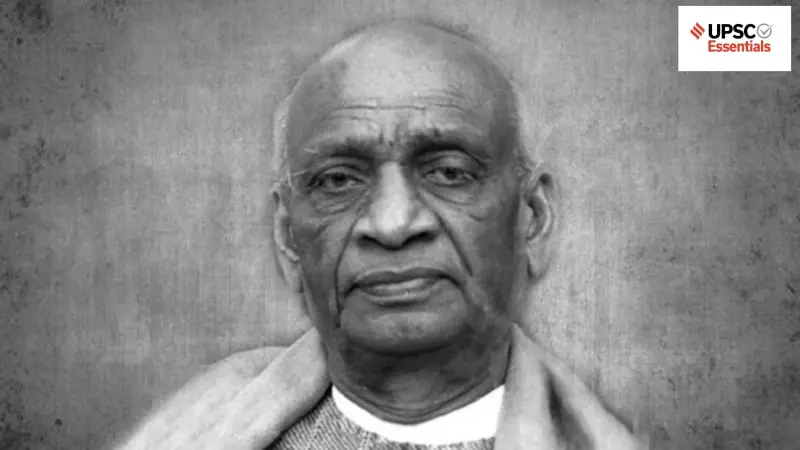
The first question requires a discussion on Vallabhbhai Patel's leadership during the Bardoli Satyagraha of 1928 and an analysis of how this campaign earned him the revered title of 'Sardar'. Often called the Iron Man of India, Patel's genius for organisation and mass mobilisation was first prominently showcased in the Kheda Satyagraha of 1918, but it was Bardoli that cemented his legacy.
The context was a 30% tax hike imposed by the British authorities in 1926 on the peasants of Bardoli, Gujarat, despite consecutive years of famine and poor harvests. When the pleas for reassessment were ignored, a non-violent satyagraha was planned. Patel, entrusted with leading the movement, executed it with military precision. He divided the region into organised zones, each managed by dedicated volunteers, ensuring clear communication and discipline.

The government retaliated with severe repression, attaching and auctioning the land and property of those who refused to pay. However, Patel's leadership ensured a powerful public boycott of these auctions, rendering them largely unsuccessful. After a protracted and intense struggle, the government was forced to capitulate, agreeing to roll back the tax increase. It was this resounding victory, achieved through impeccable strategy and unwavering resolve, that led the grateful farmers and fellow leaders to hail him as 'Sardar', meaning a leader or chief. This title became synonymous with his identity and his formidable role in India's subsequent integration.
Question 2: The 1911 Capital Shift: Strategy Over Geography
The second question probes the strategic and political factors behind the British decision to move India's capital from Calcutta to Delhi in 1911. This was not merely a change of address but a calculated move to address growing political challenges and reassert imperial authority.
Politically, the decision was a response to the rising tide of the Indian national movement. The earlier partition of Bengal in 1905 by Lord Curzon, aimed at dividing nationalist sentiment, had backfired spectacularly, intensifying protests and the Swadeshi movement. The subsequent viceroys, Lord Minto and Lord Hardinge, sought political reforms to manage Indian aspirations. Reuniting Bengal and shifting the capital was part of a strategy to mollify public opinion and symbolically align British power with India's historic seat of empires.
Strategic and Administrative Rationale
Beyond politics, compelling strategic reasons favoured Delhi. Calcutta was located on the eastern periphery of the subcontinent, making it distant from vast swathes of British India and the strategically important princely states of North and West India. Delhi, in contrast, was geographically central, offering better connectivity and control.
It was a junction of multiple major railway lines, facilitating quicker movement of troops and administration. Its proximity to the summer capital, Simla, also simplified the annual migration of the government. Furthermore, by choosing Delhi, the British sought to tap into its historical symbolism as the traditional capital of earlier empires, from the Delhi Sultanate to the Mughals, thereby legitimising their rule as the latest in a line of powerful regimes.
The announcement was made by King-Emperor George V at the grand Delhi Durbar on December 12, 1911, marking a definitive shift in the imperial centre of gravity. While it faced opposition from Calcutta's commercial elites, the move was ultimately driven by a need for greater political control and administrative efficiency in the face of a burgeoning nationalist challenge.

Essential Points for UPSC Aspirants
For a comprehensive answer, candidates should integrate these facets. On Patel, linking his Bardoli success to his later role in integrating princely states showcases his consistent leadership style. For the capital shift, connecting it to the annulment of the Bengal Partition and the Morley-Minto reforms provides a fuller political picture.
This practice underscores that UPSC Mains demands not just factual recall but analytical depth—understanding the 'why' behind historical events and the qualities that forge national leaders. Regular answer writing on such multidimensional topics is indispensable for cracking the Civil Services Examination.