UPSC Weekly Current Affairs Quiz: Essential Analysis for Aspirants
The UPSC Weekly Current Affairs Quiz for November 02-08, 2025 presents fifteen crucial multiple-choice questions that test aspirants' awareness of recent national and international developments. This comprehensive analysis breaks down each question with detailed explanations to strengthen your preparation foundation.
Tropical Forests Forever Facility: Key Facts and India's Position
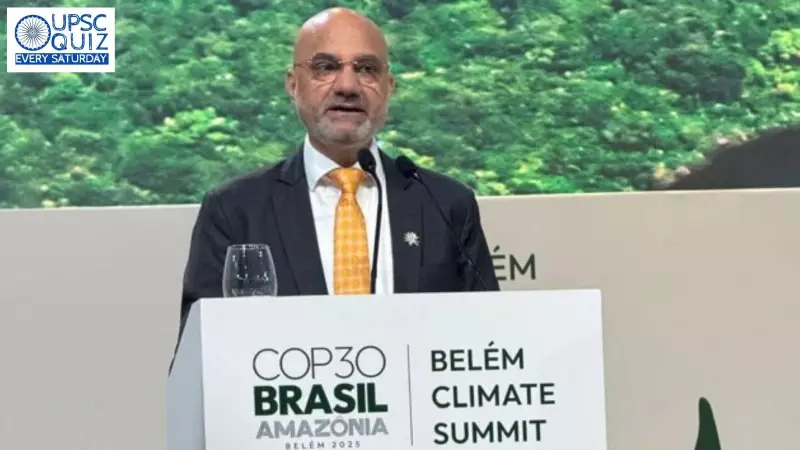
The quiz featured an important question about the Tropical Forests Forever Facility (TFFF), a significant global environmental initiative. Contrary to initial assumptions, this facility is Brazil-led rather than France-led, aiming to mobilize approximately USD 125 billion through combined public and private investments.
India has taken a strategic position by joining the TFFF as an observer while emphasizing that global climate ambitions remain insufficient even a decade after the Paris Agreement. The Indian government has welcomed Brazil's initiative as a substantial step toward collective global action for tropical forest preservation.

Cultural Heritage: Understanding Ramman Festival
Another highlight question focused on Uttarakhand's Ramman festival, celebrated annually in late April during Baisakhi in the twin villages of Saloor-Dungra in Chamoli district. This vibrant cultural event features theatrical performances of the Ramayana and local legends, with participants wearing 18 distinct types of masks made from Bhojpatra (Himalayan birch).
The festival holds international recognition, having been inscribed in UNESCO's Intangible Cultural Heritage of Humanity list in 2009. The celebrations begin with invocations to Lord Ganesha and include dances depicting various deities and local myths, making it a multifaceted cultural expression that reinforces community identity.
Strategic Developments: Defense and International Relations
The quiz covered several significant defense and geopolitical developments. Russia's testing of the Burevestnik nuclear-powered cruise missile, notable for its unlimited range and unpredictable trajectory, featured prominently. Meanwhile, India's defense cooperation advanced with Hindustan Aeronautics Limited signing a USD 1 billion agreement with American defense major General Electric for 113 F404-GE-IN20 engines to power the indigenously-built LCA Tejas Mk 1A aircraft.
In environmental governance, India has called upon developed nations to not only achieve net-zero emissions earlier than scheduled but to target net-negative emissions. The country maintains its commitment to achieve net-zero status by 2070, while urging greater ambition from historically high-emitting nations.
Infrastructure and Connectivity Projects
Important infrastructure approvals included twelve defense projects in Ladakh across the Changthang Cold Desert Sanctuary and Karakoram Wildlife Sanctuary. These projects, essential for operational preparedness, include a brigade headquarters at Chushul and border outposts near Depsang.
India-Bhutan cooperation saw progress with the upcoming inauguration of the 1,020 megawatt Punatsangchhu-II Hydropower Project and two new railway links: Kokrajhar–Gelephu connecting Assam to southern Bhutan, and Banarhat–Samtse linking West Bengal to southwestern Bhutan.
Scientific and Technological Advancements
The quiz also tested knowledge about recent scientific developments, including the passing of American molecular biologist James Dewey Watson, co-discoverer of DNA's double helix structure. In transportation innovation, Indian Railways is implementing the AI-based DRISHTI system to enhance freight train safety by monitoring door locking mechanisms in real-time.
China's military advancement was noted with the induction of its third aircraft carrier, Fujian, which becomes only the second carrier globally after USS Gerald R Ford to use electromagnetic catapult technology, significantly enhancing its power projection capabilities.

Border Security and International Terminology
Current security operations included Operation Pimple, a successful joint operation in Jammu and Kashmir's Keran sector that neutralized two infiltrators attempting to cross into the valley. The operation demonstrated continued vigilance along the Line of Control.
International relations terminology was explored through the concept of G-2, originally coined by economist C. Fred Bergsten in 2005 to describe key bilateral relationships the US should cultivate with entities including the European Union, China, Japan, and Saudi Arabia amid evolving global power dynamics.
This weekly quiz underscores the importance of consistent current affairs preparation for competitive examinations, covering diverse topics from environmental initiatives and cultural heritage to defense developments and international relations.