Ahmedabad Youth Champion Mother Language Preservation Through Innovative Methods
In Ahmedabad, a vibrant movement is underway as numerous individuals and organizations are dedicated to passing down the rich linguistic heritage to the next generation. They are achieving this through engaging storytelling sessions tailored for children, distributing books to young readers, and meticulously documenting region-specific dialect usage via digital platforms. This initiative gains special significance as International Mother Language Day approaches on February 21.
UNESCO Theme Highlights Youth Role in Multilingual Education
This year's International Mother Language Day theme, 'Youth voices on multilingual education', underscores the pivotal role young people play in preserving, promoting, and revitalizing linguistic diversity. According to UNESCO, this involves leveraging technology and education to support inclusive learning in mother tongues, ensuring languages thrive in modern contexts.
Census Data Reveals Gujarat's High Multilingualism Rates
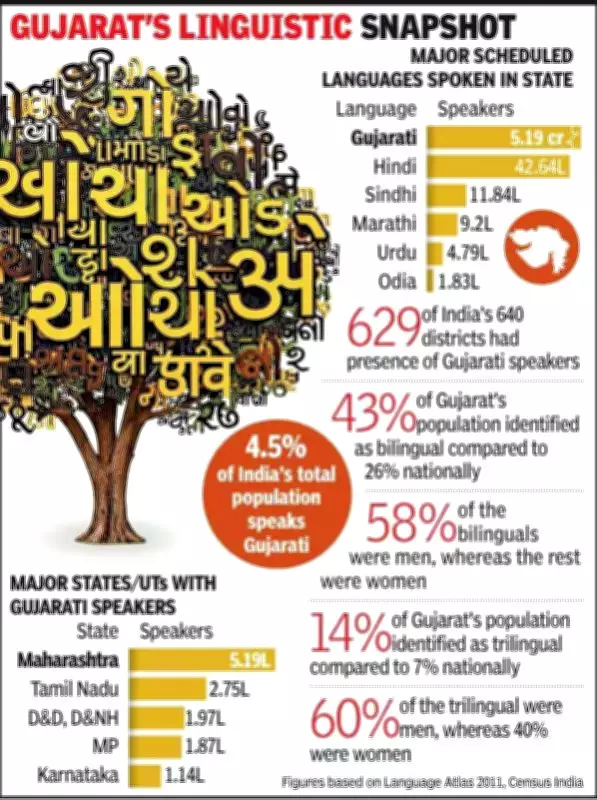
While the next census is scheduled for 2027, data from the 2011 census provides insightful statistics. The Language Atlas based on this data shows that Gujarat stands out with a significantly higher proportion of multilingual speakers compared to national averages. Specifically, 43% of Gujarat's population identified as bilingual, far exceeding the national average of 26%. Similarly, 14% were trilingual, double the national average of 7%.

Experts Note Gujarati's Global Reach and Regional Variations
Experts in Ahmedabad emphasize that Gujarati is a major Indian language with a substantial speaker base both within and outside the state, including a large diaspora abroad. This global presence makes it fascinating to observe how regional variations of the language have evolved across different continents. The current generation is actively involved in preserving and utilizing the language as it was spoken by previous generations, highlighting a dynamic interplay between tradition and modernity.
Key efforts include:
- Organizing interactive storytelling sessions to engage children with linguistic history.
- Distributing books and educational materials to foster early language appreciation.
- Creating digital content to archive and promote dialect-specific usage.
These activities not only celebrate linguistic diversity but also empower youth to become custodians of their cultural heritage, aligning with UNESCO's goals for inclusive and technology-driven education in mother tongues.