AI Job Disruption Forces College Students to Rethink Majors and Career Paths
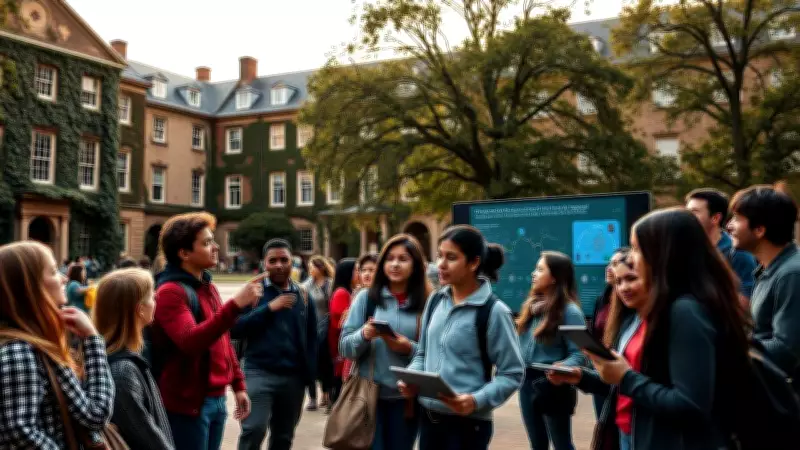
The traditional rhythm of college life—choosing a major, building skills, landing an entry-level job, and climbing steadily upward—is now faltering across campuses in America. Students are increasingly questioning whether that first career step will even exist by graduation, as artificial intelligence moves from theory to reality with unsettling speed. AI is no longer just transforming industries; it is actively influencing the decisions students make about what to study and, more critically, what to avoid.
A Silent but Widespread Shift in Academic Choices
This change is neither loud nor dramatic, but it is widespread and gaining momentum. A recent survey conducted by Gallup and the Lumina Foundation, based on responses from 3,800 college students, reveals that 16% have already changed their majors because they believe AI is reducing entry-level job opportunities. Another 42% report they have seriously considered making the same switch.
These decisions are not made overnight. They emerge after months of reflection, watching industries evolve, hearing about automation replacing routine tasks, and recognizing that traditional pathways into the workforce may be narrowing. For many students, the shift feels practical rather than aspirational. They are moving toward social sciences, business, and select technology fields, not necessarily because these areas were their first choice, but because they seem more adaptable in an uncertain future.

The Disappearing First Step: Entry-Level Jobs Under Threat
Student concerns are justified by emerging research. A 2024 study from Harvard University, observing 62 million employees across 285,000 companies, reveals a decrease in entry-level vacancies in businesses using artificial intelligence. The research highlights the removal of the bottom rungs of the employment ladder, referring to the displacement of functions typically performed by young workers due to automation.
Similarly, scientists from Stanford University reached a parallel conclusion. They found an approximate 13% reduction in new hires for entry-level jobs in business sectors that widely apply AI in software engineering, customer care, and administrative work. For students, this data turns abstract worries into tangible reality, as their career prospects are no longer guaranteed.
Awareness Driving Anxiety Across Disciplines
Student responses vary sharply depending on their field of study. Those in technology and vocational programs appear the most unsettled. According to the Gallup-Lumina survey, nearly 70% of these students say they have seriously thought about changing their majors.
The reason is not difficult to understand. These students often interact directly with the tools reshaping the job market. They see, in real time, how quickly certain technical skills can lose value as AI advances. In contrast, students in humanities, healthcare, and natural sciences show far less urgency to switch. These fields are still seen as rooted in human judgment, interpersonal interaction, or complex systems that are harder to automate. They also tend to use AI tools less frequently, creating some distance from the immediate disruption.
Not a Retreat, but a Strategic Recalculation
What stands out is that students are not turning away from opportunity; they are trying to anticipate it. A March report by Niche highlights this strategic shift. Instead of pursuing traditional programming paths that may be vulnerable to automation, students are increasingly drawn to AI-focused roles, software engineering, and specialized tech domains. The aim is not to compete with machines, but to work alongside them or build them.
This reflects a deeper recalculation in student thinking. They are beginning to prioritize flexibility over fixed career paths, choosing fields that allow them to adapt as the technological landscape evolves. It is a proactive adjustment to an unpredictable job market.

Rethinking the Promise of a College Degree
Higher education has long rested on a simple promise: study hard, graduate, and step into the workforce. That promise now feels less certain. If entry-level opportunities continue to contract, institutions may need to rethink how they prepare students, and employers may need to reconsider how they bring in new talent.
For students, however, the shift is already underway. Each change of major, each moment of hesitation, reflects a broader recognition that the rules are changing. What emerges is not panic, but a measured adjustment. A generation is learning, in real time, that the path ahead may not be linear and is rewriting it, one decision at a time.