

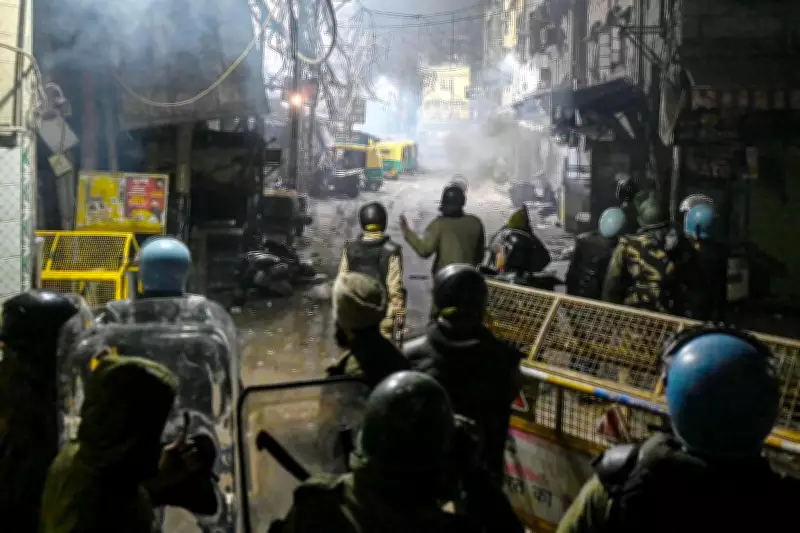
Delhi Court Denies Anticipatory Bail in Turkman Gate Demolition Violence Case
A Delhi court on Monday dismissed the anticipatory bail plea of Sajid Iqbal, an accused in the Turkman Gate violence case. The court observed that Iqbal was allegedly leading the mob during the intervening night of January 6–7, when a Delhi High Court-sanctioned demolition drive was being carried out by the Municipal Corporation of Delhi (MCD) near the Faiz-e-Ilahi mosque.
Court's Observations and Prosecution's Arguments
Additional Sessions Judge Shilpi Jain, while hearing the matter, took note of the prosecution's submission that Iqbal had not cooperated with police during the investigation. The court emphasized that his custodial interrogation was deemed necessary to uncover further details about the incident.
The prosecution argued that Iqbal's role was distinct from that of 13 co-accused who have already been granted regular bail. They contended that he was "leading the mob, therefore, the ground of parity is not applicable." The prosecution sought further custody to determine his motive, stating that efforts were required to pinpoint "the accused's motive to stop the lawful work of agencies and the persons who are behind him are also to be ascertained."

Defence's Counterarguments
The defence maintained that Iqbal had been "falsely implicated" in the FIR and that no specific role had been attributed to him. They argued that he had not "given any provocative speech" and that the assembly was "peaceful and without any pre-planned motive for rioting or conspiracy." Seeking parity, the defence pointed to the 13 accused already enlarged on bail, asserting that Iqbal should receive similar treatment.
Though the defence assured the court that Iqbal would cooperate with the investigation and comply with all conditions imposed, the court took a contrary view, ultimately rejecting the plea based on the evidence and arguments presented.
Background and Implications
The violence erupted during a demolition drive authorized by the Delhi High Court, highlighting tensions over urban governance and municipal policies in the capital. This case underscores the legal challenges faced by individuals accused in such incidents, with courts weighing factors like cooperation, alleged roles, and public safety.
The dismissal of the anticipatory bail plea sets a precedent for similar cases, emphasizing the judiciary's focus on thorough investigations and accountability in matters of public order and law enforcement.






