Bharathidasan Institute of Management Launches Parasuraman Centre for Citizen-Centric Service Excellence
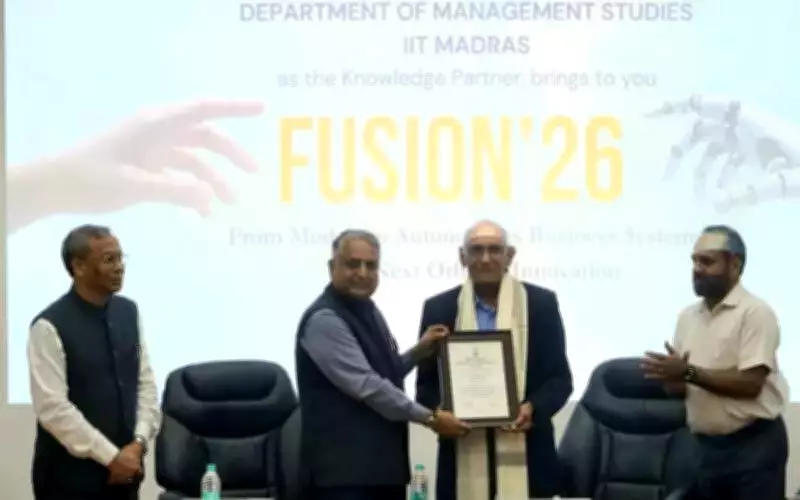
In a significant move to enhance public governance, the Bharathidasan Institute of Management (BIM) has officially launched the Parasuraman Centre for Citizen-Centric Service Excellence. The inauguration took place during the Agentic AI conclave held at the Indian Institute of Technology Madras on March 2, marking a pivotal step in addressing gaps in public service delivery systems.
Inauguration and Key Figures
The centre was inaugurated by Ravi Appasamy, chairman of BIM's board of governors, alongside A Parasuraman, a renowned service marketing scholar and emeritus professor at the Miami Herbert Business School, University of Miami, USA. This collaboration underscores the centre's commitment to leveraging global expertise for local impact.
Objectives and Research Focus
According to an official statement, the centre aims to develop a scientifically validated framework to measure and improve citizen-centric public service delivery. Unlike the corporate sector, which employs structured service quality models, public services currently lack a standardized and scalable assessment system across different states and countries.

Professor Parasuraman highlighted that there is limited India-specific, large-scale research on citizen-centric service systems. He noted that many digital governance studies often lack grounding in established service theory, which the centre seeks to rectify through rigorous scientific methods.
Strategic Initiatives and Future Plans
The Parasuraman Centre will focus on three core areas:
- Policy Advisory: Providing expert recommendations to enhance governance frameworks.
- Pilot Implementation Projects: Testing and refining service delivery models in real-world settings.
- Executive Education Programmes: Training public officials in citizen-centric governance practices.
Over the next five years, BIM plans to partner with at least three state governments, train over 500 public officials, and publish high-impact research. These efforts are designed to build country- and state-specific service excellence norms, ultimately fostering more responsive and efficient public services.
Broader Context and Implications
This initiative comes at a time when global events, such as conflicts in West Asia, highlight the importance of robust governance and service systems. While unrelated to the centre's launch, ongoing crises underscore the need for improved public service mechanisms worldwide. The centre's work could serve as a model for other nations seeking to enhance citizen satisfaction and operational efficiency in governance.
By bridging the gap between academic research and practical application, the Parasuraman Centre aims to transform how public services are delivered, ensuring they are more aligned with citizen needs and expectations.