Visually Impaired Students in Pune Achieve German Language Milestone
For six visually impaired students enrolled in the foreign language department at Savitribai Phule Pune University's Ranade Institute, learning German transcended the acquisition of a new linguistic skill. It represented a profound journey toward greater independence, bolstered confidence, and a reinforced sense of self-belief. This group's enrollment in the German language certificate course marked a significant first for the institute, being the largest cohort of blind learners to undertake a foreign language program there.
Overcoming Challenges with Technology
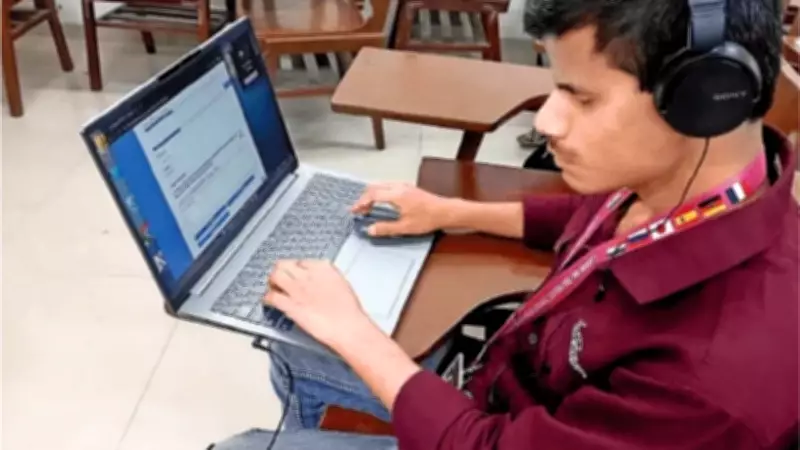
One of the students, Shashikant Shinde, shared his initial apprehensions. "I wasn't confident about writing the paper by typing because German is a new language and I did not know if the spellings would be accurate," he explained. However, consistent practice on the Swalekhan Test platform transformed his experience. "As we solved homework and assignments on Swalekhan Test, I felt more and more confident and breezed through the final exam," Shinde added.
The Swalekhan Test platform, a free and fully accessible resource developed by the organization Niwant Andh Mukta Vikasalaya, was instrumental. It enabled these students to take examinations independently, eliminating the traditional need for a reader or writer. This technological intervention is part of a broader governmental push to extend such inclusive training to blind students across all educational levels, from kindergarten through postgraduate studies. Notably, the education board has already sanctioned the use of computers in examinations for visually impaired students.

A Collaborative and Inclusive Educational Model
Utilizing the platform, the students completed assignments, homework, and class exercises, which their German language teacher, Aishwarya, could then evaluate directly. This collaborative effort between students, educator, and technology providers was unprecedented at the institute. To ensure a genuinely inclusive classroom environment, several preparatory initiatives were undertaken. Uma Badve from Niwant conducted a comprehensive mobility and accessibility workshop for the faculty at Ranade Institute, focusing on practical strategies to make classrooms more accessible for blind individuals.
Niwant Andh Mukta Vikasalaya, which has been dedicated to empowering visually impaired people for three decades, found a supportive partner in the Ekaansh Foundation. The foundation sponsored the course fees, removing financial barriers that could have hindered the students' aspirations. On the academic front, Kirti Vaidya worked closely with the Niwant team, with support from the head of the Ranade Institute's department, Swati Acharya, to ensure all course materials were fully accessible.
Personal Triumphs and Broader Implications
The emotional impact of this achievement was vividly captured by student Geetanjali Dhobe. Immediately after the exam, she called Uma Badve to express her feelings. "For the first time in my life, I felt that the marks I get will be my own because I wrote the examination independently," Dhobe stated, adding that she thoroughly enjoyed the entire course.
Uma Badve, co-founder of Swalekhan and a trustee of Niwant, highlighted the broader significance. She noted that these students have set a powerful example for other visually impaired individuals by choosing to learn a foreign language and appearing for exams independently. Furthermore, Kirti Vaidya pointed out that this initiative supports academic research in inclusive language education. "In a recently submitted thesis on developing teaching methodology for visually impaired learners of German as a foreign language, the Swalekhan platform played a key role in making learning and assessment accessible," Vaidya added.
This successful pilot program in Pune not only demonstrates the potential of accessible technology in education but also paves the way for more inclusive learning opportunities for visually impaired students across India, fostering greater academic and personal empowerment.