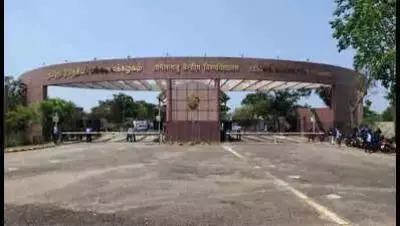
CUSB's Campus for Community Initiative Transforms Rural Agriculture in Gaya
In a significant step toward rural empowerment, the Central University of South Bihar (CUSB) successfully conducted a comprehensive day-long educational tour and training program specifically designed for rural youth and women farmers. This initiative, part of the university's broader 'campus for community' outreach, took place at the institution's agricultural farm located in Gaya on Friday, bringing together nearly 60 enthusiastic participants from 15 different blocks across Gaya district.
Bridging Traditional Farming with Modern Scientific Practices
CUSB Vice-Chancellor K N Singh emphasized that the primary objective of this program was to acquaint women farmers with the rapidly evolving agricultural landscape. He highlighted the importance of introducing new dimensions, advanced production techniques, and supplementary income-generating activities to these rural communities. The initiative aims to enable participants to adopt scientific farming practices in their respective areas, ultimately enhancing both productivity and household income through sustainable methods.
The participants received direct, hands-on exposure to various units of the integrated farming system operational on the university campus. This unique opportunity allowed them to observe a multifaceted agricultural model at a single location, gaining practical insights into methods that can make traditional farming more profitable and efficient.

Comprehensive Training in Diverse Agricultural Ventures
According to CUSB Public Relations Officer Md Mudassir Alam, the training covered an extensive range of agricultural activities. Participants received detailed information and practical demonstrations on:
- Cattle rearing and goat farming techniques
- Poultry farming management practices
- Establishing and maintaining nutritional gardens
- Mushroom production methods
- Beekeeping for honey production
- Dhanvantari Arogya Vatika (medicinal plant garden) cultivation
- Dragon fruit cultivation practices
- Azolla units for animal feed
- High-value crops including Brimato and Pomato
For each of these activities, experts provided comprehensive details about their specific characteristics, scientific management practices, production techniques, and economic utility. The training emphasized how adopting these activities in an integrated manner could help farmers achieve higher production at lower costs while generating additional income streams, thereby promoting self-reliance among rural households.
Addressing Climate Change Challenges in Agriculture
Vice-Chancellor Singh further elaborated on the critical importance of making agricultural systems climate-resilient, diversified, and sustainable in light of the mounting challenges posed by climate change. He urged farmers to blend modern scientific techniques with traditional practices to ensure higher production, better quality crops, and sustainable income generation. The university committed to continuing its technical guidance, training, and support to farmers in the future, reinforcing its dedication to community development.
Hemant Kumar Singh from the horticulture department provided specialized insights into the importance of horticultural crops, nutrition gardens, and integrated farming systems. He highlighted the significant opportunities these approaches offer in ensuring both nutritional security and enhanced income generation for rural families.
Expert Guidance from University Faculty
Other distinguished faculty members, including Prabhat Kumar, Pranav Tripathi, and Avanish Prakash Singh, actively engaged with participants throughout the program. They addressed critical aspects of contemporary agriculture while discussing practical strategies to overcome various constraints arising from climate change. Their collective expertise provided participants with a well-rounded understanding of how to navigate the complexities of modern farming while preserving environmental sustainability.

This initiative represents a meaningful collaboration between academic institutions and rural communities, demonstrating how university resources can be effectively leveraged to address real-world agricultural challenges and empower women farmers with knowledge that transforms their livelihoods.