France Unveils Ambitious Plan to Triple Indian Student Intake by 2030
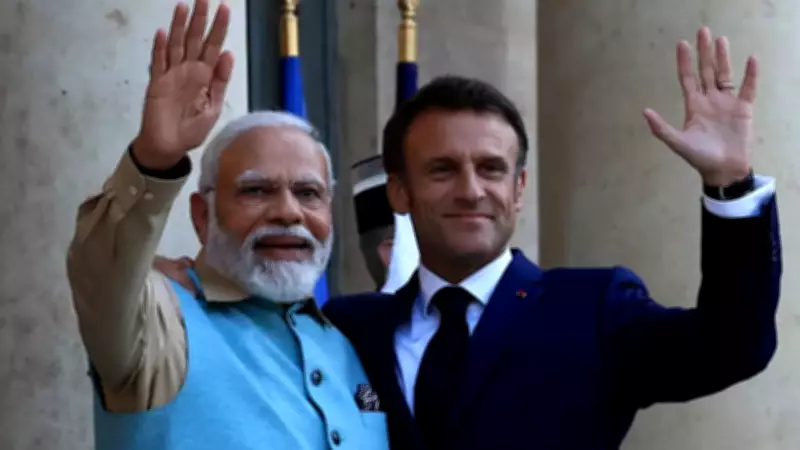
During his recent diplomatic visit to India, French President Emmanuel Macron announced a comprehensive set of mobility and research measures designed to significantly expand the presence of Indian students in France over the next five years and beyond. This strategic initiative moves beyond superficial reforms, focusing instead on concrete administrative decisions and institutional collaborations to transform student exchange into a structured academic corridor between the two nations.
Ambitious Numerical Target Backed by Policy Adjustments
France currently welcomes approximately 10,000 Indian students annually. President Macron revealed that both governments have committed to a bold objective: increasing this number to 30,000 by the year 2030. This represents a threefold expansion that requires proactive involvement from both educational institutions and governmental bodies.
"In India, 10 to 15 years ago, it was not the number one source of students. Let's be honest. So I want our universities and high schools to do much more, but we will do as well much more in terms of administrative facilities," Macron stated during his announcement. The emphasis extends beyond mere attraction of applicants to ensuring that bureaucratic procedures do not disrupt academic timelines and student experiences.

Visa Reforms Aligned with Academic Realities
A cornerstone of this initiative involves simplifying France's visa process for Indian students, particularly those enrolled in long-duration programs such as doctoral studies. Macron explicitly addressed the practical challenges of current arrangements, noting, "If a PhD takes three years and I give a visa for one year, that is not practical."
The French government will implement long-term visas that match the actual length of academic courses, providing greater stability and predictability for students and institutions alike. "So on the French side, we will clearly streamline this approach in order to have something which meets the expectations and is much more practical for the students and the schools," he added.
Complementing these changes, France announced a visa-free transit facility for Indian nationals passing through French territory, a measure expected to ease travel logistics for students undertaking study or academic exchanges.
Education Cooperation Linked to Artificial Intelligence Collaboration
Macron strategically positioned student mobility within a broader framework of bilateral cooperation in Artificial Intelligence. He emphasized that India and France aim to develop their own AI models rather than relying entirely on technological ecosystems dominated by the United States or China.
Sustained investment in computing power, skilled talent, and financial resources will be crucial to strengthening these independent AI systems, creating natural synergies with expanded educational exchanges.
Institutional Partnership Launched in New Delhi
As a tangible manifestation of this collaborative vision, Macron, alongside Union Health Minister Jagat Prakash Nadda, inaugurated the Indo-French Campus on AI in Global Health at the All India Institute of Medical Sciences in New Delhi.
This specialized campus is designed to foster research and innovation in AI-driven healthcare, with particular focus on applying advanced technology to:
- Disease detection and diagnosis
- Medical research advancements
- Healthcare system efficiency improvements
Framing AI as a Development Tool
Macron further contextualized these initiatives within discussions from the AI Impact Summit in New Delhi, highlighting the role of responsible and ethical AI deployment. He articulated how such technologies can contribute significantly to critical areas including disease detection, energy transition, and productivity improvement.
What This Means for Indian Students
For Indian students considering France as an educational destination, the immediate benefits may include:

- Longer visa validity aligned with study durations
- Clearer administrative pathways and reduced bureaucratic hurdles
- Expanded academic partnerships and institutional collaborations
Over the longer term, research collaboration in fields such as healthcare technology and Artificial Intelligence is expected to create new study and training opportunities linked to joint institutional work between French and Indian establishments.
The success of the ambitious 30,000 student target will ultimately depend on whether these procedural adjustments translate into smoother admissions processes, stable residency timelines, and sustained cooperation between universities. If implemented consistently, this policy shift could fundamentally reshape France's position as a premier destination for Indian students seeking education deeply integrated with cutting-edge research and innovation.