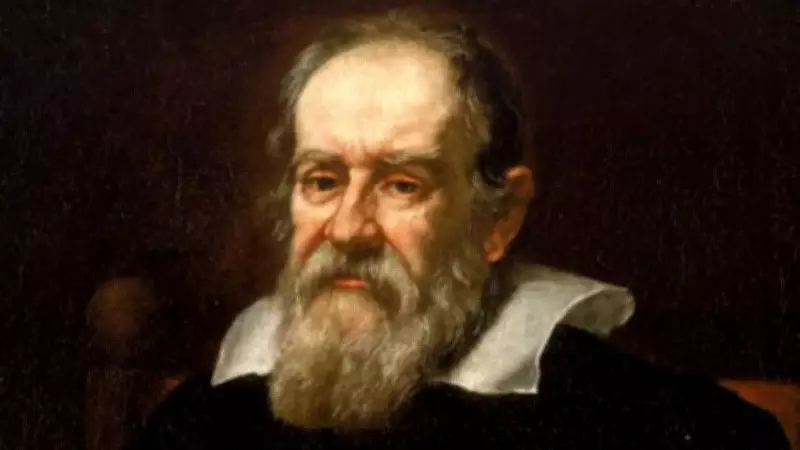
Galileo Galilei: The Visionary Who Redefined Human Understanding
Galileo Galilei, the pioneering Italian astronomer, physicist, and engineer of the 16th and 17th centuries, stands as one of history's most transformative scientific figures. His groundbreaking discoveries fundamentally altered humanity's perception of the universe, establishing the essential foundations for contemporary physics and astronomy. Galileo's innovative use of telescopes to meticulously observe celestial bodies marked a monumental shift in scientific methodology, yet his revolutionary ideas faced intense resistance from established beliefs of his era.
The Core Philosophy: Discovery Over Instruction
Galileo's enduring legacy extends far beyond his astronomical observations to encompass a profound educational philosophy encapsulated in his famous declaration: "We cannot teach people anything; we can only help them discover it within themselves." This powerful statement emphasizes that genuine understanding emerges not from passive information reception but through active personal exploration and critical reflection. Galileo fundamentally believed that true learning occurs when individuals engage deeply with material, question assumptions, and arrive at conclusions through their own cognitive processes.
Modern Relevance in Education and Beyond
In today's information-saturated world, where knowledge is abundantly available through digital platforms, classrooms, and publications, Galileo's wisdom remains critically important. The contemporary challenge has shifted from information access to meaningful comprehension and retention. Educational research consistently demonstrates that active learning methodologies—where students participate in problem-solving, experimentation, and discussion—produce significantly better understanding and long-term memory compared to traditional rote memorization approaches.

This philosophy extends beyond formal education into personal development, professional growth, and lifelong learning. By encouraging curiosity-driven exploration rather than passive consumption, individuals develop enhanced critical thinking abilities, creative problem-solving skills, and sustainable intellectual engagement. Galileo's approach fosters intrinsic motivation for learning that persists throughout one's lifetime.
Practical Applications for Daily Life
Implementing Galileo's discovery-oriented philosophy can transform how we approach learning in various contexts:
- Question-Driven Learning: Instead of providing immediate answers, cultivate environments where thoughtful questions stimulate independent investigation and deeper understanding.
- Experiential Engagement: Participate in hands-on activities, real-world experiments, and practical applications that make abstract concepts tangible and memorable.
- Curiosity Cultivation: Actively pursue personal interests through research, experimentation, and exploration to create meaningful connections with new knowledge.
- Reflective Practice: Regularly contemplate newly acquired information through journaling, discussion, or meditation to solidify understanding and identify personal insights.
- Facilitative Mentoring: When guiding others, emphasize discovery processes over information delivery, empowering them to develop their own analytical capabilities.
Additional Insights from Galileo's Wisdom
Galileo's perspective on learning and discovery is further illuminated through his other notable observations:

- "All truths are easy to understand once they are discovered; the point is to discover them."
- "I do not feel obliged to believe that the same God who has endowed us with sense, reason, and intellect has intended us to forgo their use."
- "Measure what is measurable, and make measurable what is not so."
These statements collectively reinforce his conviction in human intellectual capacity and the transformative power of methodical inquiry. Galileo's work reminds us that despite technological advancements that facilitate information access, the learner remains central to the knowledge acquisition process. His philosophy champions a more engaged, self-directed, and thoughtful pursuit of understanding that continues to resonate across centuries, making his contributions to both science and educational theory truly timeless.