Gujarat High Court Intervenes in PhD Student's Allegations of Bribery and Harassment by Guide
In a significant development highlighting academic misconduct, a doctoral research student from Gujarat has approached the High Court with serious allegations against her PhD guide. The student claims that her guide demanded expensive electronic gadgets as a bribe and subsequently derailed her research work when she failed to comply with the illegal demand.
Years of Institutional Neglect and Alleged Retaliation
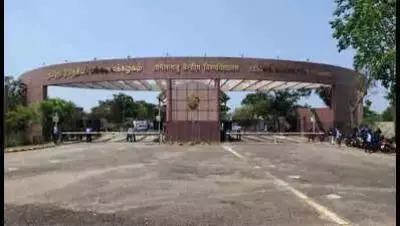
The petitioner, Priyanka Vasava from Dabhoi town in Vadodara district, registered for her PhD in February 2020 at Shri Govind Guru University in Godhra. Her research topic was 'Comparative Studies on Biodegradable and Non-biodegradable Components'. She pursued her doctoral work under the guidance of Lata Raj, a faculty member in the chemistry department at Shree CNPF Arts & DN Science College in Dabhoi.
According to the petition filed through advocate Brijesh Raj, Vasava submitted a formal complaint to university authorities on December 31, 2021. In this complaint, she detailed how her PhD guide had demanded an iPad and a printer for personal use. When Vasava, who comes from a modest background, expressed her inability to afford these expensive gadgets, the guide allegedly began creating systematic obstacles in her academic journey.

Systematic Obstruction of Academic Progress
The alleged harassment took multiple forms that severely impacted Vasava's research:
- The guide refused to sign bills for miscellaneous expenses that Vasava was entitled to receive under her Rs 4 lakh SHODH fellowship
- She reportedly declined to sign attendance and evaluation reports for several consecutive months
- Vasava further alleged that she faced insults and discrimination for being a member of a Scheduled Tribe community
Despite submitting her complaint in late 2021, the university authorities took no substantive action for over four years. Instead of addressing her grievances, Vasava found herself facing punitive measures from the institution she had approached for justice.
University's Alleged Retaliatory Actions
Rather than investigating her serious allegations, the university initiated proceedings against Vasava herself. On May 10, 2023, the institution issued her a notice demanding the return of either the fellowship amount or the remuneration she had received for her work as a part-time lecturer.
In a separate communication, the university sought an explanation as to why her PhD registration should not be cancelled entirely. These actions, according to Vasava's petition, represented punishment for raising legitimate grievances rather than receiving justice for her complaints.
Legal Escalation and Court Intervention
Frustrated by years of institutional inaction, Vasava issued a legal notice to the university's vice-chancellor and her guide in November 2024. The notice clearly stated that the university had 'punished the petitioner for raising her grievance instead of giving justice to her'.
When this too failed to yield results, she approached the Gujarat High Court seeking specific directions:
- Restoration of her PhD studies under a new guide
- Initiation of a proper enquiry into her allegations against the former guide
- Appointment of a new professor to supervise the completion of her doctoral work
Judicial Directive for Timely Resolution
Hearing the matter, Justice Nirzar Desai noted the prolonged delay in addressing the student's complaint. In his order, the judge observed: 'In view of the above innocuous prayer made by the petitioner, as well as considering the fact that the representation made by the petitioner was not decided for more than five years...'
The court directed the university authorities to decide Vasava's representation dated December 31, 2021, in accordance with law at the earliest possible opportunity. The respondents were instructed to pass a reasoned order and communicate the same to the petitioner via Speed Post.

This case brings to light critical issues of academic integrity, power dynamics in higher education, and institutional accountability. It raises important questions about protection mechanisms for research scholars, particularly those from marginalized communities, when they face exploitation by those in positions of academic authority.