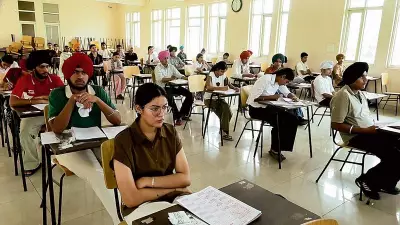
Lucknow University Uncovers Widespread Plagiarism in PhD Theses Using AI Detection Software
In a startling revelation, Lucknow University has discovered that more than 95% of PhD theses submitted across all disciplines in January and February 2024 have been flagged for plagiarism. The university utilized DrillBit software, an advanced tool specifically designed to identify copied content and detect writing assisted by Artificial Intelligence (AI).
Alarming Statistics from Tagore Library Data
Data accessed from the university's Tagore library shows that out of 121 theses submitted during this period, a staggering 116 contained significant similarities to previously published research. This clearly indicates that AI-generated content was extensively used in their preparation. The detection was possible because AI chatbot databases are compiled from existing texts and research materials available globally.
Interestingly, AI tools like DrillBit have themselves been developed to identify copy-paste work generated by AI chatbots, creating a technological arms race in academic integrity enforcement.

University Norms Violated with Excessive Plagiarism
According to established Lucknow University regulations, a maximum of 180 words of plagiarism or less than 5% similarity is permitted for citations and factual information available in journals, books, and even AI databases. However, in these flagged cases, officials reported plagiarism levels ranging from 20% to 50%, representing a severe violation of academic standards.
The affected scholars were admitted during the 2019-2020, 2020-2021, and some in the 2021-2022 academic sessions. Having completed their research work, they submitted their theses for evaluation. Under university rules, students must submit a soft copy to the Tagore library, where research undergoes plagiarism checking through DrillBit. Only after approval is a thesis accepted; if plagiarism is detected, the research is returned to the scholar for revision to ensure originality.
Academic Community Responds to Plagiarism Crackdown
A senior professor from the Faculty of Arts welcomed this development, stating that "this reform finally tilts the balance back in favour of genuine scholars, those who spend hours digging through books instead of relying on AI chatbots."
Many research scholars echoed this sentiment, with one noting that "long hours spent in the library are beginning to matter, and the idea that hard work pays off no longer sounds outdated."
Experts Weigh In on AI Misuse in Academic Research
AI expert Mukul Srivastava emphasized that artificial intelligence itself isn't the problem, but rather its misuse. He explained that "AI should be used in works that are time consuming or tedious. However, when AI is used for 'thinking', the research loses its core of originality."
Honorary librarian Keya Pandey highlighted the broader implications, pointing out that "overdependence on AI tools is gradually weakening the depth and originality of research." She added that plagiarism checks serve not just to catch copying but to ensure scholars return to genuine academic engagement where critical thinking and authenticity remain central.
Looking forward, Pandey revealed that "we will soon begin with Turnitin software, which will help check the assignments submitted by students at the UG and PG level too," indicating a comprehensive approach to maintaining academic integrity across all levels of university education.