Nagpur University VC Stresses Student-Centric Efficiency in Higher Education
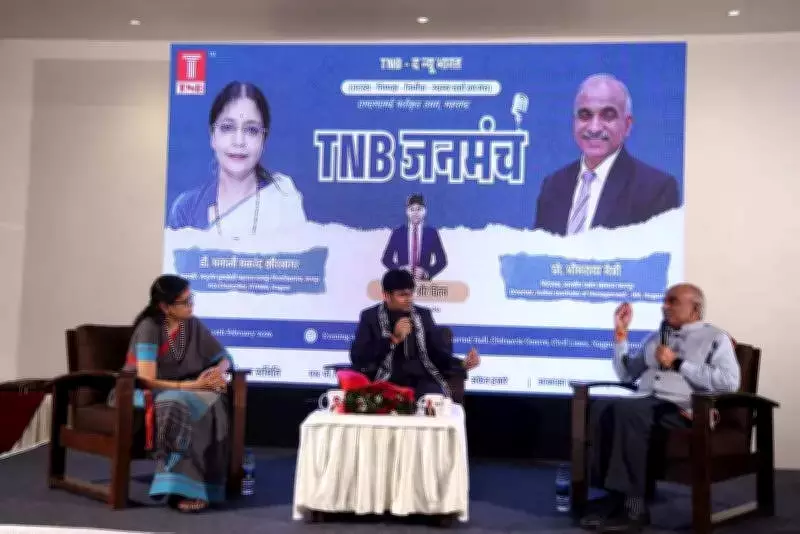
In a candid discussion at The New Bharat Janmach's talk show held at Chitnavis Centre on Saturday, Nagpur University Vice-Chancellor Manali Kshirsagar highlighted a significant shift in how students evaluate universities today. She asserted that modern students prioritize practical, day-to-day efficiency over lofty promises and long-term visions when assessing educational institutions.
Practical Concerns Take Precedence for Students
Kshirsagar explained that students primarily focus on operational aspects such as whether examinations are conducted punctually, results are declared accurately without errors, and administrative problems are resolved swiftly. "For students, the vision of a vice-chancellor or university may not hold as much weight as time-bound exams and results. It fundamentally revolves around smooth and fair functioning," she stated. The vice-chancellor emphasized that this immediate efficiency builds crucial trust among students, while strategic long-term planning gradually shapes the university's future reputation and image.
Balancing Diverse Stakeholder Expectations
Identifying students as the most vital stakeholders, Kshirsagar noted that universities must also cater to the expectations of teachers, administrators, and government authorities. Teachers seek fair administration and transparent decision-making processes, whereas state and national leaderships look to universities to support broader developmental goals. University leaders face the complex task of carefully balancing these varied demands to maintain harmony and progress.

Continuity in Governance and Digital Age Challenges
Kshirsagar stressed the importance of continuity in good governance, warning that abrupt changes in direction can damage a university's hard-earned reputation, which is built over generations through the collective efforts of students and faculty. She also addressed evolving student behavior in the digital era, where easy online access to information reduces dependence on teachers for knowledge alone. "The real challenge today lies in aligning the expectations of contemporary students with the teaching methodologies of faculty members," she remarked, adding that fostering better mutual understanding can resolve many persistent issues in higher education.
Competitiveness and International Outreach
On topics of international rankings and attracting foreign students, Kshirsagar acknowledged that success depends on multiple factors. With increasing competition from private universities and global educational options, public universities must enhance their online presence, outreach initiatives, and technological adoption to appeal to international students effectively.
IIM-Nagpur Director Advocates for India-Centric Education
Speaking at the same event, Bhimaraya Metri, Director of IIM-Nagpur, urged Indian institutions to emphasize India-based case studies rather than relying predominantly on Western examples. He argued that India's unique social and business environment should be reflected in management education to provide more relevant and contextual learning.
Metri presented data and facts supporting his belief that India will achieve developed-nation status well before 2047. He called for IIM-Nagpur to forge a new and distinct identity by actively engaging with society. The session was moderated by Ravi Shukla, facilitating a comprehensive dialogue on the future of higher education in India.