Rajasthan Assembly Erupts Over Massive University Fee Collection Controversy
The Rajasthan Legislative Assembly witnessed intense confrontations and sharp political exchanges during Wednesday's Question Hour, centering on explosive allegations regarding the collection of substantial "counselling fees" from private students enrolled in state-funded universities. The controversy has raised serious questions about financial transparency and student rights within the higher education system.
Congress MLA Levels Serious Allegations
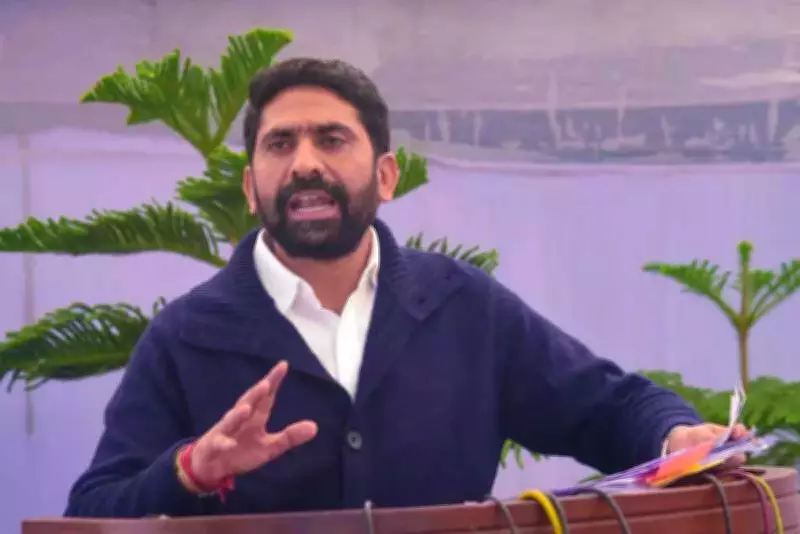
Congress legislator Manish Yadav launched a scathing attack on the state government, specifically naming three prominent universities—Mohanlal Sukhadia University in Udaipur, Raj Rishi Bhartrihari Matsya University in Alwar, and Rajasthan University in Jaipur. Yadav presented detailed allegations that these institutions have been systematically charging Rs 1,000 per student for counseling services that were never actually provided to the student body.
"This amounts to nearly Rs 240 crore collected from approximately 24 lakh students across these universities," Yadav declared forcefully from the Assembly floor. "Neither any counseling session was conducted nor was any counseling center operational in any of these universities. On what legal or moral basis are you charging Rs 1,000 per student?"

The Congress MLA went further, accusing the universities of financial misconduct. "Money collected in the name of career and subject counseling is being diverted for other purposes entirely. This systematic diversion of funds constitutes nothing short of cheating the students who placed their trust in these institutions," Yadav asserted, demanding immediate accountability.
Government's Defense and Opposition's Rebuttal
Responding to these serious charges, Higher Education Minister and Deputy Chief Minister Prem Chand Bairwa offered a staunch defense of the universities' actions. "Universities are autonomous institutions operating within established legal frameworks. All fees are collected strictly in accordance with legal provisions under the respective University Acts," Bairwa stated authoritatively.
The minister provided additional context, revealing that the counseling fee collection has been ongoing since 2018 under existing university statutes. He clarified the administrative structure, explaining, "The counseling fee forms an integral component of the comprehensive examination fee. The consolidated amount collected under the examination category is utilized exclusively for examination-related activities that ultimately benefit students. No separate accounting records are maintained specifically for counseling expenditures."
Leader of Opposition Tikaram Jully immediately challenged this explanation, highlighting apparent contradictions in the government's position. "This represents a profound betrayal of student trust. If no counseling services were delivered, what justification exists for collecting Rs 1,000 from each student? This fee must be withdrawn immediately and refunds processed without delay," Jully demanded, amplifying the opposition's stance.
Assembly Descends Into Chaos and Protest
As tensions escalated, Congress MLA Manish Yadav pressed for concrete government action, specifically questioning whether authorities planned to refund the contested fees to affected students. When no direct assurance or commitment was forthcoming from the treasury benches, Yadav took dramatic action by walking into the well of the House in visible protest.
This move triggered an immediate response from ruling party legislators, with several BJP MLAs rising from their seats in a show of counter-protest. The Assembly briefly descended into a tense standoff before Speaker Vasudev Devnani intervened to restore parliamentary decorum.

The Speaker firmly directed Yadav to return to his designated seat, while ruling that the complex nature of the issue required more extensive discussion than Question Hour procedures permitted. "A detailed debate on this substantial matter cannot be appropriately conducted within the constraints of Question Hour. The issue demands proper examination through established parliamentary channels," Devnani declared, effectively postponing further immediate discussion while acknowledging the seriousness of the allegations.
The controversy has exposed significant fault lines in Rajasthan's higher education governance, with opposition parties demanding transparency and accountability, while the government maintains that all procedures were legally sanctioned. The unresolved dispute leaves nearly 24 lakh students awaiting clarity on whether substantial fees collected in their name were properly utilized or represent institutional overreach requiring corrective action.