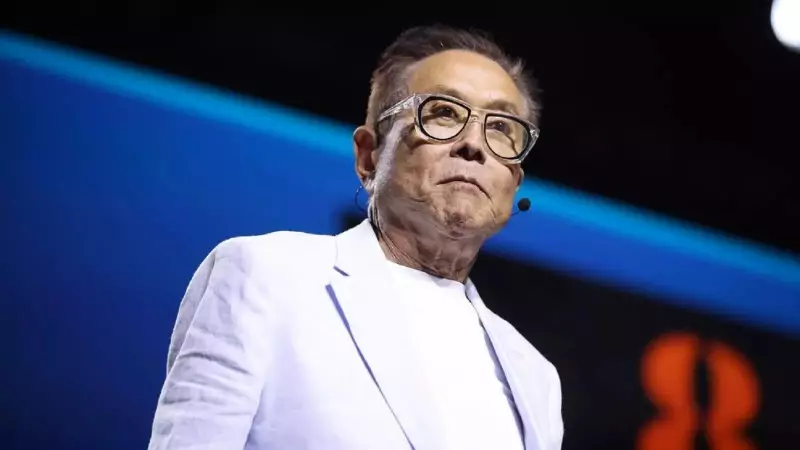
The story of Robert Toru Kiyosaki is a powerful reminder that success in life does not always follow a straight line from school to a profession. His journey, marked by poor grades, military service, and early business failures, ultimately led him to build a worldwide brand teaching financial literacy, challenging the very education system he grew up in.
A Rocky Start Within the System
Born in 1947 in Hilo, Hawaii, Kiyosaki was raised in a family deeply committed to public education. His father was an educator who eventually became Hawaii’s superintendent of schools. Despite this, young Robert's own academic experience was fraught with difficulty. He attended local schools and Hilo High School, where his weak performance nearly got him expelled. This stark contrast between his father's profession and his own school record became a central theme in his later work.
Finding Structure Beyond Classrooms
In 1965, Kiyosaki found a different kind of learning environment at the United States Merchant Marine Academy. This institution offered practical, structured training with clear goals. He graduated four years later as a deck officer, discovering that rules and skills tied directly to work suited him far better than traditional classrooms.

His pursuit of structured, high-stakes learning continued when he joined the United States Marine Corps. Serving as a helicopter gunship pilot during the Vietnam War and based at Kaneohe Bay, he learned through command, risk, and responsibility—a world away from academic assessment. After his service, he returned to civilian life without a clear direction.
Failures That Forged a Teacher
Kiyosaki's early business ventures did not bring quick success. In 1977, his company selling nylon and Velcro wallets collapsed. A subsequent sales job at Xerox, however, exposed him to crucial skills in sales and marketing. These experiences, though not immediately profitable, laid the groundwork for his future career in teaching others.
The 1980s saw him move into motivational speaking. He became involved with the "Money and You" course, which used methods from Erhard Seminars Training. After taking the course himself in the 1970s, he later acquired the business with a partner and expanded it globally. While successful, the venture faced scrutiny, including a crisis in Australia following a TV investigation, leading Kiyosaki to exit in the mid-1990s.
Building an Empire on Experience
By this time, a clear pattern had emerged: Kiyosaki was adept at packaging his life lessons into instruction. In 1993, he published "If You Want to Be Rich and Happy, Don't Go to School?", arguing that formal education fails at financial preparation and championing real estate and entrepreneurship.
This philosophy reached millions with the release of "Rich Dad Poor Dad". The book contrasted two mindsets—one tied to traditional employment and the other to investing and business ownership. Its simple, powerful narrative, drawn from his own life, resonated globally, selling millions of copies in numerous languages.
Around this core idea, Kiyosaki built a vast network of companies, books, board games like the Cashflow game, and licensed seminars. He taught through simulation, not lecture, mirroring his belief in participatory learning. However, the commercial side faced challenges, including the 2012 bankruptcy of Rich Global LLC after a legal dispute and a settled lawsuit with a former partner.
Throughout his career, Kiyosaki maintained a critical view of schooling and salaried jobs, advocating for wealth through assets and leverage. Critics have questioned the substance of his advice, but his impact on global financial education is undeniable.

In essence, Robert Kiyosaki's story is not one of rejecting education, but of remaking it. His early academic struggles, followed by practical training in the maritime and military worlds, shaped his belief in applied knowledge. His business setbacks sharpened his focus on teaching through experience. The result is a parallel education system, built outside traditional institutions, yet forever engaged in a debate about what true learning should be. For his readers, the appeal lies in this very challenge—a challenge rooted deeply in the biography of a man who turned personal difficulty into a global enterprise.