Supreme Court Halts UGC Equity Regulations Over Definitional Ambiguities and Procedural Gaps
The University Grants Commission's ambitious attempt to fortify equality and non-discrimination safeguards within India's higher education institutions has encountered significant judicial scrutiny. The Supreme Court of India has issued a stay order on the newly notified UGC (Promotion of Equity in Higher Education Institutions) Regulations, 2026, raising fundamental questions about their clarity, scope, and potential consequences.
Judicial Intervention and Core Legal Questions
A bench led by Chief Justice of India Surya Kant and Justice Joymalya Bagchi described the regulatory framework as prima facie vague with potentially sweeping implications. The court highlighted that the possibility of misuse could not be ruled out, setting the stage for a comprehensive examination of how discrimination should be identified, addressed, and prevented across Indian universities.
The bench framed four substantial questions of law regarding the regulations' rationality, focusing on:

- Ambiguous definitions of caste-based discrimination
- Potential segregation in campus arrangements
- Lack of procedural safeguards for extremely backward sub-groups
- Omission of ragging provisions that were present in earlier regulations
Regulatory Evolution and Definitional Concerns
The UGC notified these equity regulations on January 13, 2026, replacing the largely advisory anti-discrimination framework established in 2012 with a binding structure. The new regulations mandate institutional mechanisms including Equal Opportunity Centres, Equity Committees, helplines, and monitoring bodies.
However, critics point to significant definitional inconsistencies. While the 2012 regulations addressed a broader spectrum of discriminatory acts including specific categories like ragging, harassment, and victimization across multiple grounds, the 2026 version creates a dual system. It separately defines caste-based discrimination as discrimination only against members of Scheduled Castes, Scheduled Tribes, and Other Backward Classes while retaining a broad definition of general discrimination.
Political Reactions Across the Spectrum
The Supreme Court's stay order has elicited mixed reactions across political parties. Several opposition parties welcomed the judicial intervention, citing inadequate stakeholder consultation and potential social tensions. Bahujan Samaj Party chief Mayawati called the stay appropriate given the unrest generated by the new rules, while Congress leaders Pramod Tiwari and Ranjit Ranjan suggested parliamentary panel examination to prevent student divisions.
Trinamool Congress's Kalyan Banerjee echoed concerns about constitutional validity. However, not all opposition voices agreed, with CPI(ML) Liberation arguing that caste discrimination remains an everyday campus reality requiring essential safeguards.
Tamil Nadu Chief Minister M K Stalin hailed the original regulations as a welcome step toward reforming a higher education system scarred by discrimination, though he called for their strengthening rather than dilution.
BJP insiders, according to PTI reports, were contemplating their next steps as the issue created tensions with sections of the student community. Union ministers defended the stay, emphasizing the need to protect cultural unity and resolve concerns about misuse and clarity at the policy level.
Student Mobilization and Campus Protests
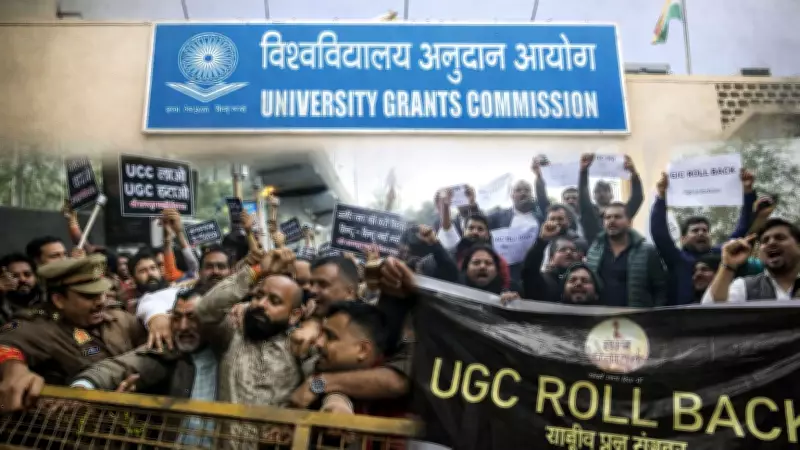
The controversy has ignited significant on-ground protests at leading universities across India. Student unions and politically affiliated campus groups have expressed strong disagreement with the stay order, demanding immediate enactment and legislative backing for anti-discrimination protections.
At Jawaharlal Nehru University, the JNUSU demonstrated in solidarity with the 'Rohith Act' – legislative proposals inspired by the 2016 suicide of student Rohith Vemula, which many activists view as emblematic of persistent caste bias in educational institutions.

Across Delhi University campuses, Left-backed groups including the All India Students' Association and the Students' Federation of India organized marches demanding implementation of the stalled regulations. These groups argue that robust protections are urgently needed to address sharply rising complaints of discrimination in recent years.
While many student bodies expressed disappointment with the Supreme Court's intervention, other student factions, including some aligned with the ruling establishment, welcomed the stay. They argued that the rules lacked clarity and could potentially be misused against general category students, highlighting the complex social dynamics at play.
Broader Implications for Higher Education Equity
The Supreme Court's intervention has opened a crucial dialogue about the mechanisms through which educational equity should be pursued in India. The court's concerns about definitional clarity, procedural safeguards, and institutional implementation reflect deeper questions about how to balance protective measures with inclusive educational environments.
As the legal examination proceeds, stakeholders across the political spectrum, academic community, and student bodies continue to debate the appropriate framework for addressing discrimination while maintaining institutional harmony and academic excellence.