The Supreme Court's Intervention and the Unfinished Battle for Equity
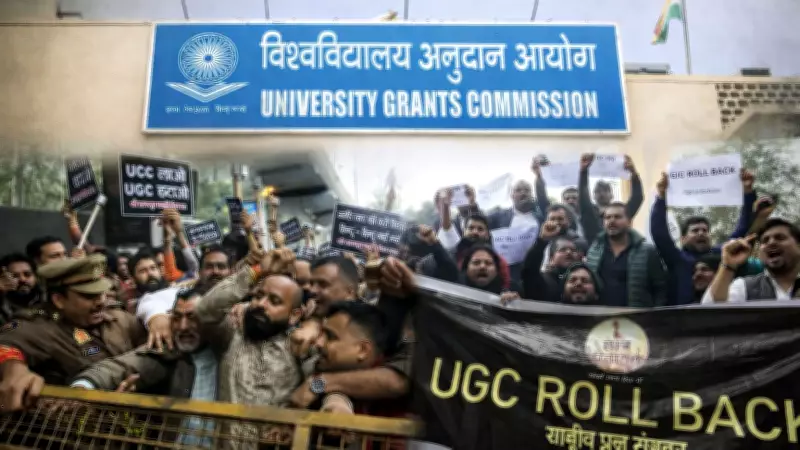
The recent decision by the Supreme Court to temporarily stall the University Grants Commission (Promotion of Equity in Higher Education Institutions) Regulations, 2026, has reignited a crucial national conversation about caste, discrimination, and constitutional justice within India's higher education system. By maintaining the 2012 regulatory framework—which notably excluded Other Backward Classes (OBCs) from institutional anti-discrimination safeguards—the Court has paused a significant reform aimed at addressing a profound structural blind spot. This development forces us to confront uncomfortable truths about the persistent hierarchies in our academic institutions.
From Draft to Final Regulations: The Inclusion of OBCs
To fully grasp the current controversy, we must trace the journey of these regulations. When the UGC released the draft Promotion of Equity Regulations for public consultation in February 2025, it faced strong opposition from various organizations, including student associations representing marginalized communities. Their criticism was not that the draft was too radical, but that it was insufficient, primarily due to the exclusion of OBCs from the definition of vulnerable groups.
In response to these valid concerns, the final 2026 Regulations explicitly included OBCs within the scope of protection. This was a long-overdue acknowledgment of a basic reality: caste discrimination on Indian campuses does not stop at the SC/ST binary. OBC students and faculty, especially those from artisan, pastoral, and service communities, routinely encounter exclusion, stereotyping, and institutional neglect. Ironically, this corrective inclusion—a modest step toward a more comprehensive understanding of social justice—has triggered resistance from powerful quarters.

Representation Vacancies and the Persistent Myth of Merit
The broader empirical context makes this resistance even more troubling. More than seven decades after Independence, the representation of SCs, STs, and OBCs in faculty positions remains alarmingly low. In central universities alone, nearly 80 percent of sanctioned professor posts reserved for OBCs and over 83 percent for STs are lying vacant. These are not minor shortfalls but massive structural gaps that indicate systemic failure.
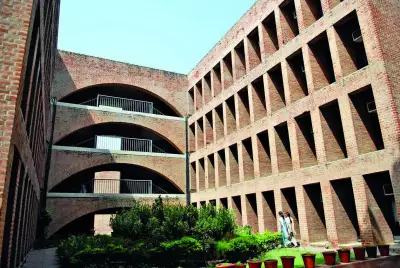
In eight Indian Institutes of Technology (IITs) and seven Indian Institutes of Management (IIMs), over 80 percent of professors belong to the General Category. Such figures cannot be dismissed as statistical coincidences or transitional anomalies. They point unmistakably to entrenched systems of exclusion that perpetuate historical inequalities.
Opponents of the 2026 Regulations frequently invoke the language of "merit" to justify the status quo. They argue that vacancies exist because there is a scarcity of "qualified" candidates from reserved categories. However, this claim collapses under scrutiny when one examines the persistent and expanding use of the "None Found Suitable" (NFS) clause in faculty recruitment. The repeated declaration that no suitable SC, ST, or OBC candidate could be found, year after year, across various disciplines and institutions, stretches credibility to its limits.
The Human Cost of Institutional Discrimination
Beyond representation numbers, the human cost of institutional discrimination is even more alarming. Data submitted by the UGC to a parliamentary panel and the Supreme Court in 2025 reveals that complaints of caste-based discrimination in universities and colleges increased by 118.4 percent over five years, from 173 in 2019-20 to 378 in 2023-24.
While authorities point to a reported resolution rate of around 90 percent, this statistic masks deeper and more disturbing realities. Many students and scholars do not report discrimination at all, fearing academic reprisals, social isolation, or irreversible damage to their careers. Most tragically, there has been a disturbing rise in student suicides linked directly to caste-based humiliation, exclusion, and harassment, highlighting the severe psychological toll of this systemic issue.

Fear of 'Misuse' Versus the Reality of Caste Violence on Campuses
It is against this backdrop that critics of the 2026 Regulations have advanced a familiar counter-argument: that anti-discrimination frameworks will be misused, and that "upper-caste" students and faculty will be targeted through false complaints by "so-called reserved students." This narrative is not only exaggerated but deeply misleading.
The Regulations do not provide for automatic punishment upon the filing of a complaint. They mandate the constitution of Equity Committees, adherence to principles of natural justice, and fact-based inquiries. No individual can be penalized without due process. The specter of rampant "fake cases" is largely imaginary, yet it is repeatedly invoked to delegitimize even the most basic safeguards for marginalized groups.
A Moral and Political Imperative
The question before us, then, is not merely legal or procedural. It is fundamentally moral and political. Do we want campuses that merely reproduce existing hierarchies under the guise of merit? Or do we want institutions that actively work to dismantle historical injustices and create genuinely inclusive spaces of learning?
Protecting SC, ST, and OBC rights in higher education is not about targeting any group; it is about ensuring that no one is denied dignity, opportunity, or life itself because of their caste background. Stalling equity measures only sustains discrimination, and India, as a constitutional democracy, can no longer afford this moral failure. The path forward requires courage, empathy, and a steadfast commitment to justice for all.