UPSC Essentials | Daily Subject-Wise Quiz: Economy MCQs on Light Water Reactors, Crude Oil, and More (Week 146)
Are you actively preparing for the UPSC Civil Services Examination Prelims 2026? This detailed quiz on Economy is designed to help you assess your current progress and systematically revise crucial topics from the static portion of the syllabus. Written by Nitendra Pal Singh from New Delhi, this edition focuses on multiple-choice questions that test fundamental concepts and their practical applications.
Why This Quiz Matters for UPSC Aspirants
Regular practice through subject-wise quizzes is essential for UPSC candidates to reinforce learning, identify weak areas, and build confidence. Today's quiz specifically targets Economy, a vital subject that frequently appears in both Prelims and Mains examinations. By attempting these questions, you can gauge your understanding of complex economic principles and current affairs linkages.
Question 1: Light Water Reactors (LWRs)
With reference to Light Water Reactors (LWRs), consider the following statements:

- They use normal water as both coolant and moderator.
- LWRs currently account for over 85% of the civil nuclear reactor capacity in the world.
- They use natural uranium instead of enriched uranium as fuel.
How many of the statements given above are correct?
- (a) Only one
- (b) Only two
- (c) All three
- (d) None
Relevance: This question evaluates core knowledge of nuclear reactor technology, including fuel types and moderator-coolant systems. The UPSC often frames MCQs from reactor classifications and global nuclear capacity trends, making this a high-yield topic for aspirants.
Detailed Explanation:
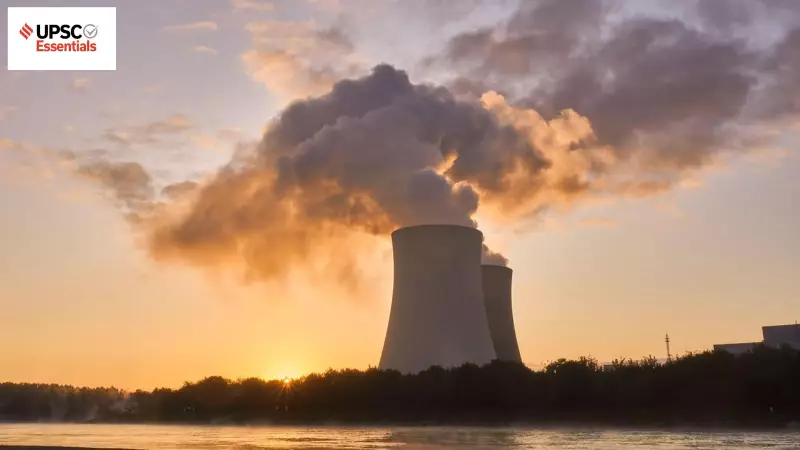
Light Water Reactors represent a cornerstone of global nuclear energy programs. They utilize light water, which serves dual purposes as both a coolant and a moderator, leading to simpler design architectures, reduced construction costs, economies of scale, and high thermal efficiency.
Statement 1 is correct because LWRs indeed employ normal water for both cooling and moderation functions, distinguishing them from heavy water reactors that use deuterium oxide.
Statement 2 is accurate as LWRs currently dominate the civil nuclear landscape, accounting for more than 85% of worldwide nuclear reactor capacity, highlighting their technological prevalence and reliability.
Statement 3 is incorrect since LWRs require enriched uranium as fuel, unlike Pressurized Heavy Water Reactors (PHWRs) that can operate with natural uranium, offering greater fuel versatility.
Therefore, only two statements are correct, making option (b) the right answer.
Question 2: Crude Oil Economics
With reference to crude oil, consider the following statements:
- Crude oil is exactly a fungible commodity.
- An increase in crude oil prices always leads to an improvement in India’s current account balance.
- Venezuelan crude is classified as a heavy sour crude because of its high sulphur content.
How many of the statements given above are correct?
- (a) Only one
- (b) Only two
- (c) All three
- (d) None
Relevance: Crude oil is a critical commodity influencing India's current account deficit, inflation rates, fiscal balance, and energy security. Its connections with global geopolitics and OPEC decisions make it a frequent topic in UPSC examinations, often tested through trap-based MCQs.
Detailed Explanation:
Statement 1 is incorrect because crude oil is not perfectly fungible in practice. Different grades and types of oil vary significantly in quality, density, and sulphur content, affecting their market value and usability.
Statement 2 is false as an increase in crude oil prices does not invariably improve India's current account balance. While higher prices may benefit export revenues in some scenarios, India's status as a net importer means that rising costs typically worsen the trade deficit and current account position.

Statement 3 is correct since Venezuelan crude is indeed categorized as heavy sour crude. It is heavy due to its thicker, denser composition compared to lighter grades, and sour because of its elevated sulphur content, which requires specialized refining processes.
Thus, only one statement is correct, making option (a) the accurate choice.
Question 3: Indian Rupee Dynamics
With reference to the Indian rupee, consider the following statements:
- A strong balance of payments position supports the stability of the rupee.
- External factors, such as the performance of the US dollar, do not affect the value of the Indian rupee.
- A depreciation of the Indian rupee always improves India’s trade balance.
Which of the statements given above is/are correct?
- (a) 1 and 3 only
- (b) 1 and 2 only
- (c) 1, 2 and 3
- (d) 1 only
Relevance: This question tests understanding of exchange rate determinants, balance of payments components, and the global linkages of the Indian rupee, all of which are core areas in the Indian Economy syllabus for UPSC.
Detailed Explanation:
Statement 1 is correct because a robust balance of payments position, reflecting healthy inflows from exports, remittances, and investments, indeed contributes to currency stability by bolstering foreign exchange reserves and market confidence.
Statement 2 is incorrect as external factors, particularly the performance of the US dollar, significantly impact the Indian rupee's value. Global economic conditions, Federal Reserve policies, and international capital flows are key determinants that the Reserve Bank of India monitors closely.
Statement 3 is false since rupee depreciation does not always enhance India's trade balance. While a weaker rupee can make exports cheaper and imports costlier, India's persistent trade deficit, driven by high import volumes in sectors like oil and electronics, means that depreciation may not automatically correct imbalances and could even exacerbate inflationary pressures.
Hence, only statement 1 is correct, making option (d) the right answer.
Question 4: India-EU Trade Relations
With reference to India-EU trade, consider the following statements:
- The EU is India’s second-largest trading partner in 2024.
- Trade in goods between the EU and India has increased by almost 90% in the last decade.
- India enjoys a persistent and large trade surplus with the European Union.
Which of the statements given above is/are correct?
- (a) 2 only
- (b) 1 and 3 only
- (c) 1 and 2 only
- (d) 2 and 3 only
Relevance: This question assesses knowledge of India's major trading partners, trade trends, and external sector dynamics, which are essential topics in the Indian Economy section for UPSC examinations.
Detailed Explanation:
Statement 1 is correct as the European Union stands as India's second-largest trading partner in 2024, accounting for goods worth approximately €120 billion, which represents about 11.5% of India's total trade volume.
Statement 2 is accurate because trade in goods between the EU and India has surged by nearly 90% over the past decade, reflecting deepening economic ties and increased bilateral engagement.
Statement 3 is incorrect since India does not maintain a persistent or large trade surplus with the EU. The trade balance often fluctuates, with India sometimes experiencing deficits, particularly in goods trade, while services trade may show variations.
Therefore, statements 1 and 2 are correct, making option (c) the appropriate answer.
Question 5: Carbon Border Adjustment Mechanism (CBAM)
Which of the following sectors fall within the scope of the Carbon Border Adjustment Mechanism (CBAM)?
- Iron and Steel
- Fertilisers
- Electricity and Hydrogen
- Cement
Select the correct answer using the codes given below:
- (a) 1 and 4 only
- (b) 1, 2 and 4
- (c) 2, 3 and 4
- (d) 1, 2, 3 and 4
Relevance: The Carbon Border Adjustment Mechanism is a significant international policy due to its direct impact on Indian exports and the intersection of climate action with trade regulations. UPSC frequently includes sector-identification and policy-impact based MCQs from such global mechanisms in current affairs.
Detailed Explanation:
The Carbon Border Adjustment Mechanism is the European Union's instrument designed to impose a fair price on carbon emissions generated during the production of carbon-intensive goods imported into the EU. It aims to encourage cleaner industrial practices in non-EU countries and prevent carbon leakage.
CBAM officially came into effect in its final form in January 2026, following a transition period from 2023 to 2025. This phased implementation aligns with the gradual phase-out of free allowances under the EU Emissions Trading System to promote decarbonization within EU industries.
The mechanism initially applies to imports of specific items and selected precursors whose production is carbon-intensive and poses significant risks of carbon leakage. These sectors include cement, iron and steel, aluminium, fertilisers, electricity, and hydrogen.
Consequently, all four sectors listed—iron and steel, fertilisers, electricity and hydrogen, and cement—are covered under CBAM, making option (d) the correct answer.
Conclusion and Preparation Tips
This Economy quiz provides a valuable opportunity for UPSC aspirants to test their knowledge on diverse topics ranging from nuclear energy and crude oil to international trade and environmental policies. Regular engagement with such quizzes can significantly enhance retention, improve answer accuracy, and build exam readiness.
For comprehensive preparation, consider integrating these questions into your daily study routine, revisiting related concepts from standard textbooks, and staying updated with current economic developments. Consistent practice and thorough revision are key to mastering the Economy section for the UPSC Civil Services Examination.