UPSC Key Analysis: Economic Survey 2025-26, UGC Regulations, and Gram Swaraj
The recently tabled Economic Survey 2025-26 presents critical insights for UPSC aspirants, covering themes from currency stability to artificial intelligence. Alongside, the Supreme Court's stay on new UGC regulations addressing caste bias and the enduring relevance of Mahatma Gandhi's Gram Swaraj offer multifaceted perspectives for both Prelims and Mains examinations. This comprehensive analysis delves into these pivotal topics, highlighting their significance in the current socio-economic and educational landscape.
Economic Survey 2025-26: Key Highlights and UPSC Relevance
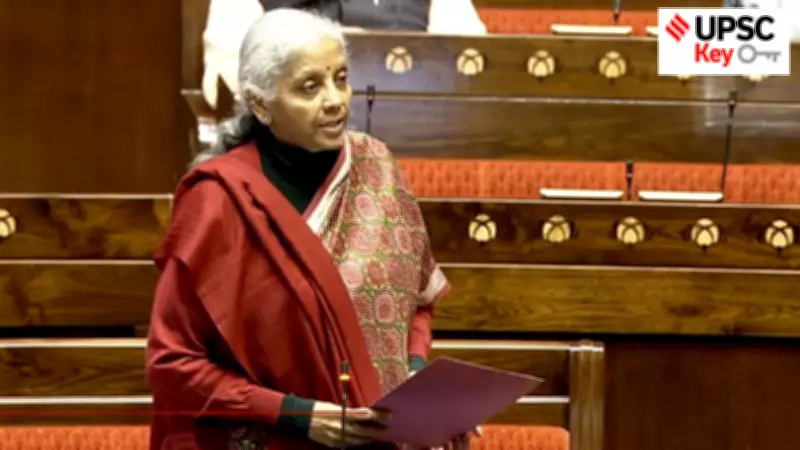
Presented by Finance Minister Nirmala Sitharaman, the Economic Survey 2025-26 projects India's growth at 6.8-7.2% for the next financial year, upgrading the potential growth rate to 7%. However, it flags concerns such as the drying up of foreign direct investment (FDI) and foreign institutional investor (FII) flows, impacting rupee stability. Chief Economic Advisor V Anantha Nageswaran noted that despite strong macroeconomic fundamentals, the rupee is "punching below its weight" due to global capital strikes and geopolitical factors.
The Survey emphasizes proactive reforms to attract foreign investment, addressing issues like fiscal populism in states, which risks crowding out capital expenditure. It also highlights the AI ecosystem, proposing an 'AI-OS' initiative to make artificial intelligence a public good, focusing on sector-specific applications rather than resource-intensive large language models. For UPSC, this ties into syllabus areas like Indian Economy, Government Budgeting, and Science & Technology.

Supreme Court Stays UGC Regulations on Caste Bias
In a significant development, the Supreme Court has stayed the University Grants Commission (Promotion of Equity in Higher Education Institutions) Regulations, 2026, citing potential societal division. The bench, led by Chief Justice Surya Kant, ordered the regulations be kept in abeyance under Article 142, reinstating the 2012 rules temporarily. Petitioners challenged Section 3(1)(c), which defines caste-based discrimination exclusively for SC, ST, and OBC communities, excluding the general category.
The new regulations introduced punitive measures for non-compliant institutions, such as debarment from UGC schemes, and mandated Equal Opportunity Centres with representation from marginalized groups. For UPSC, this issue relates to Government Policies, Welfare Schemes, and Constitutional Provisions like Article 15, offering rich material for Mains answers on discrimination and educational equity.
Gandhi's Gram Swaraj: Ideals and Contemporary Relevance
The debate over renaming MGNREGS to VB-G RAM G has revived discussions on Mahatma Gandhi's Gram Swaraj. Gandhi envisioned villages as "complete republics", self-sufficient and interdependent, critiquing urban-centric development. His writings in Harijan and Young India emphasized rural empowerment, yet genuine devolution of power remains elusive in modern India.
This theme connects to UPSC topics like Modern Indian History, Panchayati Raj, and Rural Development, providing insights into Gandhi's philosophies and their implementation in schemes like MGNREGS. Understanding Gram Swaraj helps aspirants analyze current policies through a historical lens, enriching answers on governance and social justice.

Additional Insights from the Economic Survey
- Climate Change Pragmatism: The Survey stresses balance and pragmatism in climate action, prioritizing adaptation and development over mitigation in developing economies like India.
- Digital Addiction: Flagged as a key health challenge, with recommendations for structured interventions in schools to address screen-related mental health issues.
- RTI Act Re-examination: The Survey calls for revisiting the Right to Information Act, suggesting adjustments to protect deliberative processes and governance efficiency.
- Central Public Sector Enterprises (CPSEs): Highlighting their turnaround, the Survey notes increased profitability and contributions to exports, relevant for questions on public sector reforms and economic planning.
For UPSC preparation, these topics offer a holistic view of current affairs, integrating economic, social, and historical dimensions. Aspirants should focus on interlinking themes, such as how economic policies impact social equity, to craft nuanced responses in examinations.