US Education Department Eases Path for New Accrediting Agencies with Interpretive Rule
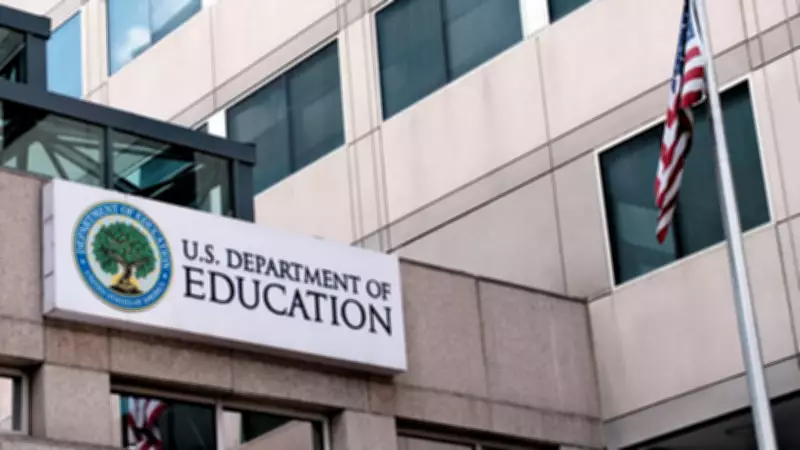
The U.S. Department of Education has unveiled a significant new interpretive rule designed to lower barriers for emerging accrediting agencies seeking federal recognition. This initiative forms a core component of a broader accreditation reform agenda championed by the Trump Administration, which prioritizes competition and accountability within the oversight framework of higher education.
The Critical Role of Accrediting Agencies
Accrediting agencies serve as fundamental gatekeepers within the American higher education system. These entities are responsible for evaluating colleges and universities, determining whether these institutions qualify to access federal student aid under Title IV of the Higher Education Act. Without accreditation from a federally recognized agency, educational institutions are barred from participating in crucial federal financial aid programs, which are vital for many students.
Key Clarifications in the New Interpretive Rule
The newly issued interpretive rule provides explicit guidance on how the Department applies existing regulations under 34 CFR Part 602, which governs the federal recognition process for accrediting agencies.

Two-Year Activity Requirement Clarified: A pivotal clarification addresses the two-year activity mandate. Current regulations stipulate that accrediting agencies must conduct at least two years of accrediting activities before applying for federal recognition. The Department has now precisely defined when these activities officially commence for regulatory purposes. Officials assert that this step eliminates previous ambiguities that may have deterred new entrants or caused unnecessary delays in application submissions.
Streamlined Timelines Established: The second major enhancement involves concrete timelines. The Department has committed to determining whether an accrediting agency meets basic eligibility requirements within 60 calendar days of receiving its application. Furthermore, it has declared its intention to complete the review of the written petition within a six to twelve-month window. These measures are anticipated to significantly shorten what has historically been a protracted and intricate recognition process.
It is important to note that this interpretive rule is nonbinding and does not impose new legal obligations. Instead, it articulates the Department's current interpretation of existing laws and regulations.
Why Accreditation Reform is a Priority
Under Section 496 of the Higher Education Act of 1965, the Secretary of Education is mandated to establish criteria for recognizing accrediting agencies. These agencies function as essential gatekeepers for federal student aid programs.
Since 1999, the Department has recognized only four new accrediting agencies with the authority to establish institutional eligibility for Title IV participation. Officials contend that this limited entry has stifled competition within the accreditation marketplace.
According to the Department, the existing system has been sluggish in adapting to transformative changes in higher education, including the proliferation of online programs, alternative credentials, and workforce-focused educational models. The new interpretive rule is designed to open the market to new institutional and programmatic accreditors, thereby encouraging innovation and adaptability.
Under Secretary of Education Nicholas Kent emphasized that the administration aims to shift focus towards measurable student outcomes, particularly job readiness post-graduation. The Department maintains that fostering stronger competition among accreditors will enhance quality assurance mechanisms and reduce unnecessary administrative costs for institutions.
Additional Measures Under Executive Order 14279
The interpretive rule follows Executive Order 14279, titled Reforming Accreditation to Strengthen Higher Education. In alignment with this order, the Department has announced several supplementary actions:

- Resuming Recognition of New Accreditors: The Department recommenced the process of recognizing new accrediting agencies shortly after the executive order was signed.
- Lifting the Moratorium on Switching Accreditors: Institutions are now permitted to change accreditors without facing previous restrictive barriers.
- Request for Information on the Accreditation Handbook: Stakeholders were invited to provide feedback on necessary updates to the handbook that guides accreditation processes.
- Funding Support through FIPSE: Nearly $15 million has been awarded through the Fund for the Improvement of Postsecondary Education to support emerging accreditors and institutions seeking accreditation changes. This is part of a broader $169 million grant competition.
- AIM Negotiated Rulemaking Committee: The Department has announced the Accreditation, Innovation, and Modernization Committee, which is scheduled to convene in April and May 2026 to consider draft regulations.
- Proposed Rule on the Regional Label: The Department has also proposed an interpretive rule clarifying that the use of the term regional by accrediting agencies and institutions may create unnecessary barriers and potentially mislead students.
Implications for Institutions and Students
If implemented effectively, this rule could facilitate easier entry for new accrediting agencies into the system and provide institutions with greater choice among multiple accrediting bodies. Enhanced competition may grant colleges increased flexibility to align accreditation standards with their unique academic models and workforce development objectives.
For students, accreditation remains directly linked to access to federal financial aid. Any alterations to the accreditation landscape could influence institutional oversight, quality standards, and accountability mechanisms. The Department has stated that its overarching goal is to render accreditation more transparent, competitive, and outcome-focused. The coming months, particularly discussions under the AIM Committee, will be instrumental in determining how these reforms reshape the accreditation framework within U.S. higher education.