CBSE Class 10 Sanskrit Paper 2026: A Comprehensive Review
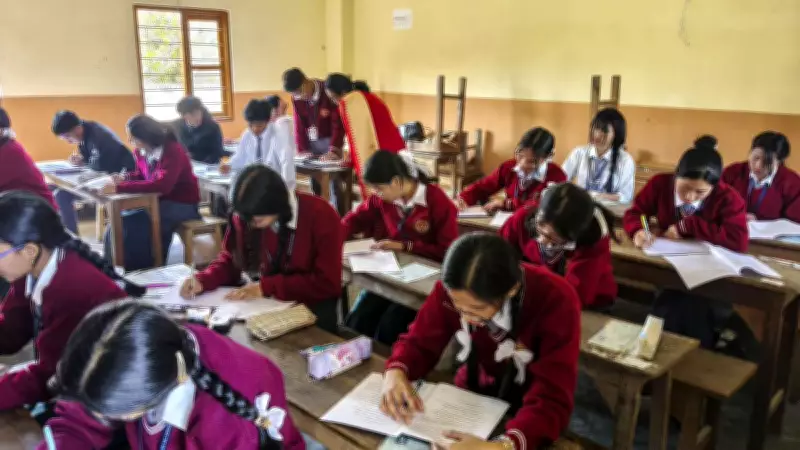
The Central Board of Secondary Education (CBSE) conducted the Class 10 Sanskrit examination for the academic year 2025-26 on February 28, 2026. This crucial board exam has drawn significant attention from students, educators, and parents across India, with many eager to gauge the paper's overall difficulty and alignment with the syllabus.
Student Reactions to the Sanskrit Paper
Initial feedback from students who appeared for the CBSE 10th Sanskrit paper indicates a mixed response. Many students reported that the question paper was moderately challenging but manageable, with a balanced distribution of questions from various sections of the curriculum.
Key Points from Students:- The grammar section was considered straightforward, with questions based on standard rules and examples.
- Translation exercises were deemed fair, though some students found certain passages slightly complex.
- Literature questions covered expected topics, but a few required in-depth understanding and critical thinking.
- Overall, students expressed relief that the paper did not contain any major surprises or out-of-syllabus content.
Teacher Perspectives on the Exam
Educators and Sanskrit teachers have also weighed in on the CBSE Class 10 Sanskrit paper 2026. Their analysis suggests that the paper was well-structured and designed to test students' comprehensive knowledge of the subject.

- The paper adhered closely to the CBSE syllabus and sample papers, ensuring predictability for prepared students.
- Questions were framed to assess both rote learning and application skills, promoting a holistic evaluation.
- The difficulty level was appropriate for Class 10 students, with a gradual progression from easy to more challenging items.
- Teachers praised the inclusion of diverse question types, such as multiple-choice, short answer, and long answer questions, which catered to different learning styles.
Analysis of Paper Structure and Content
The CBSE 10th Sanskrit paper 2026 comprised multiple sections, including grammar, translation, literature, and composition. Each section was allocated specific marks, with a total of 80 marks for the theory paper, as per CBSE guidelines.
Grammar Section: This part tested students on topics like sandhi, samasa, and karak, with questions that were largely based on textbook exercises. Students found this section to be scoring if they had practiced regularly.
Translation Section: Involved translating sentences from Hindi to Sanskrit and vice versa. While most students managed this well, some struggled with nuanced vocabulary, highlighting the need for better preparation in this area.
Literature Section: Covered prose and poetry from the prescribed textbooks. Questions ranged from factual recall to interpretive analysis, requiring students to demonstrate both memory and comprehension skills.
Overall Assessment and Implications
Based on the reactions from students and teachers, the CBSE Class 10 Sanskrit paper 2026 is viewed as a fair and balanced assessment. It successfully tested the core competencies outlined in the curriculum without being overly difficult or easy.
This feedback is crucial for future exam preparations, as it underscores the importance of thorough syllabus coverage and regular practice. Students are advised to focus on grammar rules, vocabulary building, and critical reading of literature to excel in upcoming exams.
As the CBSE continues to refine its examination patterns, such insights help in maintaining transparency and improving educational standards across the board.