CBSE Announces Historic Digital Transformation for Class 12 Board Examinations
In a landmark decision that promises to revolutionize India's educational assessment landscape, the Central Board of Secondary Education (CBSE) has declared that post-result verification of marks for Class 12 board examinations will be completely eliminated starting from the 2026 academic session. This announcement represents one of the most significant structural reforms in the history of Indian school education.
A Comprehensive Digital Roadmap Unveiled
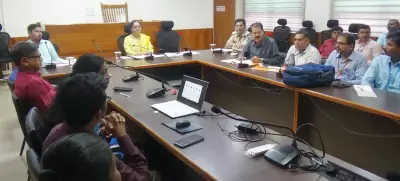
The groundbreaking announcement was delivered during a meticulously organized live webcast conducted by the Board on Friday morning. Dr. Sanyam Bhardwaj, Controller of Examinations, presented a detailed roadmap for comprehensive digital reforms that will fundamentally transform how nearly two million students are evaluated annually.
The session, streamed live on CBSE's official YouTube channel at 11 am, was not merely another routine webinar. It served as a mandatory orientation for principals, teachers, and examination staff across all affiliated schools nationwide. The Board issued explicit instructions requiring attendance and even mandated schools to arrange proper viewing facilities with screens, sound systems, and reliable internet connectivity.

The digital transformation extends beyond mere procedural changes - schools were instructed to upload geotagged group photographs of participants on the ASAR app following the session, demonstrating the Board's commitment to complete digital integration.
Online Submission and Marking System (OSM) Implementation
At the core of this educational revolution lies the implementation of the Online Submission and Marking (OSM) system for Class 12 answer scripts. Under this innovative framework, evaluated answer sheets will undergo complete digitization, with marks entered online and transmitted directly to a centralized server system.
Dr. Bhardwaj explained that the primary objectives of this digital shift include:
- Elimination of human errors in mark calculation and recording
- Ensuring absolute uniformity in evaluation standards across all centers
- Enabling real-time monitoring of the entire evaluation process
- Creating a transparent and efficient assessment ecosystem
The sheer scale of CBSE's operations underscores why digitization has become imperative. Consider these staggering statistics for the current academic year alone:
- Total Class 12 students: 18,59,479
- Number of answer books: 1,00,44,295
- Subjects offered: 120 distinct disciplines
Managing over one crore answer books manually has long presented monumental logistical challenges. The Board anticipates that OSM will introduce unprecedented precision and efficiency into a system that profoundly impacts millions of young lives annually.
Transformative Changes for Students
The most significant development for students is the complete elimination of post-result verification processes. In the traditional system, students frequently sought verification to identify discrepancies in total marks or missing numbers. According to CBSE, the new digital evaluation framework will prevent such discrepancies from occurring in the first place.
The benefits for students under the reformed system are substantial and multifaceted:
- Complete elimination of totalling, posting, and uploading errors
- Assurance that no answers remain unevaluated
- No requirement for cross-checking by evaluators
- Elimination of physical comparison of answer books at CBSE offices
- Cleaner evaluation process without physical handling or dust exposure
- Reduced evaluation period from 12 days to just 9 days
- Significant savings in transportation time and associated costs
- Environmentally sustainable digital processes reducing paper usage
For generations of students who have anxiously awaited results each year, these reforms promise greater accuracy, reduced delays, and minimal chances of clerical errors.

Revolutionizing the Teacher Experience
The digital transformation proves equally revolutionary for educators serving as evaluators. Teachers will now mark assigned answer scripts through digital platforms, with the system automatically handling mark totalling and cross-verification processes.
The Board's presentation emphasized a crucial benefit: "Teachers would not be needed for post-result verification work. They would only attend classes." This change promises to redirect valuable teaching time back to classroom instruction rather than administrative tasks.
The digital platform facilitates broader participation, including teachers residing outside India. To ensure smooth transition, CBSE has developed comprehensive support systems featuring:
- Multiple login sessions for flexible participation
- Unlimited familiarization workshops and training modules
- Instructional videos and detailed standard operating procedures
- Dedicated call centers for technical support and queries
Comprehensive Reforms Beyond Class 12
The webcast revealed additional structural changes scheduled for implementation in 2026:
- Introduction of a second board examination for Class 10 students
- Division of question papers for Science and Social Studies at Class 10 level
- Strengthened guidelines for examination conduct and evaluation procedures
Dr. Bhardwaj clarified that these reforms resulted from extensive preparation rather than sudden decisions. The Board conducted thorough analysis of past experiences, redesigned systems completely, executed multiple dry runs, identified potential glitches, gathered stakeholder feedback, conducted global testing, and reinforced security protocols.
Only after achieving perfect synchronization between policy frameworks and technological infrastructure did CBSE proceed with implementation.
A Forward-Looking Educational Vision
The session's tone suggested that CBSE views this initiative as more than technological enhancement - it represents fundamental structural correction for a high-stakes educational ecosystem. With approximately 18.6 lakh students awaiting Class 12 results annually, even minor clerical errors can trigger anxiety, appeals, and administrative backlogs. The new system aims to eliminate these stress points entirely.
For students, this means trusting a digital process where all marks are accurately accounted for before result declaration. For teachers, it signifies enhanced professional focus on pedagogical skills rather than paperwork. For the Board, it represents a decisive shift toward greater transparency and operational efficiency.
As Dr. Bhardwaj concluded the session, schools received reminders about uploading geotagged attendance photographs and directing queries to designated email addresses. While these instructions appeared procedural, their underlying significance was profound: India's board examination system is transitioning decisively into a completely digital era.