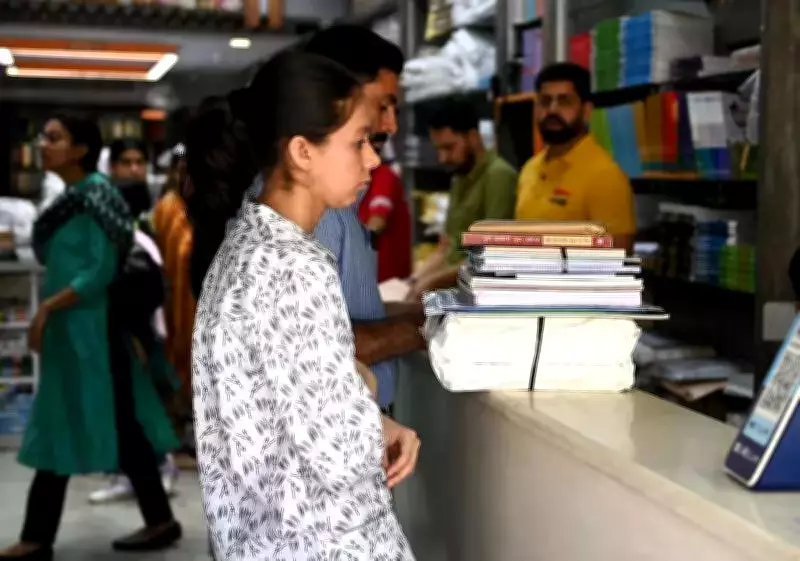
Chandigarh Parents' Association Alleges Textbook Supply Monopoly in Private Schools
The Chandigarh Parents' Association has formally raised serious concerns regarding the restricted availability of prescribed textbooks in the open market. In a significant development, the association has alleged that certain private schools in the city are involved in practices that limit textbook distribution, effectively creating monopolies despite recent government directives aimed at enhancing transparency.
Formal Representation to Education Authorities
On March 11, the parents' body submitted a detailed representation to the director of school education, highlighting critical issues with textbook distribution. The association specifically referenced the education department's memo dated February 27, which directed private schools to upload lists of prescribed textbooks for the academic session 2026–27 on their official websites. While this move was widely welcomed by parents as a step toward greater transparency, the association contends that implementation has been problematic.
"The government had asked the schools to make book lists public so that parents get choice and fair prices. If books are available only at one shop, then it is compliance on paper, but monopoly in practice," stated Nitin Goyal, president of the Chandigarh Parents' Association.

Allegations of Restricted Distribution Networks
According to the representation, local independent booksellers have reported that certain publishers—whose books have been prescribed by specific schools—are refusing to accept orders from them. These publishers are allegedly supplying textbooks only through limited, restricted channels, thereby preventing wider market access. This practice directly contradicts the spirit of the education department's transparency directive.
The association cited multiple concerning instances:
- Books prescribed by certain schools were reportedly available exclusively at a single shop
- In other cases, books were allegedly not being supplied to independent booksellers at all
- One school's prescribed books were linked to a particular local bookseller, with no supply to other retailers
Contrasting Examples and Market Implications
Interestingly, the parents' body acknowledged a positive example where books prescribed by one reputed city school are widely available across multiple independent bookstores. This demonstrates that fair distribution is possible and highlights the inconsistency in practices among different institutions.
Nitin Goyal further elaborated that several booksellers have expressed their willingness to offer discounts to parents rather than paying commissions to schools. However, they are unable to implement this consumer-friendly approach because some publishers are allegedly refusing to supply books outside their restricted distribution networks.
Call for Regulatory Intervention
The Chandigarh Parents' Association has urgently appealed to the education department to issue supplementary directives ensuring prescribed textbooks are freely available in the open market. The association has proposed specific measures to address the current imbalance:
- Require schools to publish the names and addresses of at least four independent bookshops where prescribed textbooks are available
- Obtain formal undertakings from publishers guaranteeing they will supply books to any bookseller operating within the city
- Establish monitoring mechanisms to ensure compliance with distribution guidelines
This situation raises important questions about market fairness, consumer choice, and the implementation of educational policies designed to benefit parents and students. The association's representation underscores the need for stronger regulatory oversight to prevent monopolistic practices in textbook distribution, ensuring that transparency directives translate into genuine market accessibility for all stakeholders.